Reverse Coloring vs. Adult Coloring Books: Which One Actually Relieves Stress?
FreeReverseColoring · Editorial
Quick Answer
Adult coloring books provide structure and a gentle focus anchor — both useful for stress relief. But they're passive: someone else made all the creative decisions. Reverse coloring inverts the model. The color is already there; you create the lines. This active creative agency produces greater satisfaction and more lasting confidence than filling in someone else's drawing.
In 2015, Johanna Basford's Secret Garden sold millions of copies and launched an industry. Adult coloring books — intricate, beautiful, designed for grown-ups — became a cultural moment. Neurologists were quoted in newspapers. Therapists recommended them. The message was simple: coloring reduces stress.
That message was largely correct. It was also incomplete.
Coloring books do reduce stress — for a specific reason, in a specific way, with a specific ceiling. Understanding where that ceiling is explains why some people find them deeply satisfying and others find them curiously hollow after a few pages.
What Adult Coloring Books Do Well
The stress-relief mechanism of coloring books is real and well-documented. It works through what psychologists call attentional anchoring — the activity provides a simple, structured task that occupies the busy mind without demanding creative decisions. Choose a color. Stay inside the lines. Repeat.
For a mind that's been in high gear — working through problems, managing information, navigating social complexity — the offer of zero decisions is genuinely restorative. There's nothing to figure out. The lines are already there. You just fill them in.
Coloring books are also legitimately low-barrier. No skill is required. There's no way to fail in any meaningful sense. You can do it while listening to a podcast, which lowers the friction of starting. For many people, that accessibility is exactly what they need.
Top tip
Coloring books work best as a deliberate pause rather than a background activity. The stress-relief benefits are stronger when you give the activity your full attention rather than multitasking through it.
The research is supportive. Studies have found that structured art activities reduce cortisol levels and self-reported stress. The tactile quality of colored pencil on paper has its own calming effect. There's something satisfying about watching color accumulate on a page.
Adult coloring books are not fraudulent. They deliver what they promise — for a particular kind of stress relief, in a particular kind of moment.
Where Adult Coloring Books Fall Short
The issue isn't that coloring books don't work. It's that they stop working in a specific way, and many people feel that ceiling without being able to name it.
The passivity problem. Every creative decision in a coloring book was made by someone else. The subject, the composition, the level of detail, the shapes of the objects — all of it was decided before the book reached you. Your creative act is limited to color selection, and even that has implicit constraints: realistic colors are "right," unrealistic ones can feel like mistakes.
This passivity is part of the appeal in stressful moments. But it's also why a finished coloring book page can feel subtly unsatisfying — you filled in someone else's drawing. It looks beautiful, but you didn't design it. The accomplishment belongs partly to the illustrator.
The "wrong color" anxiety. This is more common than people admit. Despite the activity being sold as one where you can't make mistakes, many adults report an underlying anxiety about whether they're using the right colors — realistic skin tones, accurate leaf colors, coherent palettes. The illustrator's lines implicitly suggest what the subject is supposed to be, which creates pressure to execute it correctly.
The novelty ceiling. The meditative effect of coloring books comes partly from novelty and partly from genuine attentional anchoring. The novelty fades. After a certain number of books — for some people it's one or two, for others it takes longer — the activity starts to feel repetitive in a way that reduces the meditative quality. The lines are different, but the experience is the same.
Limited creative development. Coloring books don't build creative confidence or drawing skill. You can complete a hundred pages and still feel unable to make art on your own, because you've never made a creative decision. The activity is more consumption than creation.
How Reverse Coloring Changes the Equation
Reverse coloring has the same accessibility as coloring books — no skill required, clear visual structure, immediate results — but it inverts the creative relationship.
"The color is given. The lines are yours."
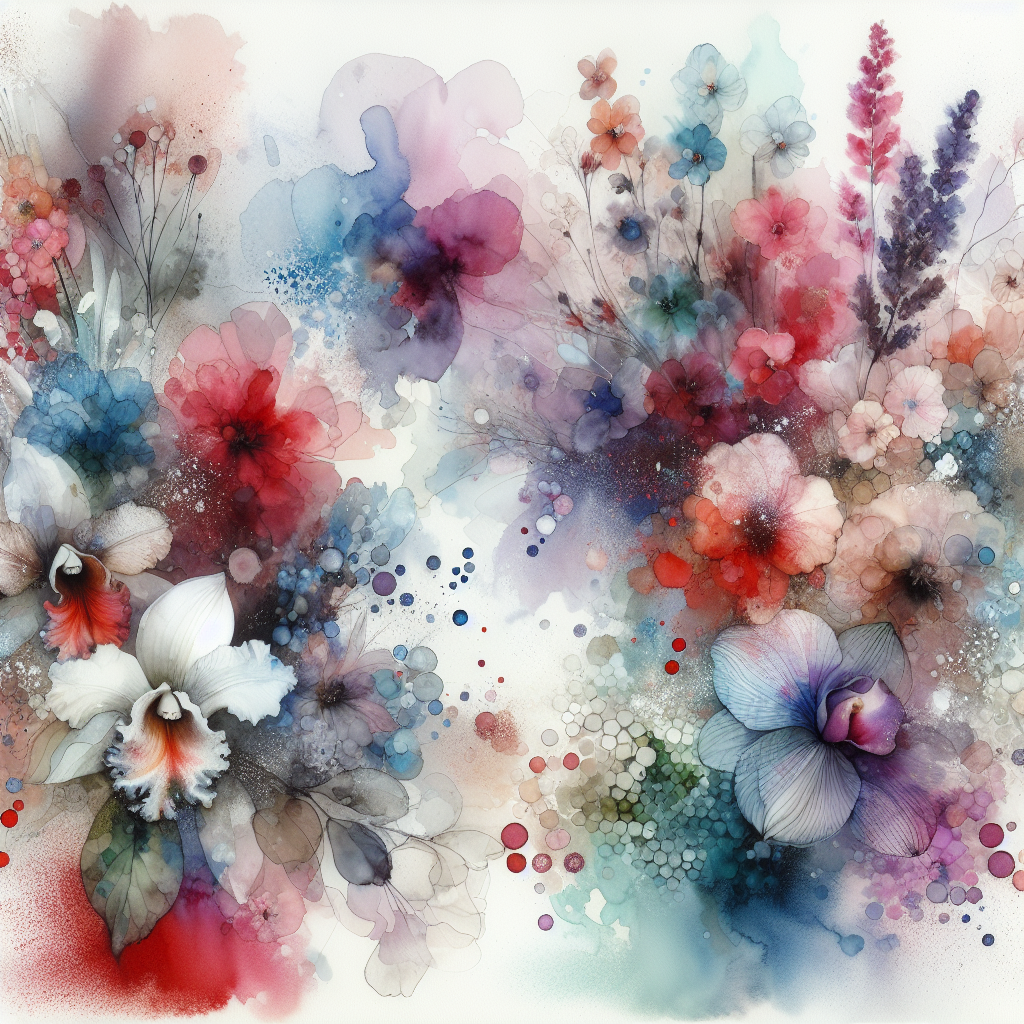
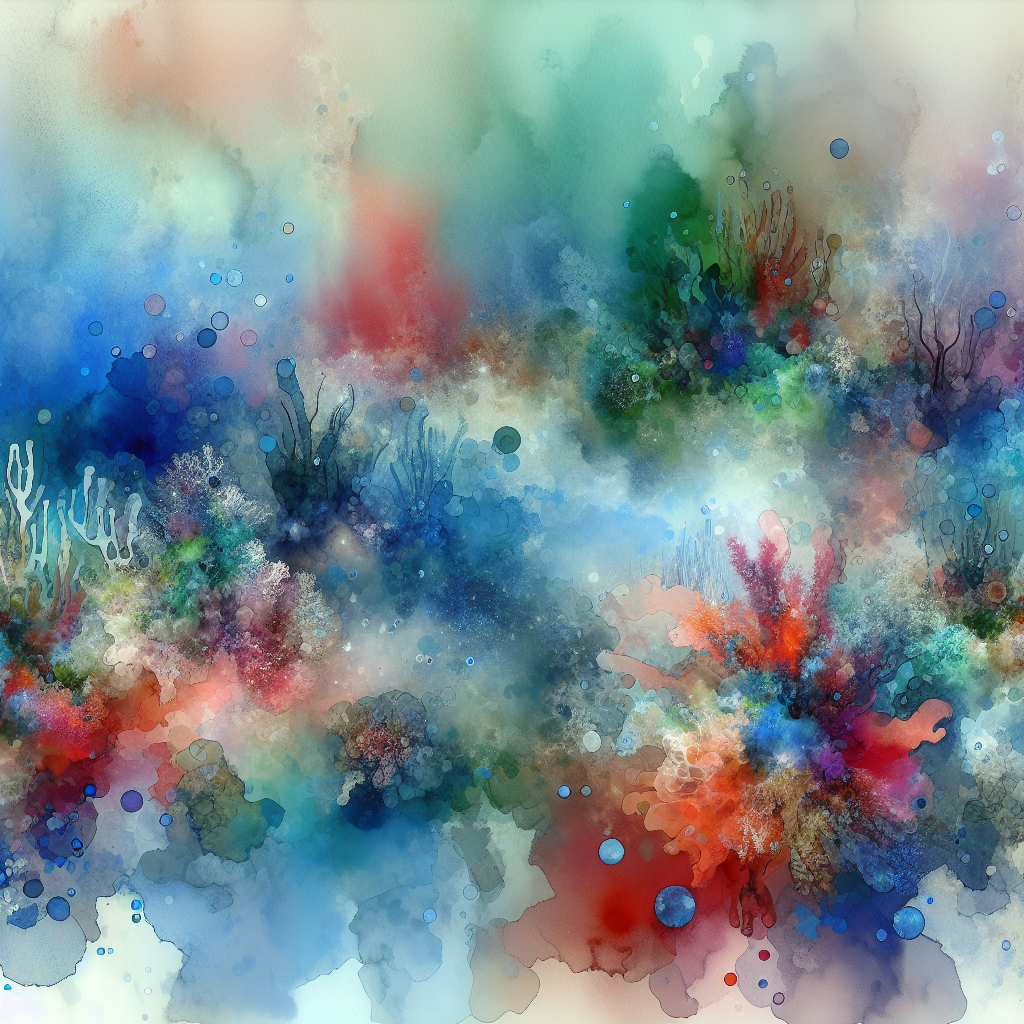
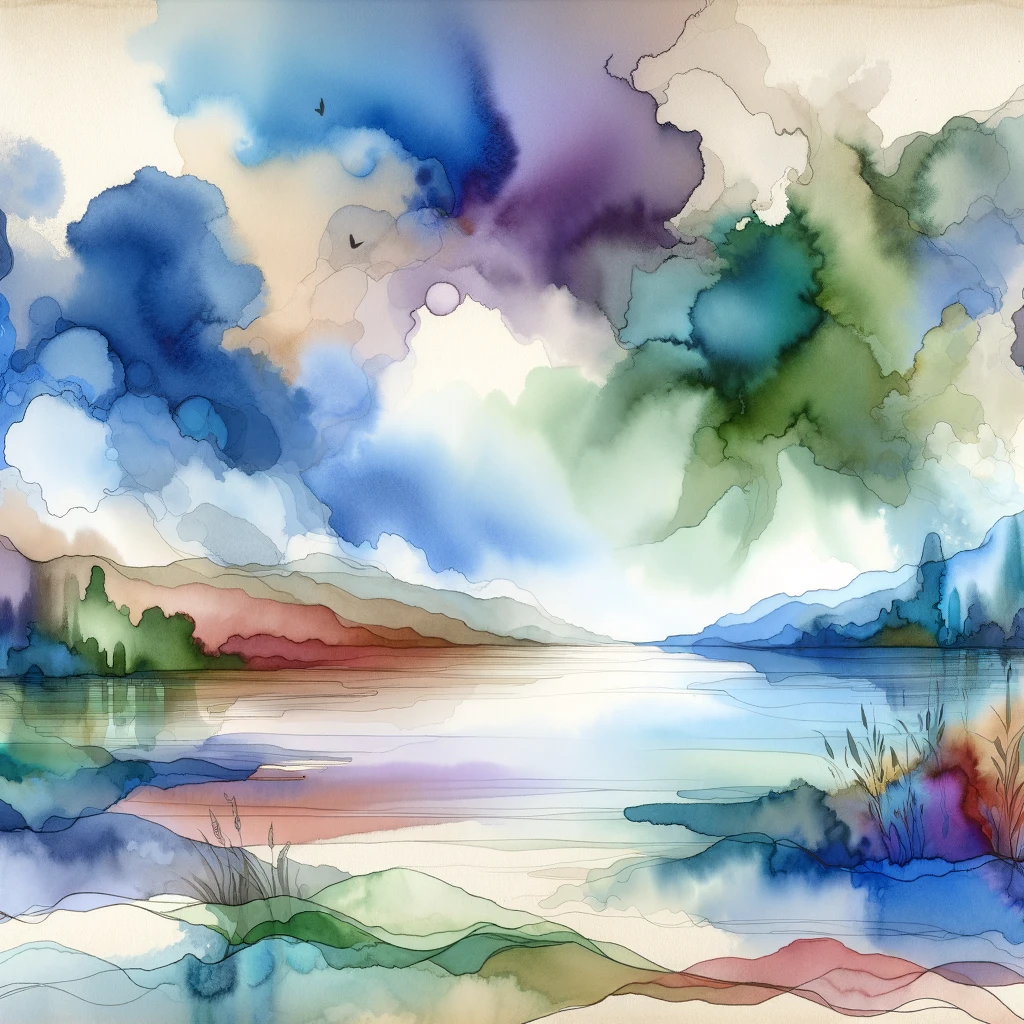
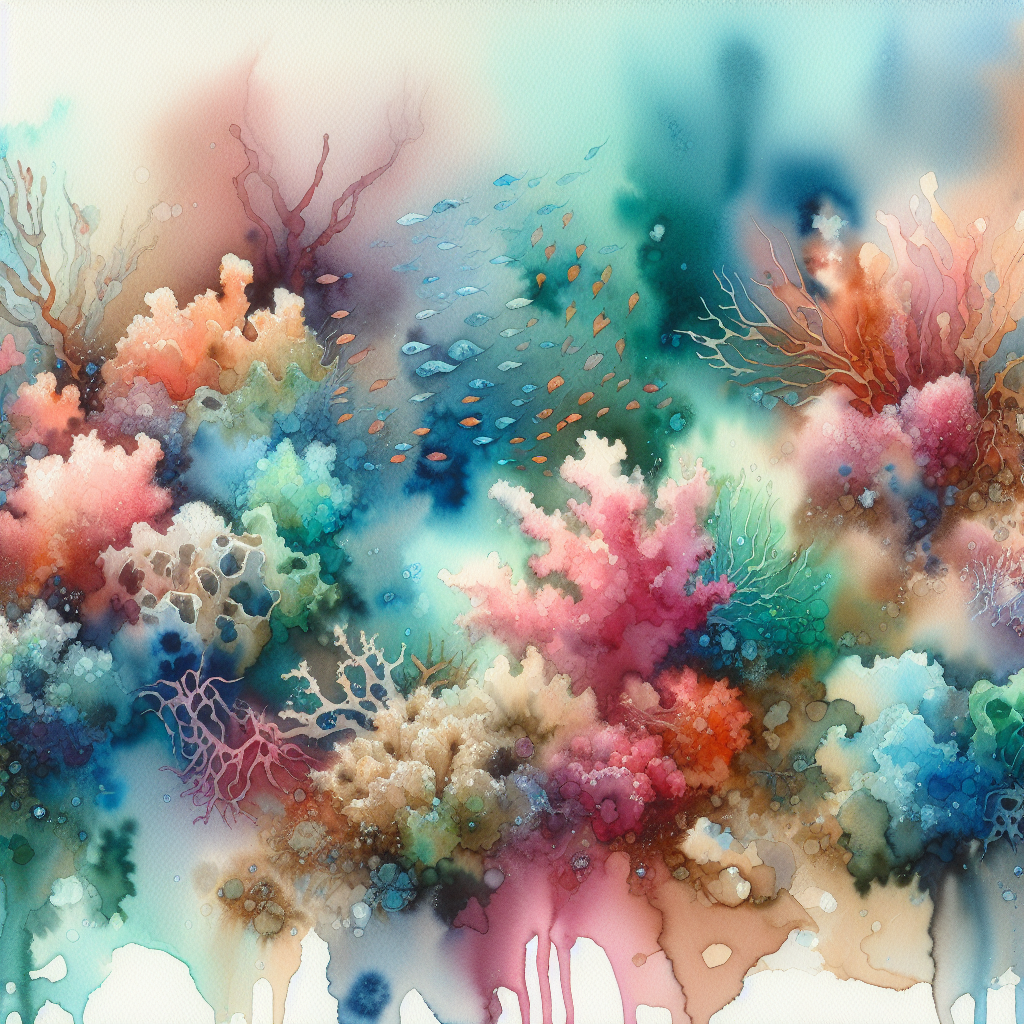
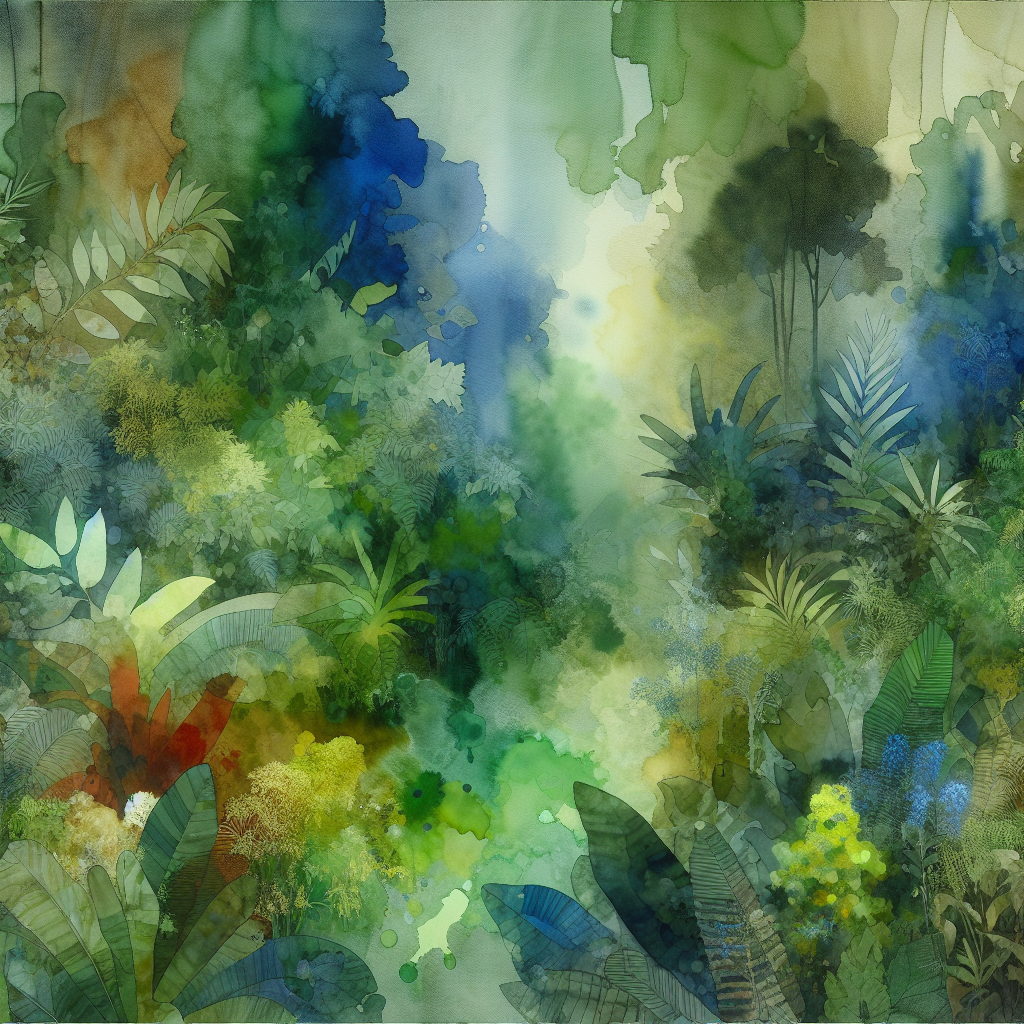
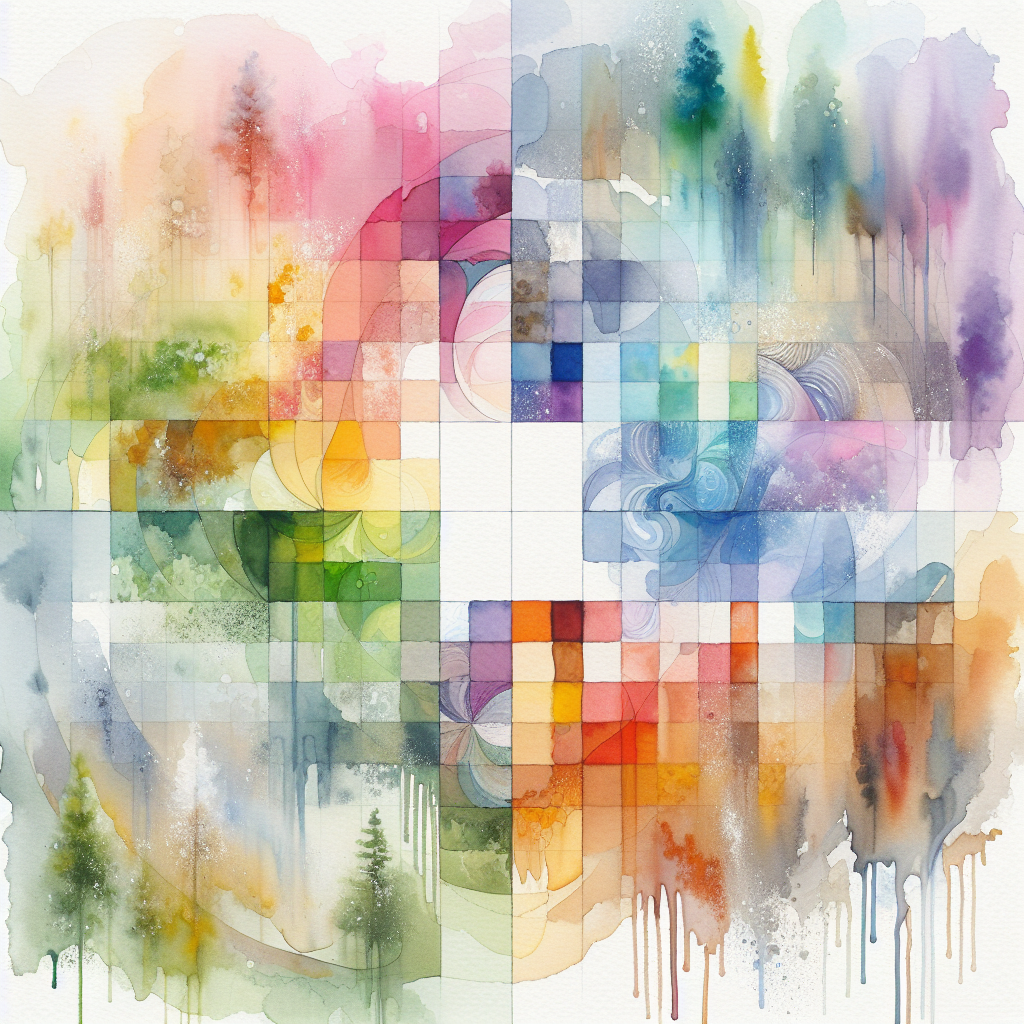
Where a coloring book constrains you to someone else's creative decisions, a reverse coloring design provides raw material and leaves the creative work to you. The watercolor background gives your eye a starting point — color fields, gradients, areas of light and shadow — but it doesn't tell you what to see in them. You decide. You draw what you find.
This changes the experience in several ways.
There is no wrong answer. Not in the soft, reassuring sense that people often mean. In the literal, structural sense: the design has no predetermined outcome. Two people working from the same background produce something completely different, and neither is more or less correct than the other. The "wrong color" anxiety doesn't exist because there's no template to deviate from.
What you produce is genuinely yours. The colors were provided; the drawing wasn't. Before you sat down, that drawing didn't exist. After you sat down, it does. That's a different quality of accomplishment than having filled in an illustrator's outline — and most people feel the difference.
The replayability is unlimited. Once a coloring book page is done, it's done. The same reverse coloring design can be drawn multiple times and produce something completely different each time — because what you see in the colors changes based on your mood, your attention, what you're thinking about that day.
Creative confidence accumulates. Every session is a small practice in looking carefully, finding form, and making a mark in response to what you see. These are real observational drawing skills, developing quietly in the background. People who do reverse coloring regularly often find that their ability to see shapes in the world around them improves without them consciously trying to improve it.
A Side-by-Side Comparison
| Adult Coloring Books | Reverse Coloring | |
|---|---|---|
| Creative decisions | Made by the illustrator | Made by you |
| Skill required | None | None |
| Cost | $15–30 per book | Free (FRC weekly delivery) |
| What you produce | Someone else’s drawing, colored | Your drawing, on someone else’s colors |
| Failure mode | "I used the wrong colors" | None — there are no wrong lines |
| Replayability | Once colored, done | Same design, different drawing every time |
| Creative confidence built | Minimal | Yes — you made real creative decisions |
| Supplies needed | Colored pencils or markers | One pen |
The Stress Relief Mechanism, Compared
Both activities reduce stress — but through somewhat different mechanisms, which is why they work differently for different people.
Coloring books work through attentional anchoring (simple task occupies the busy mind) and decision reduction (nothing to figure out, nothing to choose beyond colors). The experience is deliberately passive.
Reverse coloring adds a third mechanism: creative agency. The act of deciding where to draw, what to make of the colors, how to interpret what you're looking at — these are deliberate creative choices, and making them engages a different part of the brain than passive execution. Research on creative experience consistently finds that activities with active creative involvement produce stronger feelings of satisfaction and meaning than passive activities, even when the passive activity is enjoyable.
For pure, low-decision decompression — when you've been making choices all day and need not to make any more — coloring books may be the better fit. For sessions where you want to come away feeling like you actually made something, reverse coloring tends to be more satisfying.
They aren't mutually exclusive. Many people use coloring books on the most depleted days and reverse coloring when they have just a little more to give.
Try reverse coloring free this week
New watercolor design delivered to your inbox every week. Just a pen — that's all you need.
Free forever. No spam. Unsubscribe anytime.
Which One Is Right for You?
Choose a coloring book if:
- You want complete meditative structure with zero creative decisions
- You're in a high-depletion state and need the simplest possible activity
- You find the tactile experience of applying color to be the primary pleasure
Choose reverse coloring if:
- You want to feel like you made something, not just colored something
- You've done coloring books and found the satisfaction fading over time
- You want to build creative confidence alongside decompression
- You're curious what you'd make if the page gave you a starting point instead of a constraint
Try both if:
- You want options for different mental states on different days
- You're new to both and don't yet know which kind of session you're going to need
Enchanted Canopy
Veiled Verdure
Seasonal Symphony
Frequently Asked Questions
Is reverse coloring harder than traditional coloring?
It's more open, which some people experience as easier and others find briefly disorienting. Traditional coloring has implicit rules — stay inside the lines, use realistic colors — that provide structure even as they constrain you. Reverse coloring has no rules, which removes the constraint but also removes the structure. Most people find their footing within the first few minutes of their first session.
Do I need different art supplies for reverse coloring?
You need less. Coloring books require colored pencils or markers. Reverse coloring requires a pen — any pen, including the most ordinary one in your desk drawer. There's no color to match, no palette to coordinate. It's actually less equipment-intensive than what most people already own for coloring books.
Why do some people prefer coloring books even after trying reverse coloring?
Preference is real and valid. Some people genuinely prefer the meditative structure of fill-in coloring: the defined task, the clear rules, the predictable outcome. The passive quality is the appeal, not a limitation. Both reactions are legitimate responses to a genuine difference in the activities.
What if I try reverse coloring and don't see anything in the colors?
This is common on the first try. The skill of seeing shapes in abstract color develops with practice — most people find it easier the more they do it. A reliable starting technique: find the darkest part of the design and begin there. Dark areas almost always suggest depth or a boundary. One line at the darkest point and the eye usually starts to find the rest on its own.
Try the Alternative This Week
If you've been using coloring books and finding the satisfaction isn't quite what it used to be — or if you've been curious about a creative activity that leaves you feeling like you actually made something — a reverse coloring design is a reasonable next step.
Subscribe below to receive this week's watercolor background. It arrives already full of color. All you need is a pen and whatever you see in it.