Art for People Who Think They Can't Draw
FreeReverseColoring · Editorial
Quick Answer
The belief "I can't draw" is almost always about confidence, not ability. Drawing skill is learnable — but more importantly, there are art activities that produce genuinely satisfying results without any prior skill. The key is removing the blank page, which is where the paralysis lives. Once there's something on the page already, most people discover they can draw more than they thought.
At some point, most people decide they can't draw. Not as a considered conclusion, but as a fact absorbed from a specific moment: a comparison to a more talented classmate, a teacher's offhand comment, a drawing that didn't look the way they intended. The decision usually happens before adulthood and rarely gets revisited.
The problem is that it's almost always wrong — or at least, it's answering the wrong question.
Where "I Can't Draw" Actually Comes From
There are two different things people mean when they say they can't draw. The first is technical drawing skill: the ability to produce accurate representations of objects — a hand that looks like a hand, a face with proportional features, a perspective grid that recedes correctly. This is a learnable skill that most people have simply never been taught. It takes practice, not innate talent.
The second thing is expressive mark-making: the ability to put something of yourself on a page. This requires nothing except permission to start. No training, no technique, no instruction. Just a pen moving across paper in response to something — a shape, a color, a feeling.
Most people who say "I can't draw" have decided they can't do the first thing. But the second thing is available to everyone, immediately, and the experience of doing it — the quiet focus, the small satisfaction of having made something — doesn't require technical skill at all.
The confusion between these two things is the main reason most adults stop making art.
The Real Problem Is the Blank Page
Even if someone accepts that expressive mark-making is accessible, there's still the blank page.
The blank page isn't neutral. Before you've drawn a single line, it contains every possible drawing — and therefore demands that you choose one. That choice involves deciding what to draw, how to begin, where to place the first mark in all that white space. For people who don't feel like artists, this is where the paralysis lives. The decision of what to draw is a separate skill from drawing itself, and it's often the one that stops people.
This is why context matters so much for people who are new to drawing. Give someone a subject — "draw this apple that's sitting in front of you" — and most people can produce something. Give them nothing and tell them to draw, and many of them sit motionless.
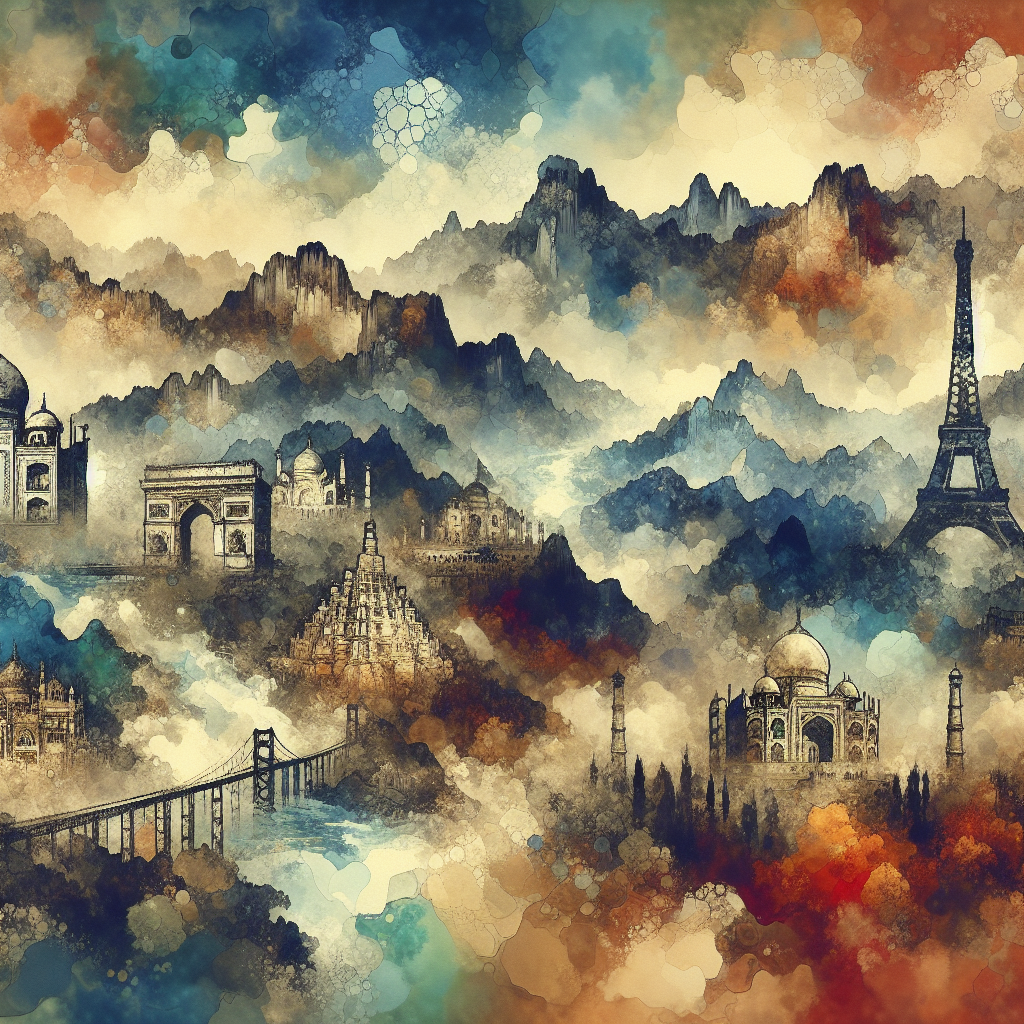
The single most effective thing you can do for someone who says they can't draw is give them something to respond to. A color. A shape. A starting point.
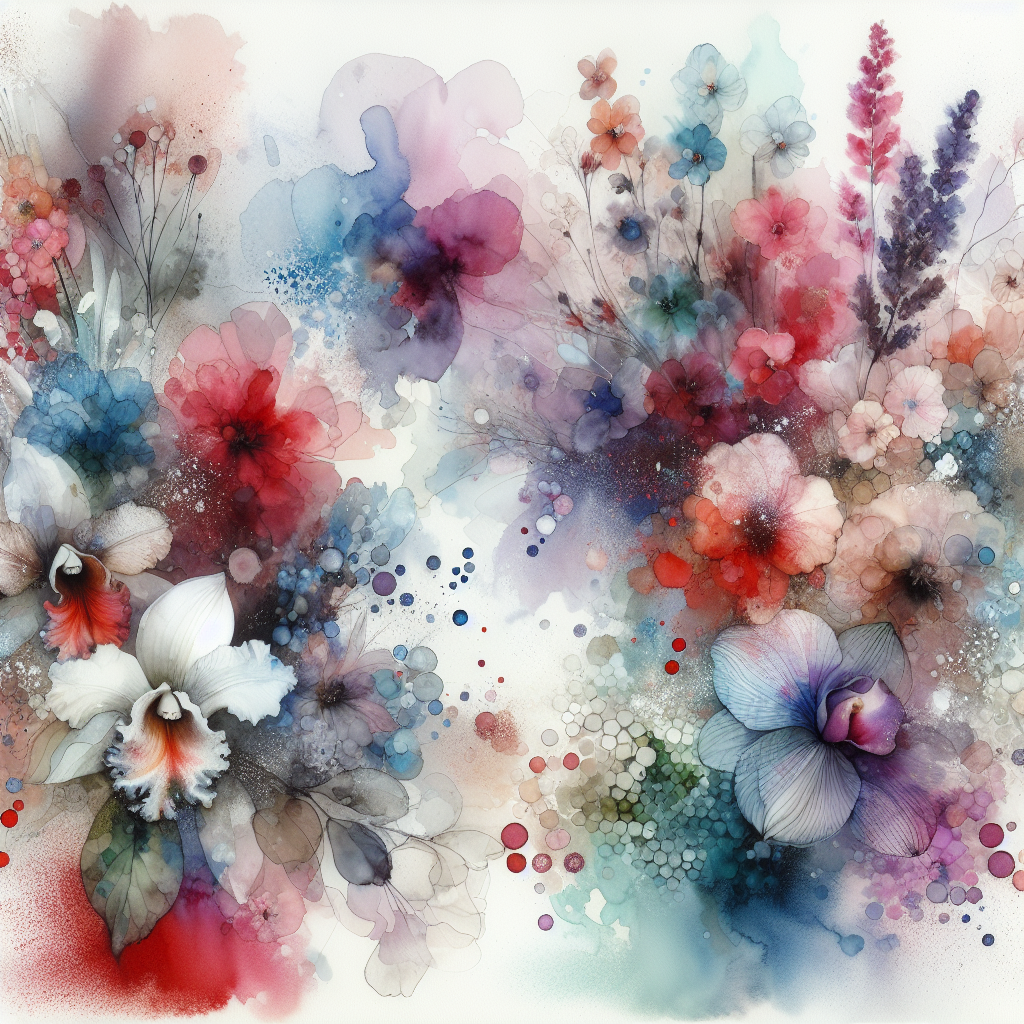
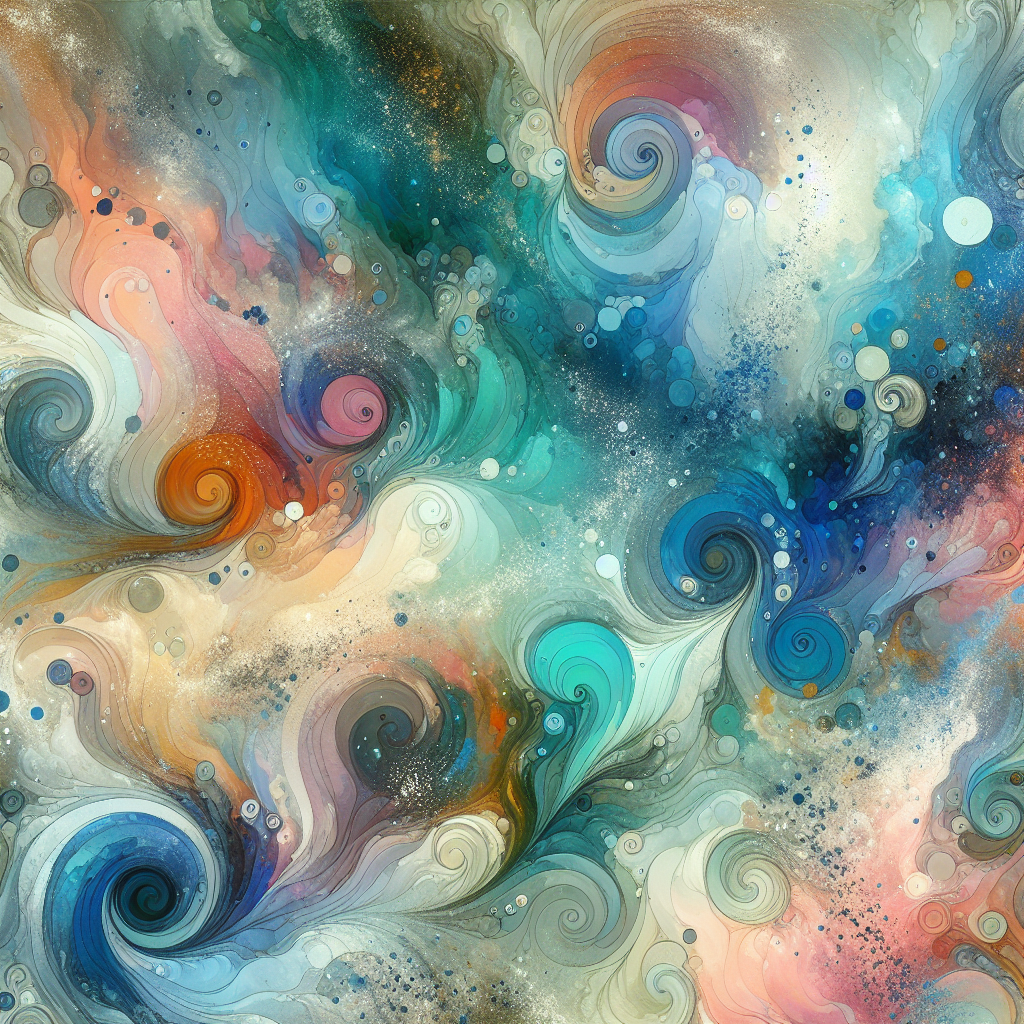
This is the design principle behind reverse coloring: the page arrives already full of color, and your job is to find what's hiding in it. The blank page problem simply doesn't exist.
5 Art Activities That Work Without Any Prior Skill
These aren't workarounds or remedial activities. They're used by working artists and taught in art schools precisely because they bypass the internal critic and get you making marks.
1. Reverse coloring
A pre-colored watercolor background already on the page. Your job is to draw the lines you see in the colors. The design provides visual structure — edges, shapes, movement — so the question is never "what do I draw?" but "what do I see here?" No blank page, no right answer, no skill required.
FreeReverseColoring.com delivers a new design every week, free.
2. Blind contour drawing
Without looking at your paper, draw the outline of any object in front of you. Keep your pen moving continuously and your eyes on the object, not the paper. The result will look strange — distorted, misaligned, sometimes unrecognizable. That's intentional. The point is to make you look carefully and to break the habit of drawing symbols instead of observations. Artists use this exercise to sharpen their eye. It's impossible to do "wrong."
3. Doodling to music
No subject, no intent — just put a pen on paper and move it in response to music. Let the rhythm guide the lines. Let the mood of the song influence the quality of the mark. After ten minutes, look at what's on the page. It will have texture, pattern, energy. It won't look like nothing.
4. Tracing with additions
Trace a photograph or printed image with a fine-liner. The traced lines are a scaffold — they give you the structure of what you're looking at. Then add your own details on top: texture, decoration, invented elements. The traced structure is a foundation; what you add is yours.
5. Collaborative pass-around drawing
Two or more people, one piece of paper. The first person draws for 30 seconds, then passes the paper. Each person can only add to what's already there — no crossing out, no judging, no discussion during the drawing. The resulting image is strange, generative, and genuinely interesting. No individual has to produce a coherent drawing; they just have to add something.
How to Try Reverse Coloring as Your First Real Art Experience
If you want to try the lowest-friction entry point, this is it.
- Go to FreeReverseColoring.com and subscribe to receive a design this week, or download one from the gallery
- Print it on standard printer paper — regular copy paper is fine
- Pick up a pen — the most ordinary pen in your desk drawer is a perfectly good starting point
- Before drawing anything, look at the design for about 30 seconds. Let your eye move across the colors. What catches your attention? Where does the image seem to be suggesting something?
- Put your pen down at the spot that caught your eye and draw one line — follow the color edge, the shadow boundary, whatever visual suggestion you noticed
- Keep going. The colors will continue to suggest the next line. Let them.
The mindset shift that makes this work: you are not inventing a drawing. You are discovering one that's already in the colors. That's a different cognitive task from drawing from scratch — and most people find it dramatically more accessible.
Your first design is waiting
Subscribe for free — new watercolor background every week. No art skill required.
Free forever. No spam. Unsubscribe anytime.
Top tip
Don't try to plan the whole drawing before you start. Focus only on the next single line. Where does this color edge go? What's on the other side of this shadow? One mark at a time, and the drawing accumulates on its own.
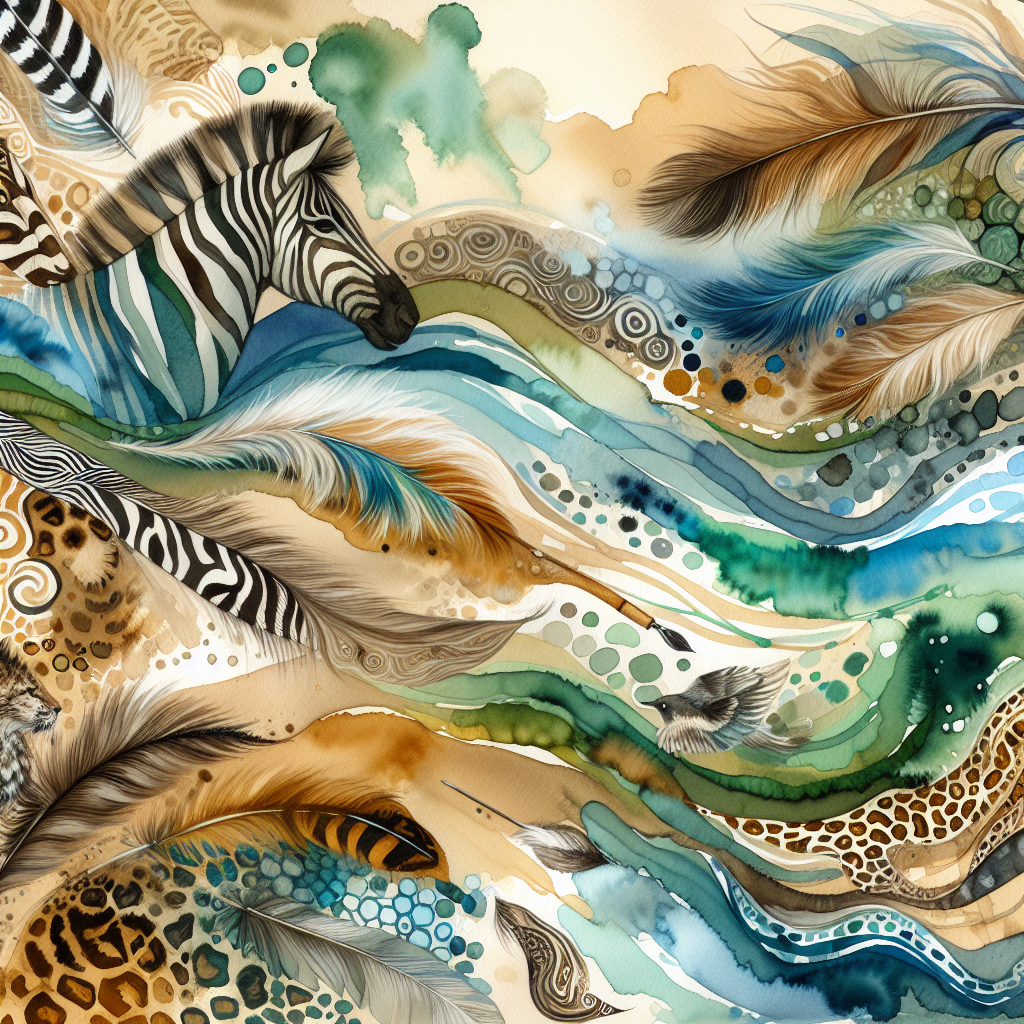
Ephemeral Wild
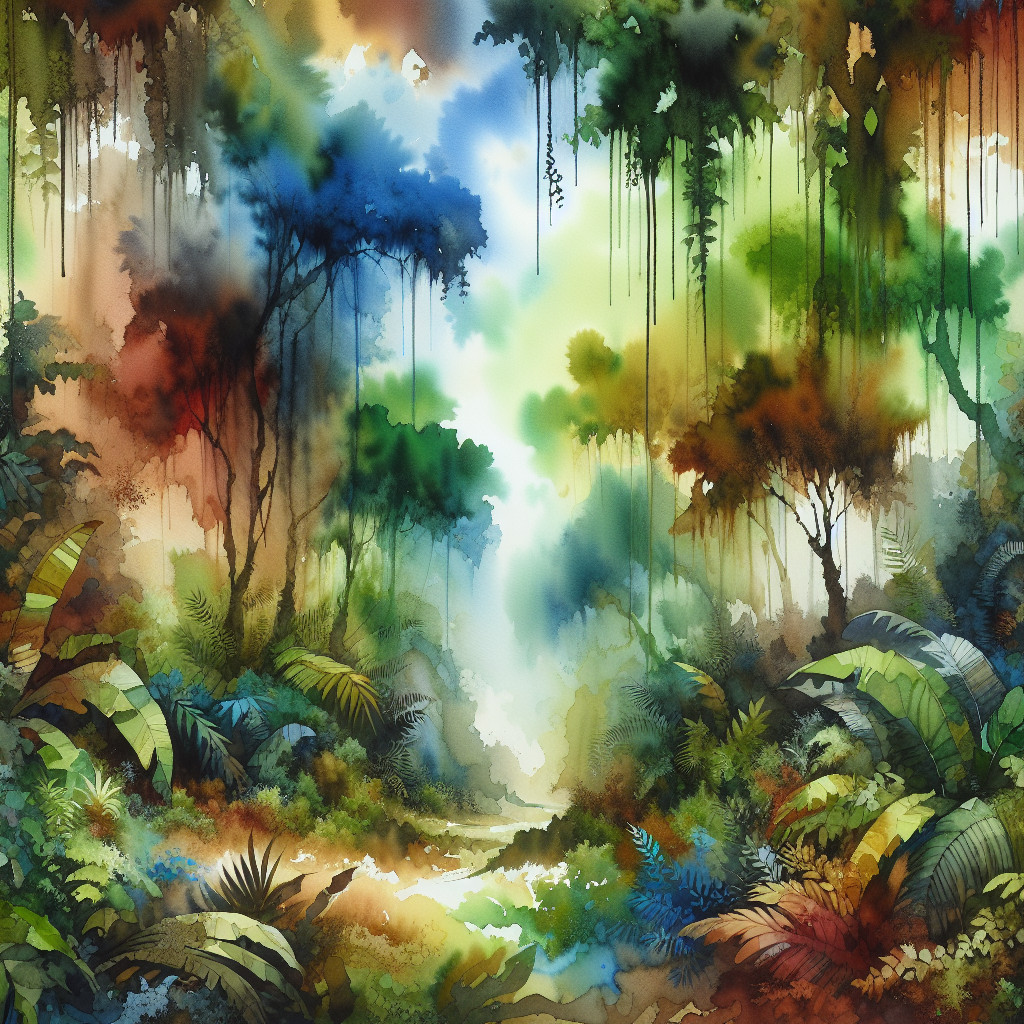
Veiled Verdancy
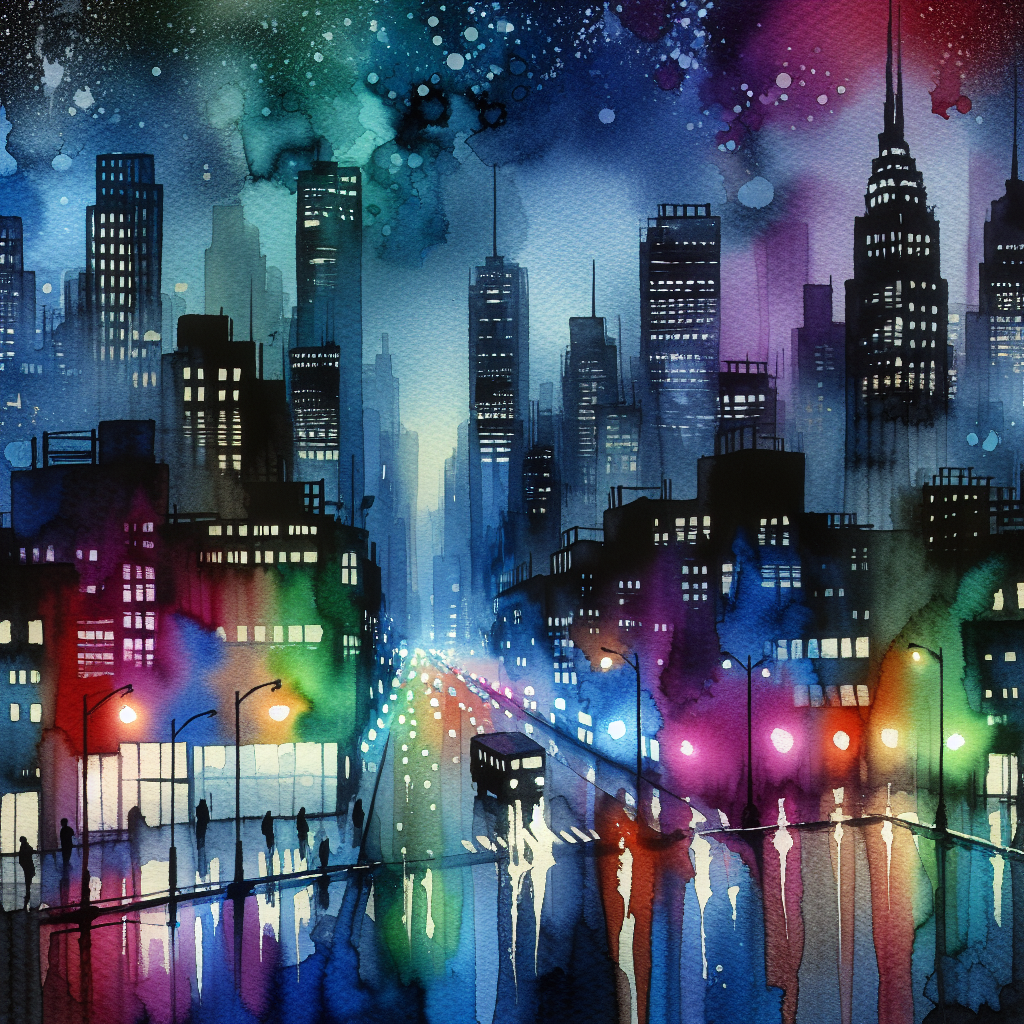
Nocturnal Vibrance
The "Low Expectations" Paradox
There's a counterintuitive principle in creative work: lower expectations tend to produce more satisfying results.
This isn't about lowering standards. It's about the difference between a performance mindset and a practice mindset. When you approach a creative activity expecting to produce something good, you evaluate each mark as it happens: is this right? does this look good? am I doing this correctly? That evaluation is cognitively expensive and interrupts the making.
When you approach it expecting to produce something imperfect — or when you actively give yourself permission to produce something that won't impress anyone — the evaluation stops. You're in learning mode, not performance mode. You notice what's actually on the page instead of measuring it against an imagined ideal.
Research on creative experience supports this: people who begin a creative activity with low expectations report higher satisfaction at the end than those who begin with high ones. The freedom to fail produces better outcomes than the pressure to succeed.
For most people trying reverse coloring for the first time, the low expectations arrive naturally — "I can't draw, so this will probably look bad." That's actually the ideal starting condition. The surprise when something genuinely interesting emerges is a real experience, not a motivational platitude.
What to Do When You're Discouraged by What You Made
At some point you'll finish a session and look at what you drew and think it looks bad. This happens to everyone, including working artists.
A few things worth keeping in mind.
The evaluation immediately after is rarely accurate. First reactions to creative work are almost always harsher than the considered view. Put the drawing away and look at it again the next day. Most people find it more interesting on second viewing than they did right after making it.
"The value was in the making, not the product."
The 20 minutes of focused attention happened. The state-change — the quieter mind, the small satisfaction of having done something with your hands — happened regardless of what's on the page. If you feel calmer or more settled after a session, that's the point.
Comparison will always make things worse. Two people working from the same reverse coloring design will produce something completely unrecognizable from each other's. There's no meaningful basis for comparison when the outcomes are that personal. The only question worth asking is whether the experience felt good while it was happening.
Do another one. The first session is always the most self-conscious. The second is easier. By the fifth or sixth, most people have stopped evaluating entirely and are just drawing.
Frequently Asked Questions
What if I start drawing and it looks terrible?
There is no "terrible" in reverse coloring because there are no predefined right answers. The only person evaluating your drawing is you — and the purpose is not to produce gallery-worthy art but to experience the process of making something. Most people are surprised by what emerges when they stop trying to control the outcome.
How old is too old to start drawing?
There is no upper limit. Reverse coloring is used in senior care settings with residents in their 80s and 90s. The activity adapts to any physical ability — if you can hold a pen, you can do it. The research on creative activity and cognitive health in older adults is consistently positive; starting at any age produces real benefits.
Can you actually learn to draw as an adult?
Yes — drawing is a learnable skill at any age. But drawing skill is not required to experience the creative and psychological benefits of making art. Stress reduction, focused attention, the quiet satisfaction of making something — none of these require technical proficiency. Start with the experience. The skill develops naturally if you keep going.
What's the minimum I need to get started?
A printer and a pen. Subscribe at FreeReverseColoring.com to receive this week's design. Print it. Pick up whatever pen is nearest. That's everything you need.
What if I try it and still feel like I can't draw?
Try it again. And again. The first session is the most self-conscious because it's unfamiliar. Most people who say it didn't work have tried once and evaluated the result immediately. Give it a few sessions before deciding. The internal critic quiets with repetition.
Your First Design Is Waiting
If you've made it to the end of this article, you've spent more time thinking about drawing than actually drawing. That's the trap.
Subscribe below and get a design this week. Print it. Put a pen in your hand. Start with one line — the first edge your eye finds in the colors.
There's nothing to prove and nowhere to fail. The drawing is already in the page. You just have to find it.