What Is Reverse Coloring? A Complete Guide for Beginners
FreeReverseColoring · Editorial
Quick Answer
Reverse coloring is the opposite of traditional coloring books. Instead of filling in pre-drawn outlines with color, you receive a fully pre-colored watercolor background and draw your own lines, shapes, and details on top. There are no wrong answers — you decide what you see in the colors and bring it to life with a pen.
Most creative activities start with a blank page and a demand: make something. For people who don't consider themselves artists, that demand can feel paralyzing before the pen even touches the paper. Reverse coloring removes it entirely.
The page arrives full of color. Your only job is to find what's already hiding inside it.
How Reverse Coloring Differs from Traditional Coloring
In a traditional coloring book, the illustrator has already made every creative decision. They drew the lines; they decided the composition, the subject, the level of detail. Your role is to fill in the spaces they left — choosing colors, staying inside the lines, executing their vision. It's a pleasant activity, but you're a participant in someone else's drawing.
Reverse coloring inverts that relationship completely.
"The color is provided. The outlines are yours."
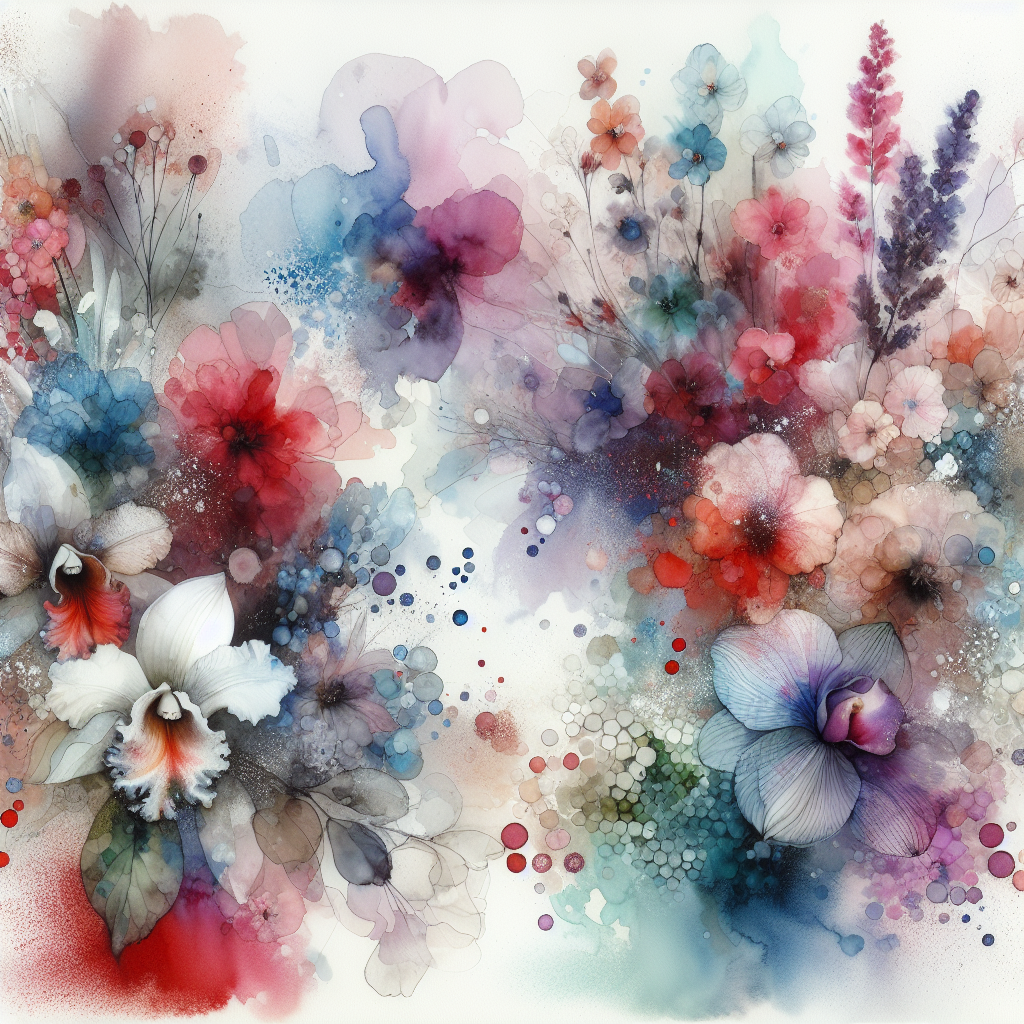
You receive a watercolor background — the kind that blooms with rich, unpredictable color, where teal bleeds into gold and pink dissolves into shadow. There are no black lines telling you what to draw. Instead, you look at the colors and find the shapes they suggest: the curl of a wave in a sweep of blue, the curve of a petal where rose meets yellow, the silhouette of a tree in a dark vertical stroke.
Then you draw what you see.
Two people can start from the same design and produce something unrecognizable from each other's finished work — because they each saw something different in the same colors. One person finds a garden. Another finds a face. Neither is wrong, because there was never a predetermined right answer.
This is the core distinction: in traditional coloring, you're constrained by the illustrator's vision. In reverse coloring, the illustration is entirely yours.
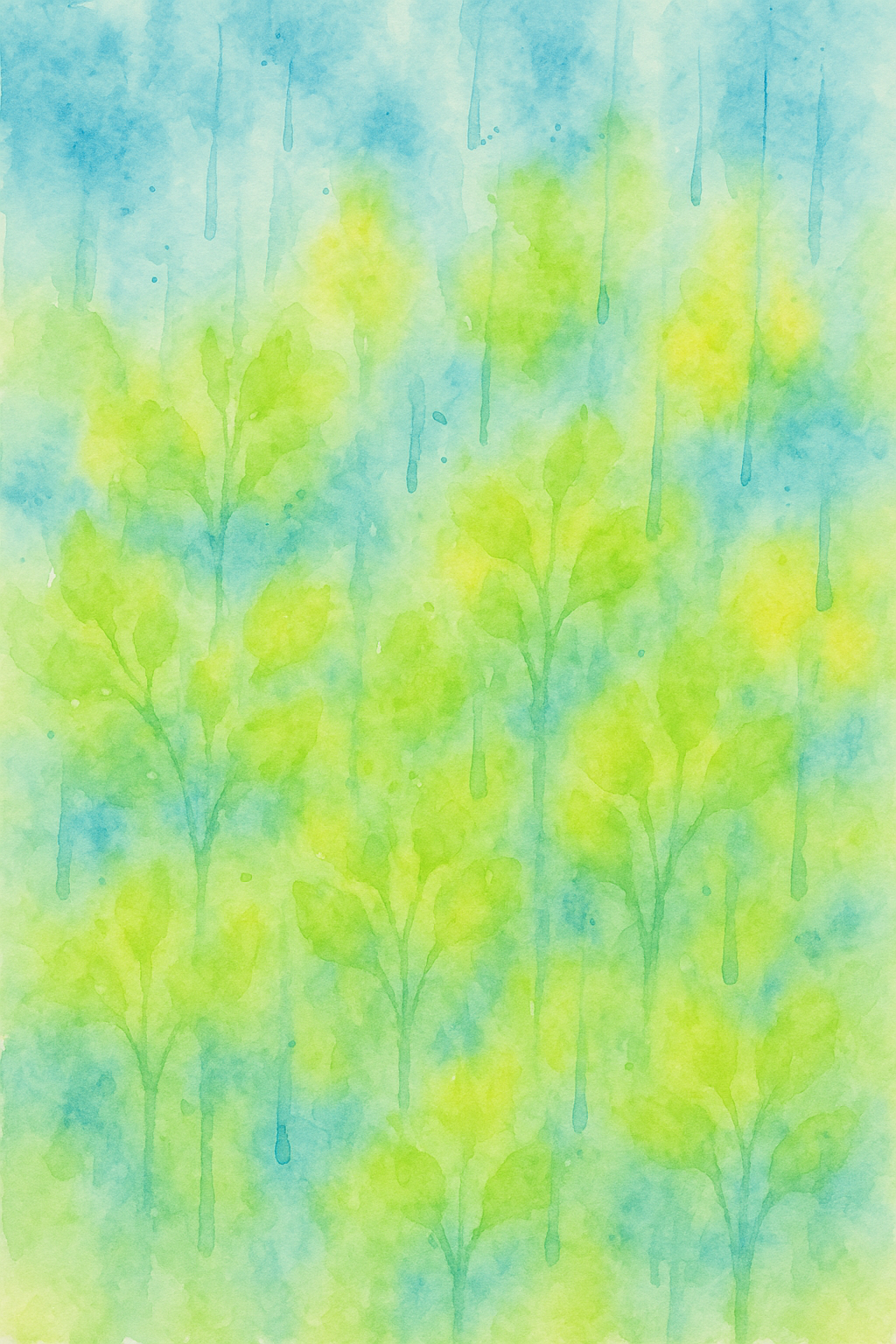
Watch how outlines bring a watercolor background to life — this is reverse coloring.
The History and Origins of Reverse Coloring
The idea of drawing on top of pre-colored backgrounds has roots in art education, where instructors have long used colored or painted surfaces as starting points for drawing exercises. The concept gained mainstream popularity in the early 2020s as physical reverse coloring books appeared in bookshops and major retailers, introducing the technique to a much wider audience.
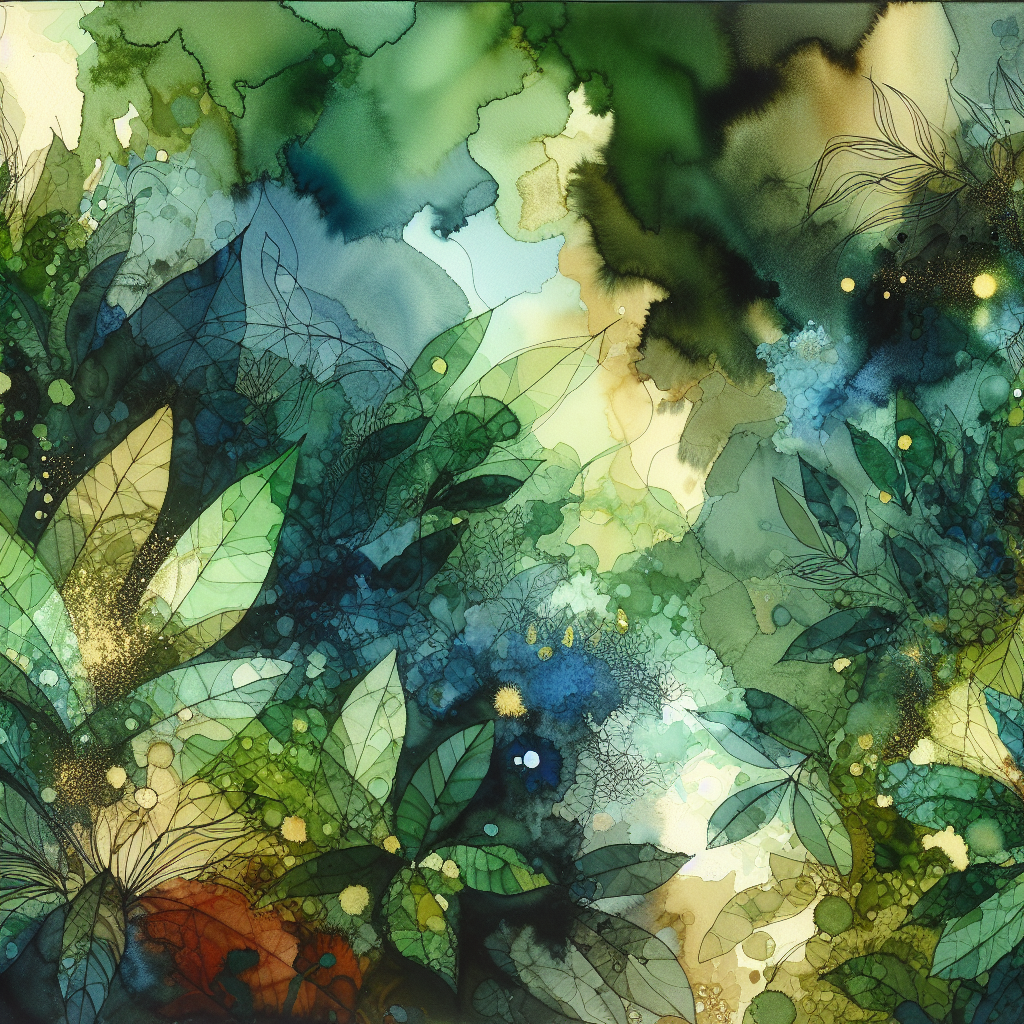
The core insight is straightforward: watercolor paintings naturally suggest forms. Loose color fields create edges, gradients create depth, and the eye instinctively finds shapes in abstract color. Rather than painting over a drawing, the sequence is reversed — paint first, draw second.
Since then, the concept has expanded beyond physical books. Digital formats, printable downloads, and subscription services have made reverse coloring accessible without a purchase. FreeReverseColoring.com takes this a step further: every week, a new AI-generated watercolor background is designed and delivered directly to subscribers' inboxes, free. New design. New blank slate. New thing to discover.
What You Need to Get Started
Almost nothing.
The essentials:
- A printer (or a phone or tablet if you prefer drawing digitally)
- A pen
That is genuinely the complete list. Any pen works — a standard ballpoint, a fine-liner like a Micron 01 or 03, a gel pen. The line quality varies, but the experience doesn't. Fine-liners produce cleaner, more precise lines. Ballpoints are more forgiving for beginners. Neither is better; they're just different.
Worth trying when you're ready:
- Colored pens or colored pencils to add secondary color layers over the watercolor background
- A slightly heavier cardstock instead of standard printer paper — the drawing feels more substantial
What to avoid:
- Felt-tip markers with broad nibs — they tend to bleed through standard printer paper and can obscure the watercolor background beneath
The intentional simplicity is part of the point. No special supplies. No setup ritual. No investment required. Just a design and something to draw with.
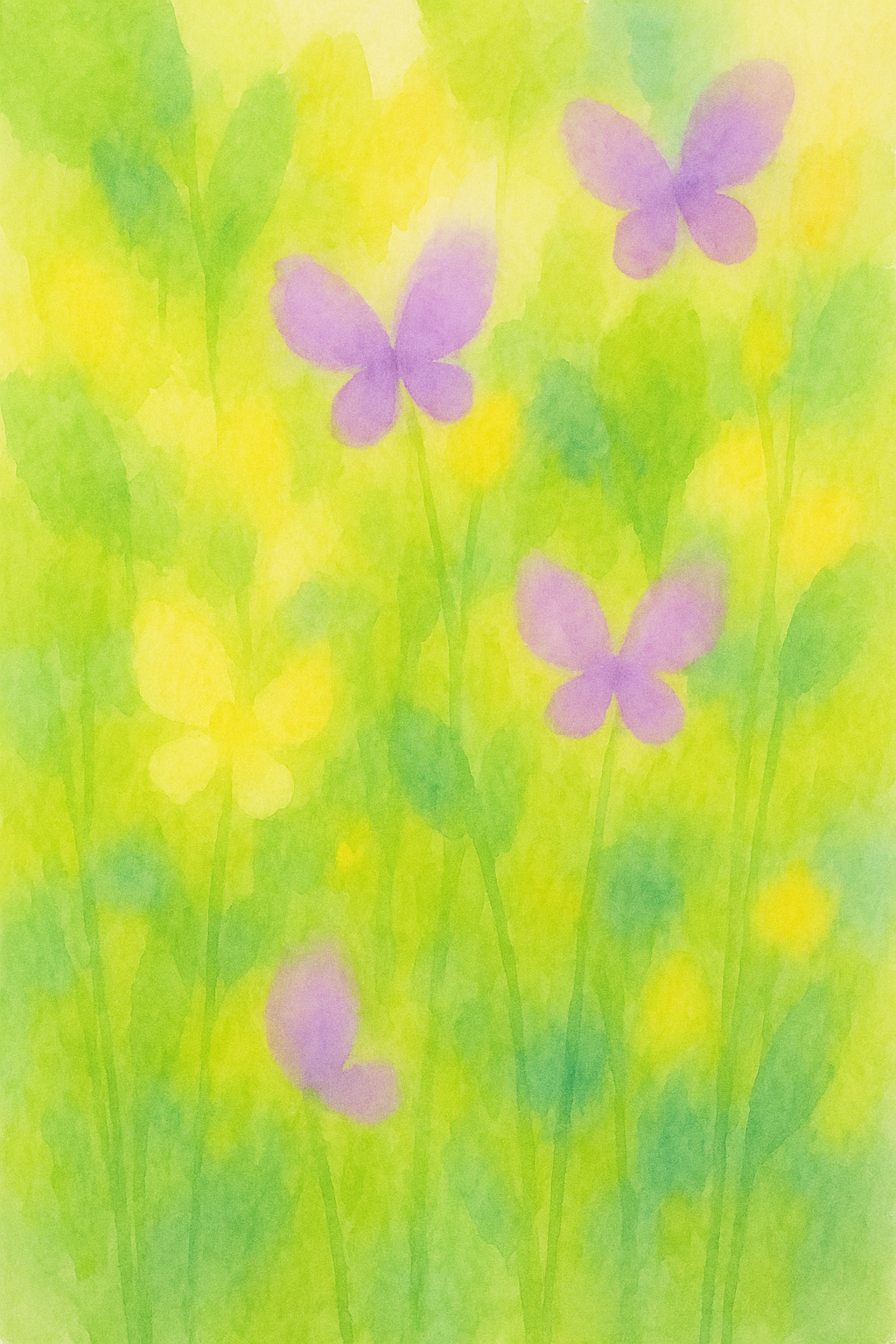
Butterfly Serenade

Nebulous Drifts

Cosmic Voyage
Who Benefits Most from Reverse Coloring
Reverse coloring works for a wide range of people precisely because it asks nothing of them artistically. A few groups find it particularly well-suited to what they need.
People who feel intimidated by the blank page. The design arrives colorful and rich. The pressure of making something from nothing simply isn't there. The colors give your eye a starting point the moment you look at the page.
Adults who used to make art and stopped. Most people who say "I used to draw" stopped for the same reason: real life got busier, and the low-stakes creative time of childhood didn't survive into adulthood. Reverse coloring recreates that low-stakes quality. There's nothing to perform, nothing to post, nothing to prove.
People managing stress or anxiety. The narrow, focused attention required to draw — what line do I add next, where does this edge go — is a natural state-change for an anxious mind. If you're interested in the research behind this, our piece on art therapy activities you can do at home explores the connection further.
Seniors in care settings. Reverse coloring is one of the most inclusive group art activities available — it requires no setup, no special supplies, no skill, and produces something visually satisfying regardless of who made it. Activity coordinators have found it works across a wide range of cognitive and physical ability levels.
Children who've outgrown fill-in coloring. Standard coloring books are passive. Reverse coloring asks children to make creative decisions — what do I see here, where should I draw a line — which is a genuinely different cognitive challenge and one that holds attention longer.
Therapists and activity facilitators. The zero-stakes, open-ended nature makes it one of the more useful take-home creative activities for clients. It produces something to discuss in a session without creating performance anxiety beforehand.
How to Use a Reverse Coloring Page (Step-by-Step)
-
Get a design. Subscribe at FreeReverseColoring.com to receive this week's design, or browse the gallery for past designs. Download and print on standard printer paper, or open on a device.
-
Look before you draw. Spend 30 seconds just looking at the design before picking up your pen. Let your eye move across the colors. What shapes do you see starting to emerge? A horizon? A face? An animal? An abstract pattern? Don't force it — let the first thing that catches your eye be your starting point.
-
Start with one line. Pick the thing your eye found first and draw one line that follows it. A color edge, a shadow boundary, the suggestion of a curve. One line is enough to break the paralysis.
-
Follow what the colors offer. The colors will continue to suggest shapes as you draw. Let them. You don't need to plan the whole drawing before you start — the design will guide you.
-
Draw what you want, not what's "correct." There is no correct interpretation of the colors. If you see a mountain where someone else would see a wave, draw the mountain. If you see a face where someone else would see flowers, draw the face. Both are valid.
-
Stop when it feels complete. There's no requirement to fill every part of the design. Some of the most satisfying results leave large areas of pure watercolor untouched, using drawn lines only where they add something.
-
Step back and look. The thing you made didn't exist before you sat down. That's worth a moment.
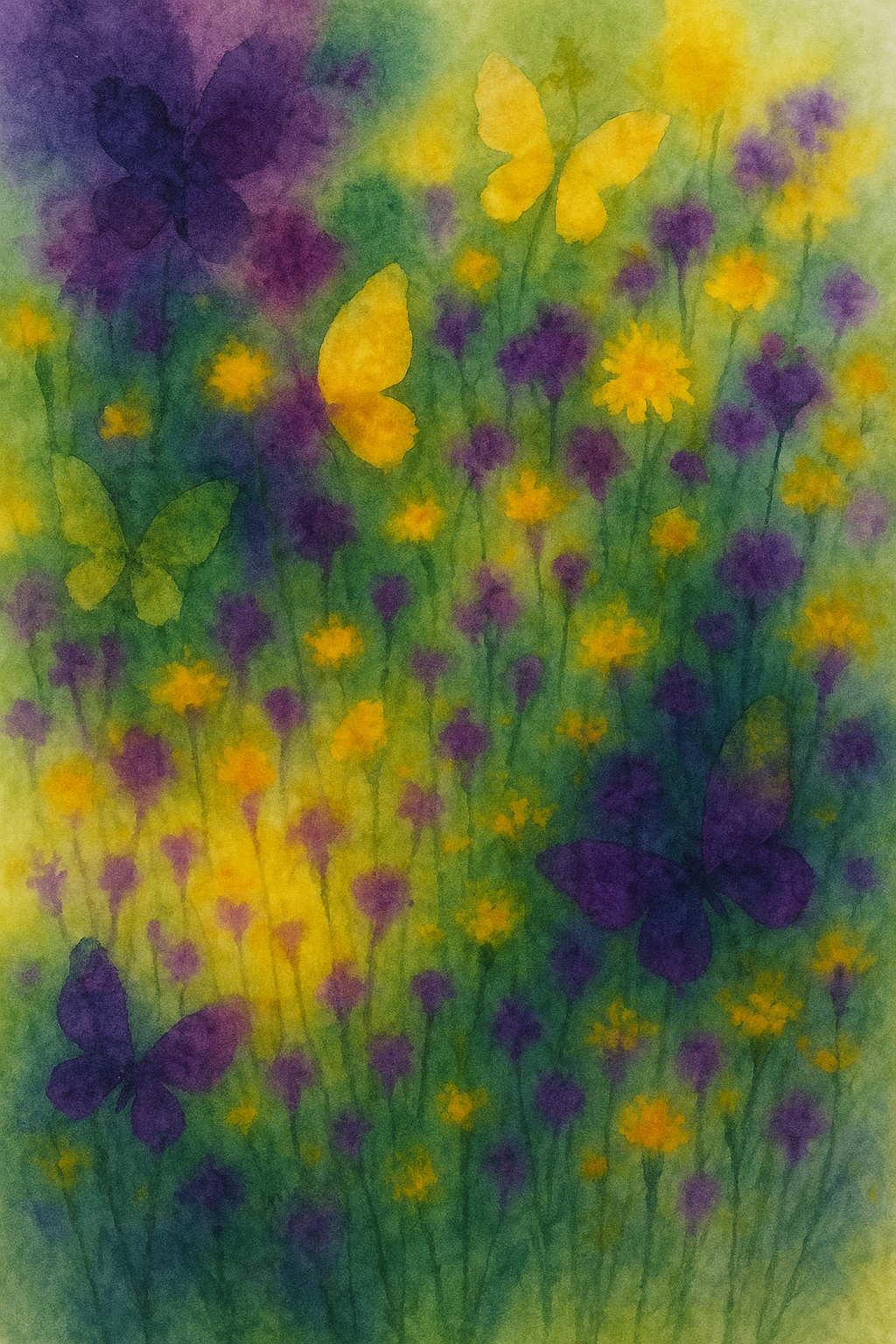
Try it now — draw on this watercolor with your mouse or finger
Try it this week — free design in your inbox
New watercolor background every week. Print, grab a pen, draw your outlines.
Free forever. No spam. Unsubscribe anytime.
Top tip
If you get stuck looking at the design and not seeing anything, try this: find the darkest part of the image and start there. Dark areas almost always suggest depth or shadow — the edge of something, the underside of a surface. One line at the darkest point and the rest tends to follow.
Why It Works — The Creative and Psychological Benefits
The psychology of reverse coloring is more interesting than it first appears.
It solves blank page paralysis. The single biggest barrier to creative activity for most adults isn't lack of skill — it's lack of a starting point. A blank page demands that you invent both what to draw and how to draw it simultaneously. Reverse coloring eliminates the first demand entirely. The what is already there, waiting to be found.
It trains observational drawing. Looking at a watercolor and finding the forms within it is exactly what artists call "seeing." The ability to observe shape, edge, light, and depth and translate it to line is a real skill — and reverse coloring builds it quietly, without feeling like a lesson.
It builds creative confidence by removing the failure state. There's no predefined correct outcome to measure yourself against. You can't get it wrong. For people who have spent years telling themselves they're not artistic, this matters: they make something, it looks good, and no one told them they did it incorrectly.
The focused attention is itself restorative. Drawing requires you to attend, specifically and narrowly, to the question of what mark to make next. This kind of focused, low-stakes attention is incompatible with anxious rumination. You can't worry about tomorrow while tracking a color edge with your eye and hand simultaneously. For many people, 20 minutes of reverse coloring produces a noticeable state-change.
Each session is genuinely different. Unlike traditional coloring — where once a page is colored it's done — the same reverse coloring design can be drawn many times and produce something new every time. The underlying color never runs out of suggestions.
Frequently Asked Questions
Do I need to be able to draw to try reverse coloring?
No. Reverse coloring is specifically designed for people who don't consider themselves artists. The pre-colored background gives your eye a starting point, and since there are no predefined lines to stay within or replicate, any mark you make is valid. The activity has no failure state.
What kind of pen should I use?
Any pen works. A standard ballpoint is completely fine for beginners. A fine-liner like a Micron 01 or 03 gives cleaner, more controlled lines if you want that quality. Gel pens produce a smooth, slightly glossy line. Avoid broad felt-tip markers that bleed through paper. If you want to add color on top of the watercolor background, colored pencils or watercolor pencils work well without obscuring the design beneath.
Is reverse coloring the same as art therapy?
Not clinically. Art therapy is a professional mental health treatment delivered by a licensed art therapist as part of a structured clinical plan. Reverse coloring is a therapeutic art activity — self-directed, accessible, and supported by research on creative activity and wellbeing — but it is not a substitute for professional mental health care.
Where can I find free reverse coloring pages?
FreeReverseColoring.com delivers a new AI-generated watercolor design to your inbox every week, free. You can also browse the gallery on the site to download past designs at any time. No purchase required, ever.
Can I use reverse coloring pages with a group?
Yes — and it works exceptionally well in group settings. When everyone starts from the same design and produces something completely different, comparing the results becomes a natural and often surprising conversation. Reverse coloring is used widely in senior care settings, therapy groups, classrooms, and corporate workshops.
Is reverse coloring suitable for children?
Yes, for children roughly five and up. Younger children can participate with guidance, though the focus for them tends to be on the experience of mark-making rather than representational drawing. Older children and teenagers often find reverse coloring more engaging than standard coloring books because it presents a genuine creative challenge — what do I see in these colors? — rather than asking them to execute someone else's design.
Try Reverse Coloring This Week — Free
Every week, FreeReverseColoring.com generates a new watercolor background and delivers it to subscribers' inboxes. The designs are created to have the visual richness that makes reverse coloring work — color fields with movement, contrast, and suggestion.
You don't need art experience. You don't need special supplies. You need a printer and a pen.
If you've ever looked at a watercolor painting and thought I wonder what's in there — that's the whole premise. Subscribe below and find out what you see.