Free Art Activities for Seniors: A Coordinator's Guide
FreeReverseColoring · Editorial
Quick Answer
Art activities improve cognitive function, reduce isolation, and give seniors a sense of purpose — but coordinators face real challenges: varied ability levels, tight budgets, and limited setup time. This guide covers 7 art activities ranked by accessibility, with specific guidance on running reverse coloring sessions that work for everyone from independent participants to those with limited mobility or dexterity.
Why Art Matters for Seniors (Beyond Passing the Time)
Activity coordinators often have to justify programming choices to administrators, families, and sometimes to skeptical participants themselves. The case for regular art activities in senior settings isn't hard to make — but the research behind it is more specific and more substantial than most people realize.
Cognitive benefits. A 2015 study published in Restorative Neurology and Neuroscience followed older adults through art-making activities and found measurable improvements in attention, processing speed, and working memory. The likely mechanism is that visual art-making engages multiple cognitive systems simultaneously: visual processing, fine motor coordination, decision-making, and spatial reasoning. This cross-system engagement appears to strengthen cognitive resilience over time. It doesn't reverse dementia, but it supports what neurologists call "cognitive reserve" — the brain's capacity to work around damage.
Emotional and psychological benefits. Research from Johns Hopkins found that participation in arts programming in senior residential settings was associated with significantly better self-reported health, fewer doctor visits, reduced medication use, and less depression. The study followed adults aged 65 and older over two years and found these effects held even after controlling for initial health status.
Social function. Group art activities create something that purely recreational activities like watching a movie don't: shared creative product. When participants make something together — even individually, in a shared session — they have a concrete topic for conversation. "What did you draw?" is a natural opening that connects people across different backgrounds and cognitive levels.
Sense of purpose and agency. For many seniors in residential care, the experience of being able to create something — something that didn't exist before they made it, something that reflects their choices — is powerful in a setting where many daily choices have been removed. Art activities restore a small measure of autonomy that matters more than it might seem.
"The creative product matters less than the creative act. What seniors gain from art-making is mostly not the artwork — it's the engagement, the agency, and the conversation it generates."
Challenges Coordinators Actually Face
Theory is one thing. The practical reality of running art programming in a senior center, assisted living facility, or nursing home involves constraints that most research papers don't address.
Varied ability levels in the same room. A typical group session might include participants who are independent and highly capable alongside those with moderate cognitive impairment, significant tremor, limited vision, or reduced grip strength. Activities that work well for one subgroup can feel humiliating or impossible for another. Finding activities that scale across this range without creating two-tier experiences is one of the most consistent challenges coordinators face.
Budget constraints. Many programs operate with minimal art supply budgets. Specialty materials — quality paints, canvases, sculpting clay — may be available only for special occasions. Sustainable programming needs to be buildable on modest, recurring resources.
Setup and cleanup time. With a full activity calendar, activities that require extensive setup before or cleanup after are harder to schedule consistently. Wet paint, complex materials, and equipment-intensive projects compete with time and staffing.
Engagement with reluctant participants. Not everyone considers themselves an "art person." For seniors who have spent decades believing they can't draw or paint, an art activity can feel like an invitation to fail publicly. Overcoming this resistance requires activities that genuinely have no failure mode.
Cognitive accessibility. As cognitive impairment increases, the ability to follow multi-step instructions, hold a concept in mind, and make sequential decisions decreases. Activities that work for cognitively intact seniors may be frustrating or inaccessible for those with moderate dementia.
7 Art Activities for Seniors, Ranked by Accessibility
The ranking below considers four factors: cognitive demand, physical demand (fine motor + grip), materials cost, and setup/cleanup time.
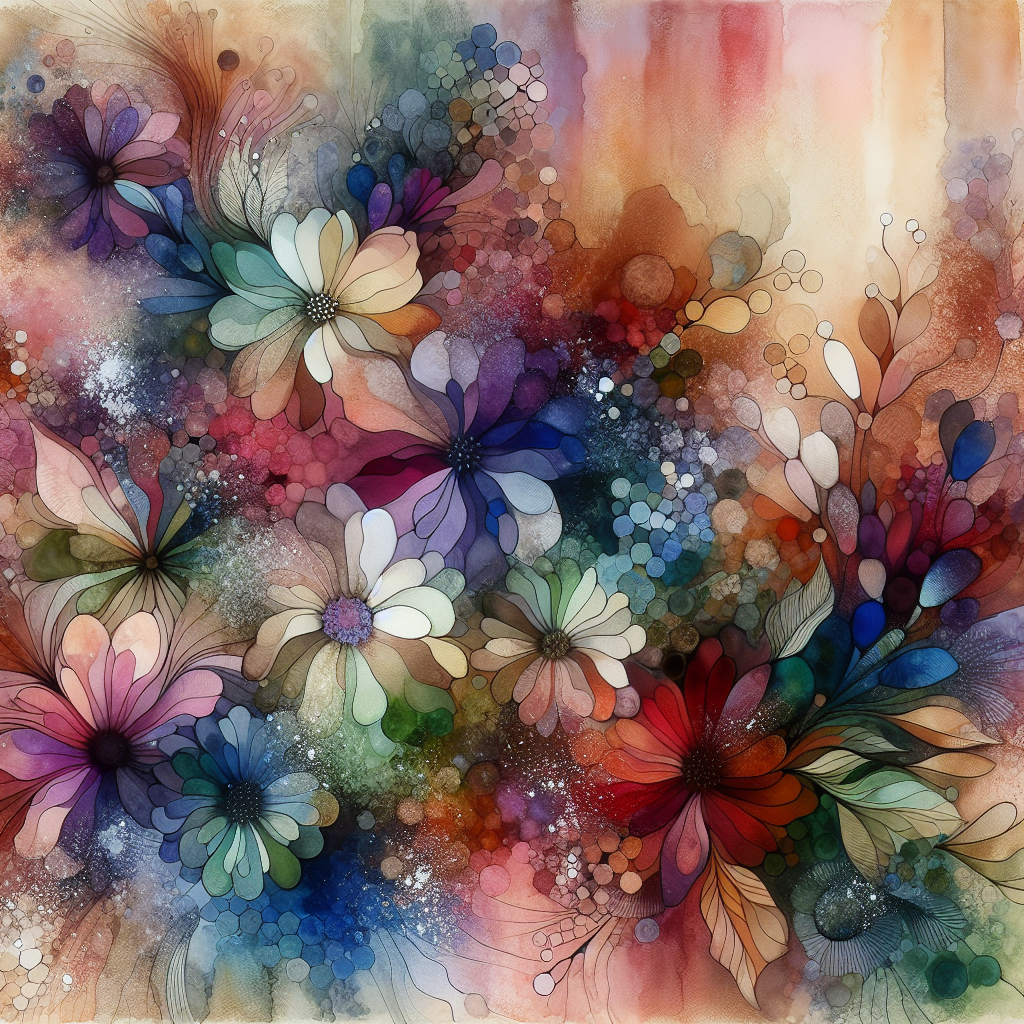
1. Reverse coloring (most accessible). A printed, pre-colored watercolor image serves as the starting point. Participants add outlines, forms, and marks on top of the existing image. Cognitive demand is minimal — there's no blank page to confront, no color decisions to make, no planning required. Physical demand adjusts to the participant: someone with good dexterity can use a fine-point pen; someone with tremor or reduced grip can use a broad marker or even a crayon. Cost is low: ink to print the image plus basic drawing tools. Setup is minimal: print and distribute. See more on this activity below.
2. Watercolor washes. Loading a broad brush with diluted paint and applying it to wet paper produces immediate, beautiful results with minimal technical skill. Participants can work abstractly (just colors and shapes) or try simple representational subjects. The main challenge is physical setup — water cups, paint palettes, paper — but cleanup is manageable. Not ideal for participants with significant tremor.
3. Collage. Tearing and gluing pre-cut magazine images, colored paper, and found materials requires only basic grip and decision-making. It scales well across cognitive levels because the task is flexible: more cognitively intact participants can create thematic arrangements; those with impairment can be supported in making simple choices about color and texture. Setup is moderate; cleanup is straightforward.
4. Stamping and printing. Pre-inked stamps require only pressing — minimal grip, no fine motor precision. Results are immediate and visually satisfying. Foam stamps can accommodate very limited hand strength. The main limitation is cost if you're buying varied stamps; sponge stamps can be made cheaply.
5. Painted rocks or stones. The three-dimensional surface is easier to grip and hold than flat paper for participants with certain mobility limitations. Acrylic paint on smooth stones dries permanently, producing a lasting keepsake. Cognitive and motor demands are moderate; it works best for higher-functioning participants.
6. Nature printing. Applying paint to leaves, flowers, or vegetables and pressing them to paper produces vivid, reproducible prints with no drawing skill required. Seasonally limited; works best spring through fall. Setup involves paint application to the natural objects, which requires some coordination.
7. Guided watercolor from photo reference (most demanding). Following a simple instruction to paint from a photograph requires sustained attention, sequential decision-making, and moderate fine motor control. Produces the most individualized results, but excludes participants who struggle with multi-step tasks or find open-ended decisions stressful.
Reverse Coloring for Senior Settings: What Makes It Different
Of all the activities on the list above, reverse coloring is worth examining in more depth because it solves several coordinator challenges simultaneously.
Zero blank-page problem. The most consistent barrier to art engagement for seniors is the belief that they "can't draw" or "aren't creative." This belief is usually formed over decades and is remarkably resistant to reassurance. Reverse coloring removes the condition under which it applies: there's nothing to create from scratch. The image is already beautiful. The participant is responding to it, not generating it. This bypasses the "I can't do art" resistance entirely.
Inherently adjustable difficulty. A participant with high dexterity and strong vision can trace fine botanical details. A participant with limited grip strength and reduced vision can add broad strokes of a dark marker over the lightest areas of the print. Both are doing the same activity with the same image. Neither is doing a "modified" version that signals lower capacity to the room.
Conversation starter. Each person's interpretation of the same watercolor background produces a different result, which creates natural sharing opportunities. "What did you see in yours? I found a bird shape — did you?" This kind of organic conversation around shared creative work is difficult to engineer and tends to happen naturally with reverse coloring.
No skill gap between participants. Activities like guided painting or nature drawing naturally reveal differences in skill, which some participants find uncomfortable. Because there's no "correct" result for a reverse coloring session, there's no visible hierarchy of quality in the room.
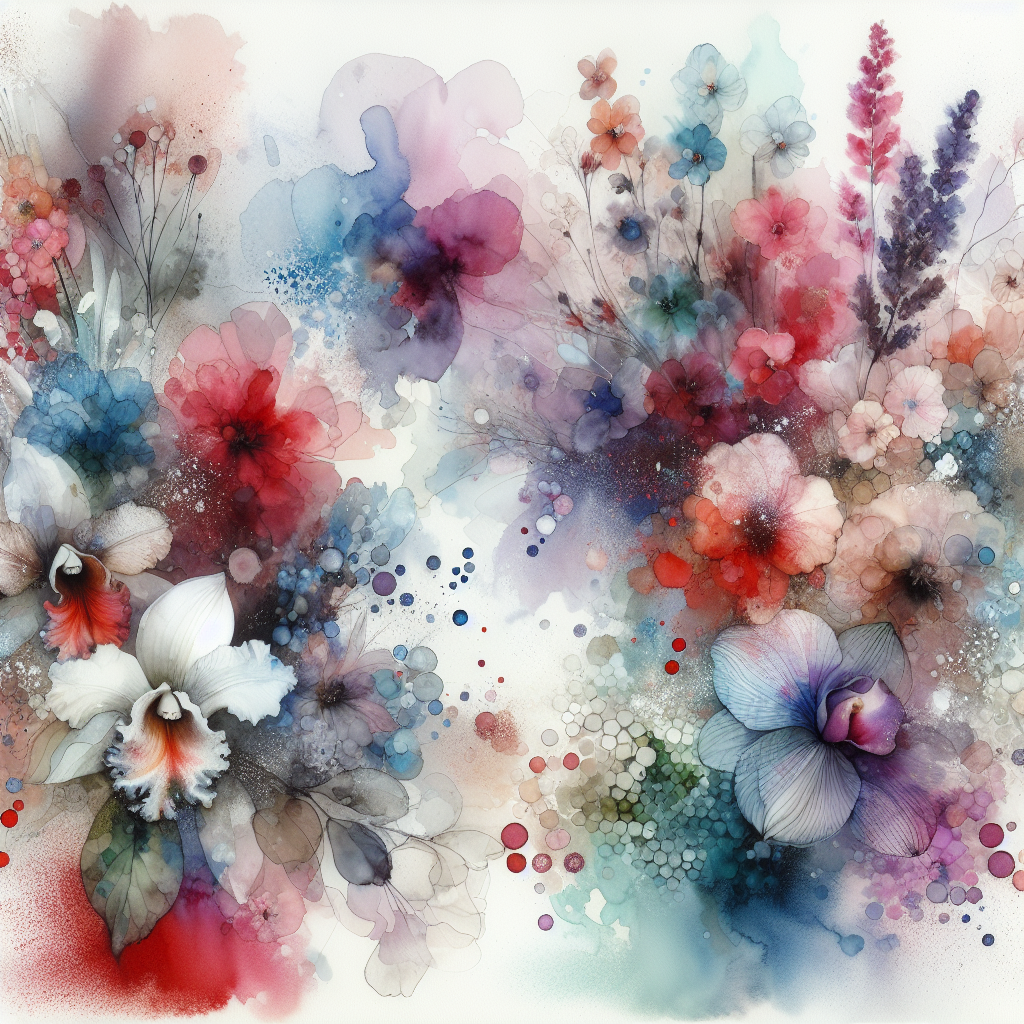
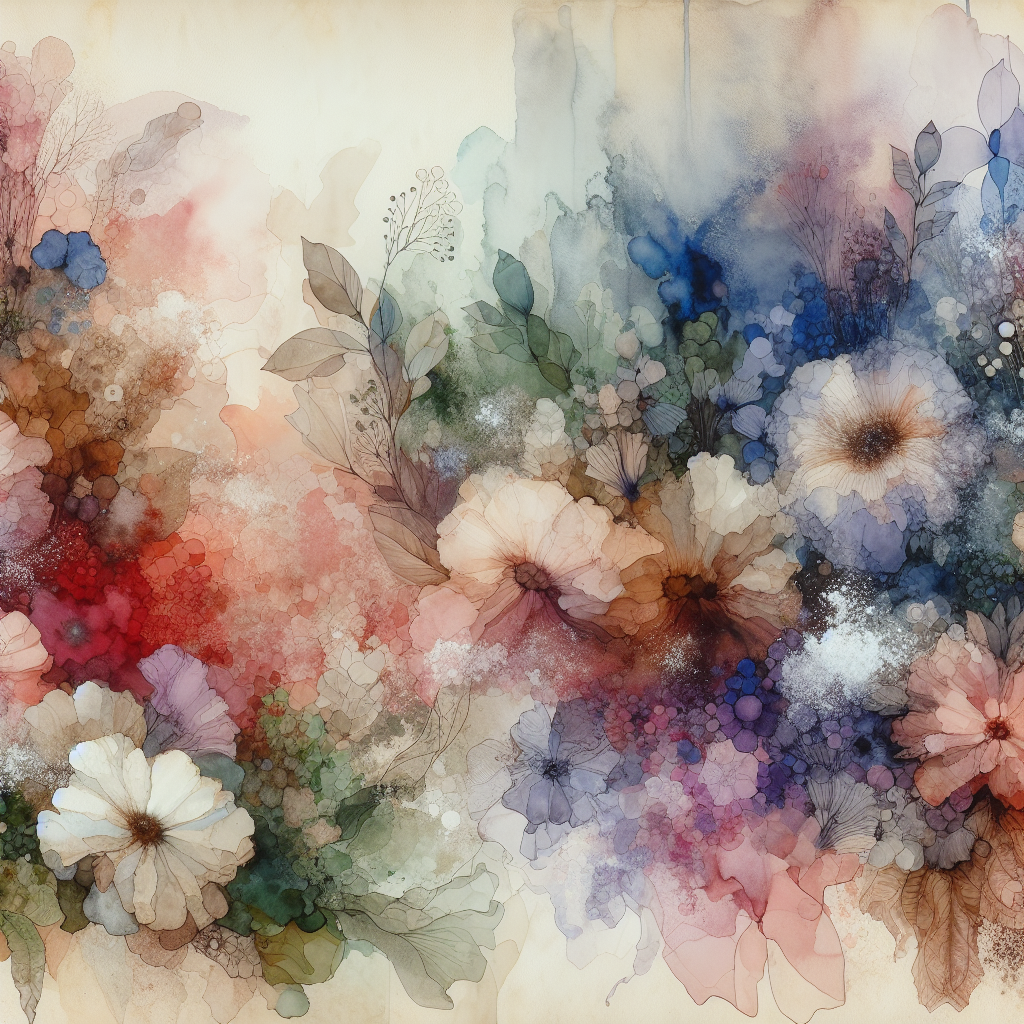
FreeReverseColoring.com delivers new designs every week and they're free to access and print. For a typical group session of 10-15 participants, you'd print 10-15 copies of the same design — or two or three different designs for variety. The only recurring cost is ink and paper.
Whispering Petals
Whispers of Bloom
Whispering Blossoms
How to Run a Reverse Coloring Session
A typical 45-60 minute group session in a senior setting:
Before the session (10 minutes of prep). Print one copy of the chosen design per participant, plus a few extras. Lay out drawing tools at each seat: black fine-point markers (Sharpie or equivalent) work well as the primary tool. Add broad markers and soft pencils as alternatives for participants with limited dexterity. You don't need special paper — the designs print well on standard copy paper. If you want to offer color options (colored pencils, crayons), put them in the center of each table as a shared resource.
Opening (5 minutes). Introduce the image. Ask what participants notice first — the colors, a particular area, a general feeling. Don't explain what they're "supposed" to do with it. The openness is a feature, not an omission.
The session (30-40 minutes). Let participants work. Circulate to offer encouragement, answer questions, and gently engage participants who seem uncertain. For those who genuinely don't know where to begin, suggest tracing the edges of a color they can see clearly, or finding the darkest area and starting there.
Sharing (10-15 minutes). Invite participants who want to share their work to hold it up or pass it around. Ask open questions: what was your favorite part? what did you see that you didn't expect? This is the richest part of the session for many participants.
Top tip
For participants with moderate cognitive impairment, simplify the introduction: "We're going to draw on this picture. You can add any lines or shapes you see." Keep instructions to a single step. For participants who become frustrated, redirect by asking what color they like best and suggesting they trace around it.
Adapting to Different Ability Levels
A well-run session should feel seamless for participants at very different ability levels. Here are specific adaptations that don't call attention to themselves:
For limited grip strength. Foam grip wraps (available from occupational therapy suppliers, often already in your facility) can be placed over standard pens and markers. Alternatively, use large-diameter markers or crayons from the start — they require less grip precision and are available to everyone, so they don't signal accommodation.
For reduced vision. Print designs at 125-150% scale for participants with low vision. High-contrast designs (darker watercolor areas) are easier to work with than very pale, light designs. Have a magnifying glass available if needed.
For tremor. Larger marks work better than fine marks — this is the one case where a broad crayon is genuinely easier to use than a fine-point pen, and the result can look intentionally expressive rather than imprecise. Anchor the paper with a clipboard or non-slip mat.
For cognitive impairment. Work one-on-one or in very small groups. Reduce choices: offer one pen, one option. Demonstrate rather than explain. Work alongside the participant — your own engagement often draws theirs. Focus on the process, not the result. The goal is engagement, not a finished drawing.
For more on introducing creative activities to people who feel they aren't artistic, see our article on art for people who can't draw. For the basics of the reverse coloring technique, what is reverse coloring is a good starting point for participants or families who want to understand what the activity involves.
Download free designs for your next group session
FreeReverseColoring.com sends a new watercolor design every week — free to print in any quantity. Sign up and have designs ready for your next session.
Free forever. No spam. Unsubscribe anytime.
Frequently Asked Questions
How many copies of a design do I need for a group session?
Print one per participant plus two or three extras. Some participants will want to start over if they're unhappy with their first attempt, and extras allow you to accommodate that without disruption. If you're running sessions regularly, you may also want to keep a small library of past designs so participants who missed a session can try earlier images.
Do participants need any art experience?
No. Reverse coloring is specifically designed to not require prior art experience or skill. The most effective framing for a group introduction is simply: "Look at the colors and add any lines or shapes that come to you. There's no right answer." Avoid the word "draw" for participants who've expressed they can't draw — "mark" or "add to" is more neutral.
How much does it cost to run these sessions regularly?
The main cost is printing. A standard inkjet print of a color design costs approximately $0.10-0.25 in ink and paper per page, depending on your printer. For a group of 12, that's $1.20-$3.00 per session. The designs from FreeReverseColoring.com are free to access and print. Drawing tools (markers, colored pencils) are a one-time purchase that lasts through many sessions. This makes reverse coloring one of the lowest-cost recurring art activities available.
Can this activity work for participants with dementia?
Yes, with appropriate support. For participants with mild to moderate dementia, the activity works well because it requires no planning or sequential decision-making — just looking and making marks. For participants with more significant impairment, a one-on-one or small-group format with a staff member working alongside them tends to produce the most engagement. The key is to focus entirely on the present-moment activity, not on producing a result.
What if some participants feel their work isn't as good as others'?
This is more common when participants work on different designs or when some have significantly more fine motor control than others. One mitigation: have all participants work on the same design in the same session. This creates a natural comparison frame ("we all started from the same place, and look how different our results are") that shifts the focus from skill to interpretation. Emphasize frequently that there's no correct answer to what someone draws on top of a watercolor background.