Creative Team Building Activities That Are Not Cringey
FreeReverseColoring · Editorial
Quick Answer
The best creative team building activities create genuine shared experience without requiring anyone to perform, compete, or fake enthusiasm. Art-based activities work particularly well because they give everyone the same low-stakes task, produce individual results that spark real conversation, and do not require prior skill. The zero-prep option: reverse coloring, where everyone works on the same printed watercolor background with a pen — no supplies beyond paper and ink, no facilitation beyond handing out the sheets.
Why Most Team Building Fails (And What Works Instead)
The word "team building" carries a specific kind of dread for most employees. It signals an imminent experience of manufactured vulnerability — a trust fall, an improv exercise, a forced icebreaker where you share a surprising fact about yourself to a room of people you see every day.
The frustration is legitimate. Most team building activities fail for a predictable reason: they try to create connection through performance rather than experience. They ask people to do something they find uncomfortable, in front of colleagues they want to appear competent in front of, and frame the discomfort as the point. This is not connection. It is a test with social consequences.
What actually creates team cohesion is shared experience under conditions of equal uncertainty. When everyone in a group faces the same unfamiliar task, no one can fall back on established role identities. The most senior person in the room is equally uncertain. The quietest person on the team has the same starting point as the most extroverted. That leveling is where genuine interaction begins.
This is why creative activities — particularly art-based ones — work better than most alternatives. When you give a group of people a creative task with no single correct outcome, you remove the conditions that generate performance anxiety and create the conditions that generate real conversation.
What Makes a Creative Team Activity Actually Work
Not all creative activities are created equal for team settings. Some — particularly those that visibly separate skilled from unskilled participants — produce the opposite of the intended effect, creating internal hierarchies rather than dissolving them.
The design principles for a genuinely effective creative team activity are:
Equal starting points. Everyone begins with the same materials and the same instructions. Activities where some people can leverage prior skill (painting, sketching, playing an instrument) inadvertently signal that prior skill matters, which creates observers and performers rather than participants.
No single correct outcome. The activity should produce visibly different results from different people without any result being objectively better. This makes sharing optional and non-threatening — your result is yours, and it is as valid as anyone else's.
Something to talk about. The best team building activities generate natural conversation rather than requiring it. When everyone is working on the same task and can see each other's results, conversation emerges from genuine curiosity rather than from an instruction to "share with the group."
Low stakes for non-participation. Attendance should not require performance. An activity where someone can be genuinely engaged while being physically quiet — drawing, building, making — accommodates introverts without singling them out.
Activity 1: Collaborative Mural Drawing
One of the most effective large-group creative activities requires nothing more than a large sheet of paper (or several taped together), markers, and the instruction: add something.
The format is deliberately open. The paper goes on a wall or a large table. One person starts with a mark — a shape, a line, a recognizable object. Others add to it, respond to it, build on it, or go somewhere completely different. The only implicit rule is that you are all sharing the same space.
What makes this work for teams is that it externalizes a version of how teams actually function. Some people elaborate on existing structures. Some people go off in a new direction. Some people bridge between elements that are not obviously related. The mural becomes a visible record of the group's collaborative dynamics, which gives everyone something genuinely interesting to look at and talk about afterward.
It requires no facilitation beyond setting it up and giving the instruction. It scales from five to fifty people. The mess risk is minimal — markers on paper, contained to the work surface.
Activity 2: Themed Sketch Challenge
A sketch challenge gives everyone the same prompt and fifteen to twenty minutes to produce a visual response. The prompt can be abstract ("draw what our company does, from the perspective of a first-time customer") or concrete ("draw the most important tool in your daily work"). The format removes the assumption that participants must be skilled artists — sketching means marks that communicate an idea, not illustration-quality rendering.
The value of the sketch challenge format is in the debrief. When everyone shares their sketch with a brief explanation, you get genuine insight into how different people on the team see the same thing. A prompt like "draw what good collaboration looks like" will produce fifteen meaningfully different answers from fifteen people, and the differences are what generate conversation.
This format works particularly well for strategy or planning retreats, where making implicit mental models visible is itself the goal. A team that has just spent an afternoon drawing their understanding of a problem has a shared reference point for the discussion that follows.
Facilitation requirement: minimal. Someone needs to set the timer, give the prompt, and open the sharing. No art expertise required.
"The best team activities do not try to create connection — they create the conditions where connection happens naturally."
Activity 3: Build-Something Challenges
Physical construction challenges — building a structure from limited materials, designing a bridge that holds weight, creating a device that performs a function — have been a team building staple for decades, and for good reason. They work.
The egg drop, the spaghetti tower, the paper bridge: these activities are durable because they hit all the effective design principles. Everyone starts equally uncertain. There is a clear goal but no prescribed process. The work requires genuine coordination. The result is visible and objectively testable, which makes the debrief concrete.
The limitation is logistics. Build challenges require materials to be sourced and distributed, usually require table space, and produce a mess that needs to be cleared. For an in-office session with planning time, this is manageable. For a spontaneous activity or a remote team, it is impractical.
A variation that reduces materials requirements: paper challenge formats where everyone gets identical materials (a sheet of paper, tape, scissors) and a building goal. The constraints are part of the design.
Activity 4: Photography Walk
A photography walk gives a team a shared observational task — photograph five things that represent our team values, or find and photograph something that surprises you in this building — and thirty to forty-five minutes to complete it individually or in pairs.
The debrief is the activity. When everyone shares their photos and explains their choices, you get a rich window into how different people see the same environment and the same concepts. The explanation of a photograph is usually more revealing than any direct answer to the same question would be.
This format works well for remote-adjacent situations — offices with outdoor access, conference retreats in interesting spaces — and requires nothing beyond the phones everyone already has. It generates conversation without requiring anyone to be in the spotlight for longer than they want.
Activity 5: Reverse Coloring — Zero Prep, All Skill Levels
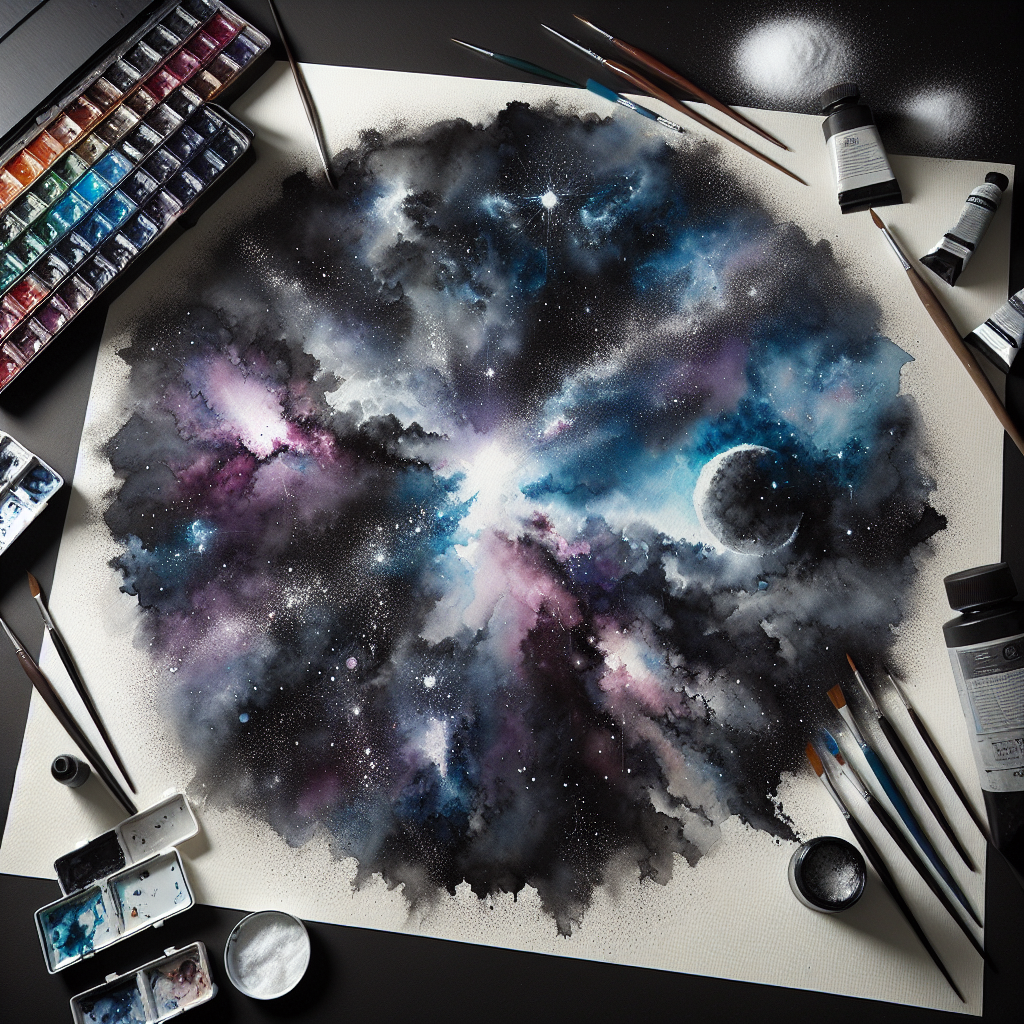
Reverse coloring is the creative team activity that requires the least preparation while delivering the most consistent results across varied groups. The format is simple: everyone receives a printed watercolor background and a pen or pencil. They add outlines, shapes, and forms to the image over thirty to forty-five minutes. The image arrives already colored — rich, finished, visually engaging. The participant's job is to find and draw the structure within it.
For HR professionals and team leads, the operational appeal is significant. Total materials cost: paper and ink to print the sheets. Facilitation required: none beyond handing out the prints. Setup time: as long as it takes to print. Cleanup: nothing.
For participants, the psychological appeal is equally significant. There is no blank page. There is no moment of staring at nothing and feeling unable to begin. The watercolor background provides visual anchoring — eyes naturally find edges and shapes within the color fields — so starting is easy regardless of drawing experience. Because every result is valid and different people will draw completely different things on the same background, there is no hierarchy of skill. The person who does not draw regularly produces a result that is just as complete and interesting as the result from the person who sketches often.
The shared image also creates a natural conversation structure. When participants show each other what they found and drew in the same watercolor background, the differences are immediately interesting: two people working on the same print see completely different things. That observation — that the same starting point produces such different results — is itself a useful insight for any team.
Celestial Voyage

Cosmic Voyage

Nebulous Drifts
Top tip
For the best debrief after a reverse coloring session, ask everyone to share one thing they noticed in the watercolor that they were not expecting to see. The answers are always different — and the conversation that follows is almost always the most natural one of the day.
Making the Debrief Count
Any creative team activity is only as good as the conversation it generates afterward. The activity creates the conditions; the debrief is where the team building actually happens.
Effective debrief questions for creative activities are open and specific rather than evaluative. Not "did you enjoy that?" but "what did you notice while you were working?" Not "what did you make?" but "what surprised you about what you made?" These questions invite genuine reflection rather than a polite answer.
For larger groups, pair sharing before group sharing reduces the social pressure of the first response. Two minutes talking to one person is less daunting than speaking first to the whole room. By the time sharing opens to the full group, most people have already articulated a thought once, which makes saying it again feel natural rather than performative.
The key facilitator skill is resisting the urge to interpret results or draw conclusions on behalf of the group. The value is in hearing different answers, not in landing on a consensus. A debrief where the facilitator summarizes what everyone seemed to get out of it is significantly less valuable than one where participants hear each other speak in their own words.
For teams that want to build regular creative habits beyond a single session, individual art practices — including the kind of meditative, low-pressure drawing that reverse coloring enables — have well-documented benefits for stress and focus at work. See our piece on art therapy activities you can do at home for more on the evidence behind creative practices as a wellbeing tool.
If you are interested in why drawing and visual creativity work as stress regulation tools — particularly relevant for teams under deadline pressure — calming activities for anxiety covers the research on attention, cortisol, and creative engagement in more detail.
Run a reverse coloring session with your team this week
Sign up for free weekly watercolor designs — print one per person, hand out pens, and you have a zero-prep creative session ready to go. No facilitation, no art supplies, no cleanup.
Free forever. No spam. Unsubscribe anytime.
Frequently Asked Questions
What makes a team building activity actually effective?
The consistent research finding is that team building creates real cohesion when it produces genuine shared experience rather than manufactured connection. Activities where everyone is equally uncertain — where no one can fall back on existing role performance — level the group in a way that manufactured vulnerability exercises cannot. The specific activity matters less than whether it meets those conditions: equal starting points, no single correct outcome, and natural reasons to talk about what happened.
How do you do creative team building for remote teams?
Remote creative activities work best when materials are simple and universal. Everyone has paper and a pen. Reverse coloring prints can be emailed as PDFs and printed at home, then worked on simultaneously during a video call. The shared image gives distributed teams a common reference point even when they are in different locations — which is unusual for remote team building, where most activities either require identical materials kits mailed in advance or depend entirely on screen-based tools.
Are art-based team activities suitable for people who are not artistic?
Art-based activities work best for teams precisely when they do not require prior skill. The activities that fail in this context are ones that reward existing ability — life drawing, watercolor painting, sculpting — because they create visible hierarchies within the group. Activities designed so that no result is objectively better than another (sketch challenges, reverse coloring, collaborative murals) avoid this problem entirely. The facilitator framing matters too: "explore" and "respond" are more effective frames than "create" or "produce."
How long should a team building session be?
For most creative activities, 60-90 minutes is the effective range. Long enough for people to settle into the task and have real conversation during and after, short enough that it does not feel like a tax on the workday. The debrief typically takes 20-30 minutes of that time. Creative activities benefit from a natural endpoint — completing the image, presenting the result — rather than a timer that ends arbitrarily.
What is the best low-budget creative team building activity?
Reverse coloring is among the lowest-cost options: you need a printer and pens, and the designs are available free. For a group of 20, total cost is paper and ink to print 20 sheets. No materials to purchase, no facilitator certification required, no external vendor. For teams that already have a meeting room and a printer, the cost is effectively zero.
How do you get reluctant employees to participate in team building?
Reluctance almost always traces back to past experiences of being put on the spot, evaluated, or forced into false intimacy. The best response is not better facilitation language — it is a genuinely better activity. When the activity has no performance component, when participation looks the same for everyone, and when sharing is optional rather than required, most reluctant participants engage on their own terms. Start with the activity, not the encouragement.