No-Mess Art Activities for Kids That Actually Develop Creativity
FreeReverseColoring · Editorial
Quick Answer
The best no-mess art activities for kids are those that require minimal materials, no water, and no cleanup — while still giving children real creative decisions to make. Drawing, collage with pre-cut shapes, digital illustration, and reverse coloring all qualify. The cleanest of the group is reverse coloring: kids draw on printed watercolor backgrounds using only a pen, with no paint, glue, or anything to wipe up afterward.
The Real Problem With Messy Art (And What Parents Actually Want)
Let's be honest about what "no-mess art activities" actually means. It is not that parents want their kids to stop making art. It is that setting up a paint session, supervising it, and cleaning both the child and the kitchen counter afterward adds forty minutes of overhead to a twenty-minute activity. On a weekday afternoon, that math does not work.
The standard advice — lay down a drop cloth, buy washable paints, accept the chaos — solves the wrong problem. It makes cleanup marginally easier while leaving the fundamental issue intact: art materials that involve liquid, pigment, or adhesive are inherently high-maintenance.
What parents actually want is creative activities that develop something real in their kids, can be set up in under two minutes, and do not require them to stand over a child monitoring every move. That is a reasonable thing to want, and there are genuinely good options that meet that standard.
The less useful version of this conversation is the one where every activity gets tagged "mess-free!" when it involves water-activated paints, glitter glue, or anything that stains fabric. This guide ranks activities honestly by actual mess risk, not marketing language.
Why Mess Level and Creative Value Are Unrelated
Before getting into specifics, it is worth addressing the assumption that messier activities are inherently more creative. Parents often feel a low-grade guilt about choosing the tidy option, as if the fingerpainting session is more artistically legitimate than the drawing session.
The evidence does not support this. Creativity is developed through decision-making, visual problem-solving, and the experience of translating an internal idea into an external form. These cognitive processes happen equally in drawing, collage, and digital illustration. They are not reserved for activities involving paint.
The specific developmental value of messy materials like clay and paint lies in sensory exploration — the feeling of textures, the physical unpredictability of wet media. This is genuinely valuable, particularly for young children. But it is a separate developmental benefit from creative development, and it does not make those activities superior for building creative thinking.
A child who spends an hour drawing imaginary landscapes with a pencil is engaging in exactly the same creative cognition as a child painting the same subject. The medium is different. The creativity is not.
Activity 1: Drawing and Sketching (Mess Level: Zero)
A pencil and paper is the original no-mess art activity, and it remains one of the most developmentally rich options available. Drawing develops fine motor control, spatial reasoning, visual observation, and the ability to plan and execute — all at once.
The limitation most parents encounter is the blank page problem. Kids who do not yet have a strong internal visual vocabulary — who cannot easily picture what they want to draw and then execute it — often stall at an empty sheet. This leads to "I don't know what to draw" and an abandoned session.
Structured drawing prompts solve this. Directed drawing tutorials, where kids follow step-by-step instructions to build a recognizable image, work extremely well for younger children (ages 4-8) because they provide a concrete goal without requiring imaginative leaping. The creativity comes later, when kids modify the steps or add their own details.
For older children, observational drawing — looking at a real object and trying to draw it — builds more sophisticated skills. It teaches kids to actually see, not just to remember a symbolic version of something. The gap between what we think a hand looks like and what hands actually look like is where real drawing skill develops.
Equipment needed: paper, pencil, eraser. Cleanup: nothing.
Activity 2: Collage With Pre-Cut Materials (Mess Level: Low)
Collage is one of the most underrated creative activities for kids because it allows complex compositional decisions without requiring drawing skill. Kids choose, arrange, and combine materials to build images — which is genuine creative work regardless of whether they could draw the same thing freehand.
The mess risk in collage comes almost entirely from glue. Standard liquid glue and glue sticks both create surface mess and dry on hands, tables, and fabrics. The best way to control this is to use a glue stick exclusively (it applies more cleanly than liquid) and to work on a single sheet of scrap cardboard as a surface. Post-session, the cardboard goes in the recycling.
Pre-cutting shapes before the session starts removes the scissors variable for young kids, and it changes the creative task in an interesting way: kids are working with a defined set of pieces and deciding how to combine them, which is closer to design thinking than raw making.
Magazines, colored paper scraps, tissue paper, and printed patterns all work. Avoid glitter. Glitter is never no-mess.
Equipment needed: glue stick, pre-cut paper scraps, backing paper. Cleanup: two minutes maximum.
Activity 3: Stamping and Block Printing (Mess Level: Moderate)
Stamping sits in the moderate mess category because it involves ink or paint — but because the ink is applied to a controlled surface (the stamp) rather than directly, the mess radius is much smaller than open painting.
Ink pads are the cleaner option compared to stamp pads loaded with craft paint. They dry faster, bleed less, and produce crisper results. For kids who want to stamp with found objects (potato halves, sponges, foam shapes), a small amount of paint in a shallow dish works better than letting them dip freely.
The creative development here is real: kids make decisions about placement, repetition, pattern, and color relationships. Stamping introduces the concept of the print — that a mark can be reproduced — which is foundational for understanding pattern and design.
The limitation is that this activity requires adult supervision for young children and does require actual cleanup of the stamp, the ink pad, and sometimes hands. Budget ten minutes post-session.
Equipment needed: ink pad or small dish of craft paint, stamps, paper. Cleanup: ten minutes.
"The creativity in any art activity lives in the decisions a child makes — not in the materials they use or the mess they make."
Activity 4: Digital Drawing (Mess Level: Zero)
Tablets and drawing apps have become genuinely capable creative tools for kids, and the stigma around "screen art" misses how much creative thinking happens in a well-designed drawing app.
Apps like Procreate (iPad), Sketchbook (free), and even Google Canvas provide kids with a real drawing surface, multiple tool types, layer capability, and unlimited undo. The undo function alone removes a significant source of frustration for young artists who abandon analog drawings because of a line they cannot fix.
Digital drawing develops the same visual and spatial skills as analog drawing, with the added benefit that mistakes are genuinely recoverable. For children who become frustrated with drawing precisely because errors feel permanent, digital tools can unlock creative engagement that analog tools shut down.
The legitimate developmental gap is physical. The haptic experience of a stylus on glass is not the same as pencil on paper, and neither is the same as hands in clay. If digital art is a child's only creative outlet, they are missing some sensory and motor development that physical materials provide. As one tool among several, it is excellent.
Equipment needed: tablet, stylus (optional), drawing app. Cleanup: nothing.
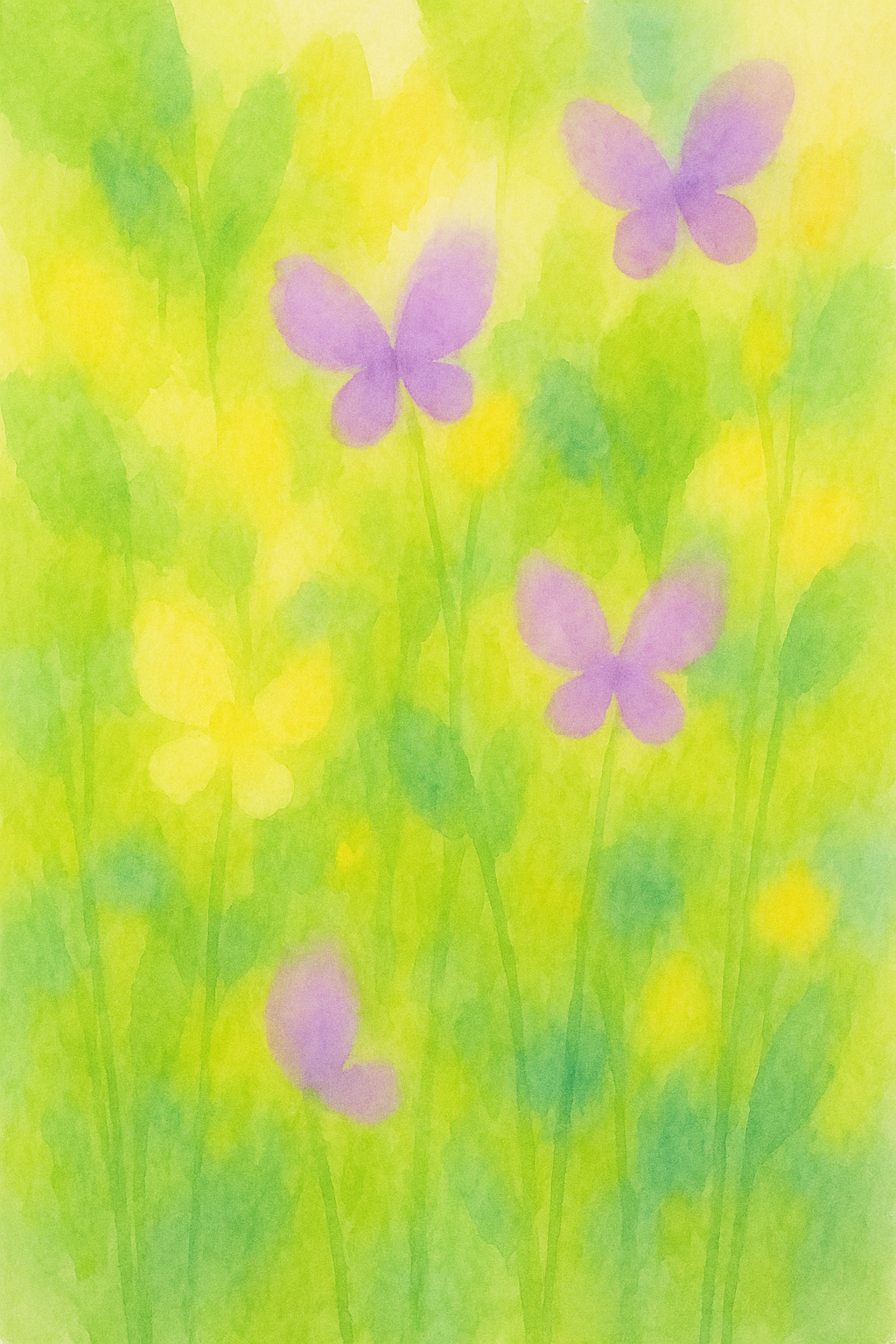
Activity 5: Reverse Coloring (Mess Level: Truly Zero)
Reverse coloring inverts the usual creative sequence. Instead of starting with a blank page and adding color, you start with a fully colored watercolor background and add the outlines, shapes, and forms you see within it. The image arrives finished in color. Your job is to find and draw its structure.
For parents specifically, this solves several problems simultaneously.
The setup is a printer and a pen. That is the entire equipment list. There is no paint, no water, no glue, no cleanup, and no materials to store. You print the image, hand it to your child with a fine-tip pen or pencil, and you are done with setup. When the session ends, the drawing goes on the fridge or in a folder. Nothing needs to be washed.
For children, the structure of the activity removes the blank-page problem entirely. The watercolor background is already rich and visually interesting — kids' eyes naturally find shapes and edges within the color fields, the same way they find animals in clouds. This visual anchoring means that even kids who usually stall at a blank page are almost always able to begin.
The creative development is real and specific. Reverse coloring builds observational drawing skills (looking for actual edges and forms), compositional thinking (deciding which elements to emphasize), and visual interpretation (choosing what the shapes mean). Because there is no objectively correct answer — every child's drawing will be different from the same background — the activity produces genuinely individual results without performance pressure.
It also scales across age ranges without modification. A five-year-old and a twelve-year-old can both work on the same printed background and produce results that are equally complete and satisfying at their respective skill levels. This makes it viable for households with kids of different ages, and useful in classroom settings where ability levels vary significantly.
Butterfly Serenade
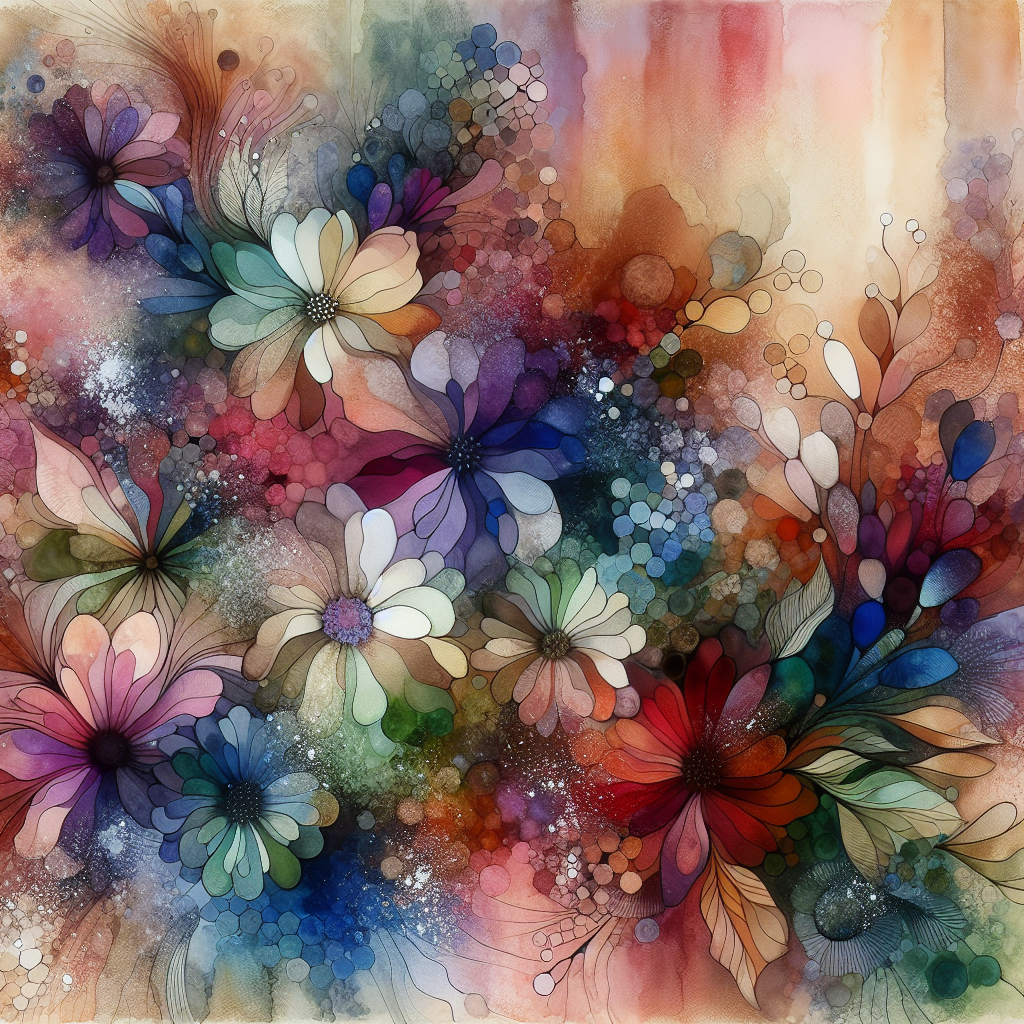
Whispering Petals

Whispers of Bloom
Top tip
For younger kids who are not sure where to start on a reverse coloring print, try asking them to find one shape they recognize inside the colors — a wing, a leaf, a wave, anything — and draw just that one thing first. Once they have made the first mark, the rest almost always follows naturally.
Making Art a Habit, Not an Event
The most common reason kids stop doing art regularly is that it becomes an event — something that requires setup, supervision, and cleanup — rather than a default activity. When the barrier to starting is high, it only happens when a parent orchestrates it.
Low-mess art activities lower that barrier enough that art can become something a child initiates independently. A pencil and a sketchbook on the kitchen table gets used. A pad of paper next to the couch gets used. A folder of printed reverse coloring sheets with a jar of pens next to them gets used without anyone asking.
The developmental benefit of art is cumulative. A child who draws for twenty minutes three times a week over a year builds significantly more visual and creative capability than a child who does one elaborate craft project per month. Frequency matters more than intensity, which means the lower the barrier to starting, the better.
For more on how creative activities build skills that transfer beyond art itself, see our article on art for people who think they cannot draw — the same principles that apply to adult beginners apply equally to children who have decided they are "not artistic."
If you are looking for activities that work for the whole family — including adults — screen-free activities for adults covers creative options that work across ages without anyone feeling like they are doing a kids activity.
Get free watercolor designs for your kids every week
Sign up for free weekly reverse coloring designs — print them, hand your kids a pen, and that is the entire setup. No paint, no mess, no cleanup.
Free forever. No spam. Unsubscribe anytime.
Frequently Asked Questions
What is the least messy art activity for young kids?
Reverse coloring is the least messy option available — it requires only a pen or pencil on a printed sheet. No paint, no glue, no water, no cleanup. Kids draw outlines on pre-colored watercolor backgrounds, and the result is immediately beautiful without any mess at all. Drawing with pencil on paper is a close second: the only cleanup is returning the pencil to a drawer.
At what age can kids start doing art activities independently?
Most children can work independently on low-mess art activities like drawing and collage from around age 5 or 6. Younger kids (ages 2-4) need supervision even with washable materials — not because they will necessarily make a mess, but because they are still developing the fine motor control and attention span to manage materials without frustration. Reverse coloring works well from about age 4, since the pre-colored image gives them a visual anchor to respond to rather than requiring them to generate an idea from nothing.
Do no-mess art activities still develop creativity, or are they just busywork?
The mess level of an activity has nothing to do with its creative value. Creativity is developed through problem-solving, decision-making, and visual thinking — all of which happen just as fully in drawing, collage, and design activities as in painting. Some of the most creatively demanding professional art forms — architecture, graphic design, illustration — are completely mess-free. Choosing the tidier option is not a developmental shortcut.
How long should a kids art session be?
For ages 4-6, aim for 15-20 minutes before attention typically drifts. Ages 7-10 can sustain 30-45 minutes, particularly when the activity has clear structure and a visible goal. Activities with an obvious endpoint — finishing a drawing, completing a print — tend to hold attention better than completely open-ended sessions. Reverse coloring has a natural endpoint (the sheet is done) that works well for shorter attention spans.
Is it okay to let kids do art activities on screens?
Digital drawing apps develop genuine creative skills, particularly spatial reasoning and color intuition. The limitation is that they do not provide the physical material interaction that has its own developmental value — the feeling of paper under a pencil, the resistance of clay, the unpredictability of ink. A mix of digital and physical art activities covers more developmental ground than either alone. For very young children (under 6), physical materials provide more sensory development value.
How do I encourage a child who says they cannot draw?
Remove the performance pressure first. Activities like reverse coloring work particularly well here because the image is already beautiful before the child adds anything — there is no blank page and no wrong outcome. When you frame the task as exploring or responding rather than producing something correct, reluctant kids almost always engage. For more on this, see our piece on art for people who think they cannot draw.