Screen-Free Activities for Adults Who Spend All Day on Devices
FreeReverseColoring · Editorial
Quick Answer
Eight or more hours of screen time leaves your brain cognitively depleted in ways that scrolling through social media in the evening doesn't fix — it extends. The most effective screen-free activities share one quality: they engage your hands and your eyes without a glowing rectangle involved. Drawing is one of the strongest options, particularly for people whose work demands sustained visual attention to text and data.
The Screen Fatigue Problem Is Real, and It's Getting Worse
Knowledge workers today spend an average of 12-13 hours per day looking at screens, according to data from DataReportal's 2024 digital survey. That number includes work devices, phones, tablets, and televisions. For anyone with a laptop-based job, it's common to have a work monitor in front of you for eight or nine hours, then pick up a phone for another three or four.
The effects accumulate in specific ways that are worth understanding if you want to address them effectively.
Digital eye strain (clinically called Computer Vision Syndrome) affects an estimated 75% of workers who spend more than two hours daily at a computer. Symptoms include blurred vision, headaches, dry eyes, and neck pain. The mechanism is partly about blue light wavelengths disrupting the eye's focusing muscles, and partly about reduced blink rate — the average blink rate drops from 15-20 times per minute in conversation to 5-7 times per minute while reading a screen.
Mental depletion is distinct from tired eyes. Sustained cognitive work — reading, writing, analyzing, communicating — depletes a specific resource that researchers sometimes call "directed attention." This is the capacity to focus despite distraction, maintain working memory, and make decisions. It is finite, it recovers slowly, and it does not recover during more screen time. A Netflix binge after work doesn't restore directed attention because it requires the same directed visual and auditory processing your workday already depleted.
Decision fatigue compounds this. The average knowledge worker makes hundreds of small decisions throughout a workday — which email to respond to first, how to word a sentence, whether a document is good enough to send. Each decision draws on the same cognitive resource pool. By early evening, the resource is substantially depleted, which is why so many people find themselves making poor food choices or ending up in long, pointless social media sessions even when they intended to do something else.
Sleep disruption. Blue light in the 460-490nm range suppresses melatonin production. Evening screen use delays the onset of melatonin by an average of 90 minutes, according to research from Harvard Medical School. This doesn't mean one hour of evening screen time causes a 90-minute melatonin delay — but it does mean that significant screen use in the two hours before bed measurably affects sleep onset and sleep quality.
Why "Just Put the Phone Down" Doesn't Work
The most common advice — put down your devices, do something offline — tends to fail not because people don't want to, but because the alternatives on offer feel less satisfying than the screen. There's a reason for this.
Digital content is engineered to be maximally compelling. Social media platforms employ teams of engineers whose sole purpose is to maximize engagement and minimize the likelihood of you looking away. The dopamine response generated by variable-ratio reward schedules (sometimes there's something interesting, sometimes not — you have to keep checking) is genuinely difficult to compete with through activities that evolved long before behavioral manipulation was a profession.
When someone tells a depleted, screen-fatigued brain to "go do something productive," the brain often responds by finding a reason why that's too hard right now. Not laziness — genuine resource depletion. The same decision-making system that's supposed to choose to go read a book has been making decisions for ten hours already.
What works instead is an environment design approach rather than a willpower approach. You remove friction from the offline activity (book already on the coffee table, drawing materials already out) and add friction to the screen alternative (phone in another room, router off at 9 p.m.). You don't rely on depleted willpower to make a good choice — you make the environment make the choice for you.
The other insight is that the replacement activity needs to be genuinely satisfying, not just virtuous. Something you do because you feel you should tends not to stick. Activities that engage multiple senses, produce something tangible, or create a sense of absorption tend to satisfy in ways that make them self-sustaining.
"Your brain doesn't need rest in the evening — it needs different engagement. The screen isn't the problem; same-channel input is the problem."
Screen-Free Activities That Actually Satisfy
The activities below are selected specifically for adults who spend most of their day in high-cognitive-demand screen work. They are not just "low-tech" — they are chosen because they restore what screen work depletes.
Reading physical books. Reading is cognitively demanding, but it differs from screen reading in two important ways: it uses different eye-focusing mechanics (no flicker, no backlight, greater depth of focus variation), and it doesn't compete with notifications. Fiction reading in particular has been shown to reduce cortisol levels and create what researchers call "narrative transportation" — a form of absorption that is restorative rather than depleting. The physical format matters: e-readers are better than nothing, but paper books are better than e-readers for sleep-adjacent reading.
Cooking from a recipe. The combination of sensory stimulation (smell, texture, heat), sequential task execution, and a concrete outcome (dinner) makes cooking one of the more complete replacements for screen-based stimulation. Following a genuinely new recipe introduces just enough cognitive novelty to hold attention without requiring directed attention capacity you've already used up. Crucially: keep the phone in the other room while cooking, and the difference in presence is immediately apparent.
Gardening and outdoor work. Contact with soil, plants, and natural environments has measurable effects on nervous system state that are distinct from general "being outside." Research published in Frontiers in Psychology found that as little as 20 minutes of exposure to a natural environment significantly reduced cortisol levels. The non-directed attention that nature requires (broadly aware, not narrowly focused) is specifically what directed-attention restoration theory identifies as restorative. You don't have to do anything in particular — weeding, watering, repotting, or just being present in a garden all seem to produce the effect.
Puzzles and tactile games. Jigsaw puzzles, physical board games, and similar tactile activities engage pattern recognition and problem-solving without screens. They tend to work best as social activities — solo puzzles at the end of a long solitary workday can feel isolating rather than restorative.
Drawing and visual art. Drawing occupies a specific position in this list because of what it does to directed attention. Rather than depleting it further or letting it lie idle, drawing redirects it toward something that is genuinely absorbing — but absorbing in a qualitatively different way than screen work. More on this below.
Walking, particularly outdoors. Walking is the most accessible activity on this list and one of the most effective. A 2014 Stanford study found that walking significantly increased creative output on divergent thinking tasks, and the effect persisted even for treadmill walking indoors. For screen-fatigued adults, a 20-30 minute outdoor walk is among the most evidence-supported interventions available, requiring no equipment, minimal willpower to initiate, and producing immediate results.
Why Drawing Works Particularly Well for Screen-Fatigued Brains
Here's the specific case for drawing as an evening screen-free activity for knowledge workers.
Your visual system has spent all day tracking text on a flat, uniformly lit rectangle at a fixed distance. Everything your eyes focused on was in approximately the same focal plane, backlit to the same brightness, moving only when you scrolled. The eye muscles that handle depth variation, ambient light adjustment, and peripheral-to-central attention shifts have barely been used.
When you draw from observation — looking at an object, a scene, or a printed image and translating it into marks on paper — your visual system does something entirely different. You're comparing values and proportions. You're looking at the actual texture of a surface and asking how to represent it. You're making constant micro-adjustments between looking and marking. The eye-brain-hand loop that drawing requires is genuinely different from the eye-brain loop that reading a screen requires.
There's also the hand component. Typing and trackpad use involve highly repetitive, precisely patterned finger movements in a very small range of motion. Drawing involves the whole hand, wrist, and often arm in varied, expressive movements. The proprioceptive engagement — your brain tracking the position and movement of your hand through space — is substantially richer.
The result: drawing engages the visual and motor systems in a restorative way, not an additive-depletion way. You're not using the same cognitive channels that are already depleted; you're engaging channels that have been underused.
Reverse Coloring: A 20-Minute Screen Detox
For adults with screen fatigue, one of the practical barriers to drawing is that starting from scratch — deciding what to draw, dealing with the blank page — requires creative decision-making capacity that's also depleted by end of day.
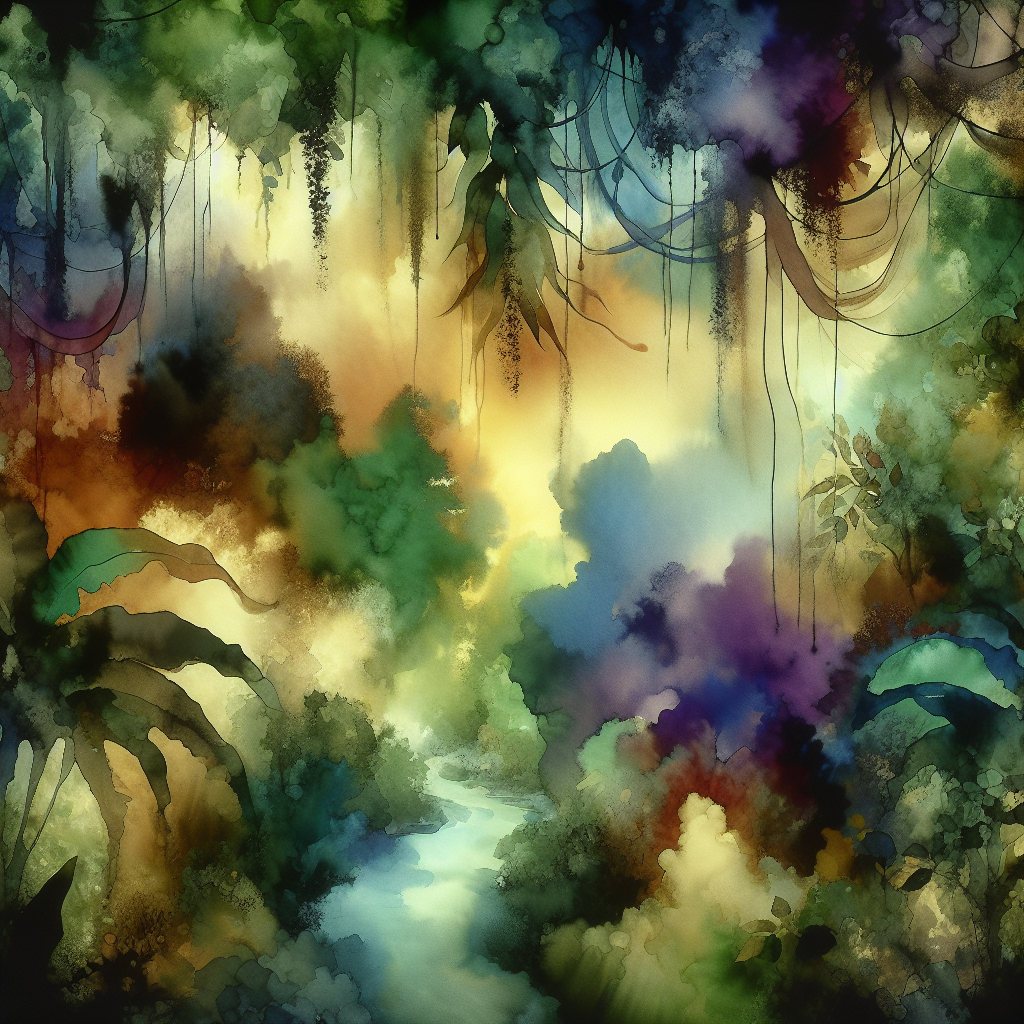
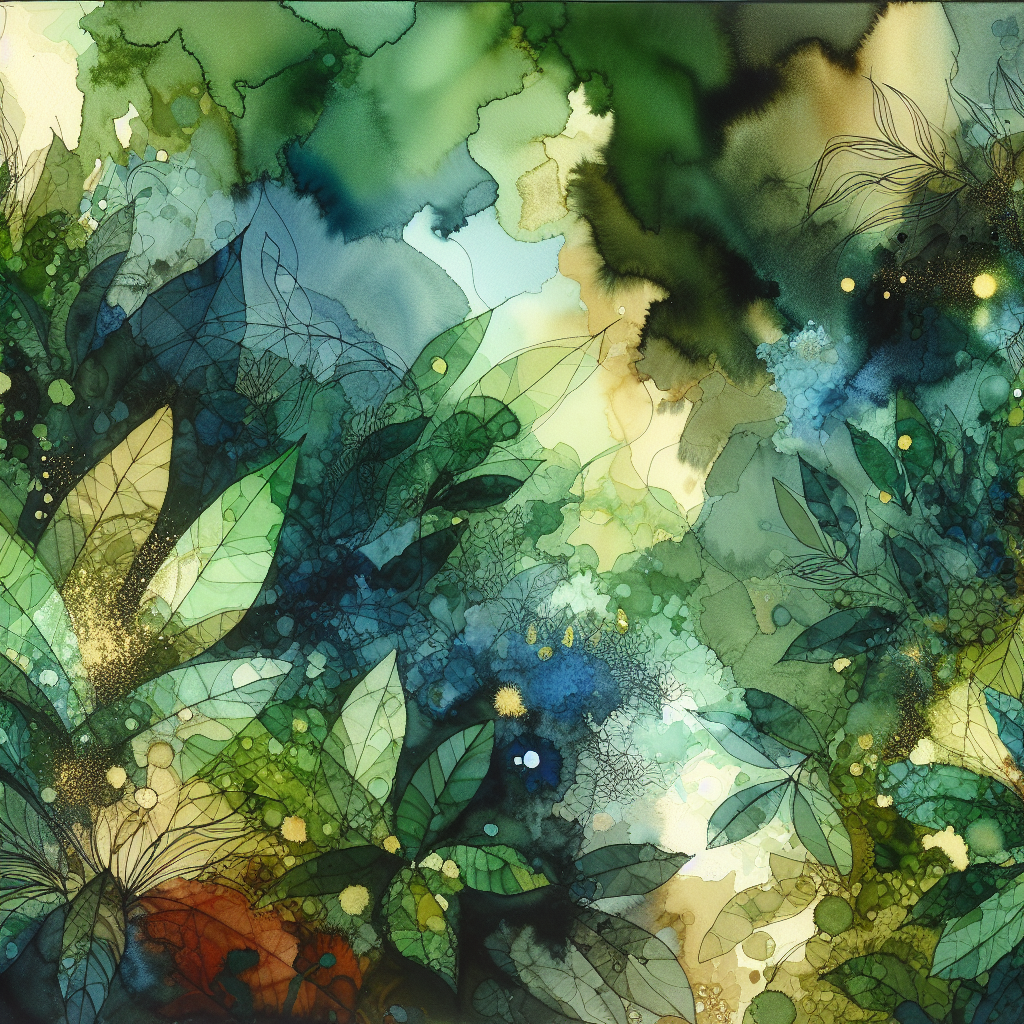
The reverse coloring technique neatly sidesteps this. A pre-printed watercolor background gives your visual system something rich, colorful, and texturally interesting to look at immediately. Your task isn't to generate something — it's to respond to what's already there. You look at the watercolor, you find forms and shapes suggested by the colors, and you draw them.
This requires looking, not generating. It requires your eye to be present and active, not your depleted creative decision-making. For many adults, this distinction makes the difference between an activity they actually do at 8 p.m. versus an activity they intend to do but don't start.
The setup is minimal: print a design, pull out a pen, sit down. The session can be as short as 15 minutes or as long as you want. You don't need to finish the image or produce anything particular. The state shift — from screen-depleted to genuinely present — tends to happen within the first few minutes.
FreeReverseColoring.com sends a new watercolor design to your inbox weekly, free. Print it when it arrives and keep it on your desk or table. Having the printed image already there removes one more friction point from the decision to start.
Veiled Canopy Whispers
Verdant Whispers

Whispers of the World
Top tip
If you want to build a screen-free evening habit, anchor it to something you already do. "After dinner, before TV" is a natural slot. Set out your drawing materials before you eat so they're waiting for you when you're done. The physical presence of a printed design and a pen on the table makes the choice visible and frictionless in a way that "I could go draw something" never is.
Building a Screen-Free Evening Routine
An evening routine isn't about eliminating screens entirely — it's about reclaiming enough non-screen time that your attention, your eyes, and your sleep are meaningfully protected.
A practical structure that doesn't require heroic willpower:
The transition ritual (15-30 minutes after work ends). A walk, a change of clothes, a brief outdoor moment — something that signals clearly to your nervous system that work mode is over. This transition matters because cognitive depletion tends to persist if you go directly from work screen to leisure screen without any clearing period.
A physical activity block (30-60 minutes). This can be a walk, cooking dinner, gardening, or any of the activities above. The key characteristic is that it involves your body and your senses without a screen.
A drawing or reading session (20-45 minutes). This is the directed-but-restorative block. Reading or drawing. Both shift your visual and cognitive engagement in ways that prepare your brain for sleep rather than extending depletion.
The wind-down period (60 minutes before bed, screens off or dimmed). The sleep research is clear: reducing screen use in the hour before sleep significantly improves sleep onset and sleep quality. Dimming lights (not just screens) in this period helps melatonin production begin at its natural time.
For more on managing anxiety through creative activity, see calming activities for anxiety that don't require sitting still. And if you want a deeper look at the reverse coloring technique itself, what is reverse coloring covers the basics.
Start your screen-free evening ritual
Get a free watercolor design delivered weekly. Print it, put it on your desk, and spend 20 minutes drawing before you reach for the remote. Your eyes will thank you.
Free forever. No spam. Unsubscribe anytime.
Frequently Asked Questions
Is screen fatigue the same as burnout?
They overlap but are distinct. Screen fatigue is a specific physical and cognitive phenomenon driven by sustained visual and attentional demands from screens. Burnout is a broader syndrome involving emotional exhaustion, depersonalization, and reduced sense of accomplishment, typically in a work context. Screen fatigue can be a symptom or contributor to burnout, but it can also occur without the emotional dimensions of burnout. Screen fatigue tends to respond well to specific environmental interventions; burnout typically requires more significant lifestyle or situational changes.
Do e-readers count as "screen-free"?
Mostly no. E-readers with e-ink displays (Kindle Paperwhite, Kobo) are better than backlit LCD screens because they don't emit the same blue light frequencies and use reflected rather than emitted light. For sleep purposes, they're significantly better than tablets or phones. But they still involve extended visual fixation on a flat digital surface and don't provide the tactile or depth-variation benefits of physical books. For a genuine screen-free reading experience, physical books are still the best option.
I tried drawing once and felt frustrated. Does that disqualify it as a relaxation option?
The type of drawing matters enormously. Drawing from a blank page with no reference and no defined task tends to produce frustration, especially for people who don't consider themselves artistic. Drawing that has structure — tracing, copying from reference, or using a pre-printed watercolor background — removes the blank-page problem and tends to feel very different. If you tried drawing and found it stressful rather than calming, it's worth trying a more structured approach before concluding that drawing doesn't work for you.
How long does it take to feel the effects of a screen-free evening?
Most people notice a difference in sleep quality within the first week of consistently keeping screens off in the 60 minutes before bed. The cognitive effects — clearer morning thinking, more available working memory — tend to accumulate over 2-3 weeks. Eye strain symptoms (dryness, headaches, blurred vision) can improve faster — sometimes within a few days — if the primary driver is screen hours rather than an underlying vision issue.
What if my partner or family is watching TV and I don't want to isolate myself?
This is one of the most common practical barriers. A few options: keep a drawing project on the couch alongside whatever the household is watching — drawing in the room is better than sitting in another room. Dimming the TV somewhat and wearing blue-light-filtering glasses reduces the impact of peripheral screen exposure. Or negotiate one or two evenings per week where the household does something non-screen together — games, cooking together, a walk.