How to Build a Weekly Creative Habit That Actually Sticks
FreeReverseColoring · Editorial
Quick Answer
Most creative habits fail not because people lack motivation but because they are designed wrong from the start — too ambitious, too vague, and too dependent on inspiration arriving on schedule. The habits that stick are small, specific, time-anchored, and require almost no willpower to initiate. A weekly creative ritual built around a concrete object and a predictable time slot is one of the most reliable formats for sustained creative engagement.
Why Most Creative Habits Collapse Within Weeks
Ask anyone who has tried to "be more creative" as a New Year's resolution what happened by February. The answer is almost always the same: it started well, got busy, slipped once, and then quietly stopped.
This is not a character flaw. It is a design problem.
Most creative habits fail because they are built on the wrong foundations. They rely on motivation — which is variable and unreliable — rather than structure, which is consistent regardless of how you feel. They are vague ("draw more," "make things") rather than specific, which means every session requires an active decision about what to do, which requires willpower, which depletes. They are ambitious, which feels inspiring at the start but creates friction that accumulates until the habit collapses under its own weight.
Behavioral science has studied habit formation in enough depth that we now have a fairly clear picture of what distinguishes habits that last from those that don't. The research is less glamorous than motivational advice, but it is more useful. Creative habits built on these principles have a structural advantage over those built on enthusiasm alone.
What Habit Science Actually Says
The foundational model of habit formation comes from research by Wendy Wood at the University of Southern California, who has spent decades studying the gap between intentions and behavior. Her central finding: habits form not through repetition of decisions, but through repetition of behaviors in stable contexts. The context — the time, place, and sequence of events — becomes the cue that triggers the behavior without requiring conscious thought.
This is why a habit like brushing your teeth survives bad days, low motivation, and packed schedules. You do not decide to brush your teeth each morning. You wake up, go to the bathroom, and the toothbrush is in your hand before you've thought about anything. The context triggers the behavior automatically.
For creative habits, the implication is significant. The goal is not to find more motivation. The goal is to engineer a context in which the creative behavior happens automatically — or at least with minimum friction.
Charles Duhigg's work on the habit loop (cue, routine, reward) provides a useful framework for this. Every stable habit has a reliable cue that initiates it, a routine that executes it, and a reward that reinforces it. Creative habits that fail usually lack a reliable cue. "When I have time" or "when I feel inspired" are not cues — they're conditions that may or may not materialize. "Every Sunday morning after coffee, before I check my phone" is a cue.
The other finding worth noting: habit formation takes longer than the popular "21 days" myth suggests. A 2010 study published in the European Journal of Social Psychology tracked participants forming new habits and found an average of 66 days to automaticity, with a range of 18 to 254 days. Simple habits with minimal friction formed faster. This matters for creative practice, because it means you should expect the first two months to feel deliberate and effortful — and not interpret that effort as evidence the habit isn't working.
Why Weekly Is the Right Frequency for Creative Practice
Daily creative habits sound admirable. In practice, they often fail because they underestimate the actual demands of sustained creative work.
Creative practice is not the same as drinking a glass of water in the morning. It requires a state of engagement — a willingness to make something and tolerate the early awkwardness of a session before it finds its rhythm. It benefits from some physical and mental energy, not just available time. It often involves setup (gathering materials, preparing a workspace) that adds friction. And unlike many daily habits, it produces something — which means it also involves some degree of self-evaluation, however mild.
For most people with full lives, daily creative practice is either too demanding to sustain or becomes so stripped down (five minutes, no setup, minimal engagement) that it doesn't provide the satisfaction that makes a habit worth maintaining.
Weekly creative practice threads this needle. One meaningful session per week is frequent enough to maintain skill and momentum, predictable enough to build a ritual around, and infrequent enough that the session can be genuinely substantial — an hour, two hours, real engagement — rather than a token gesture.
The weekly format also maps naturally onto our existing temporal rhythms. We already organize our lives in weeks. Weekends have different textures than weekdays for most people. A weekly creative ritual plugs into existing structure rather than trying to create entirely new structure from scratch.
"The habits that stick are not the most ambitious ones. They are the most frictionless ones — designed so that the only decision required is whether to sit down."
The Anatomy of a Sustainable Creative Ritual
A ritual is a habit with a bit more texture. Where a habit is a behavior that becomes automatic, a ritual adds intentionality — a small set of actions that signal to your brain that the creative session is beginning. This matters because the transition from ordinary life into a creative state takes time, and rituals accelerate that transition.
The most durable creative rituals tend to share a few structural features.
A fixed anchor point in the week. Saturday morning. Sunday evening. Thursday after dinner. The specific time matters less than its consistency. When the time is always the same, the anticipation builds automatically — you know it's coming, you begin to mentally prepare, and arriving at that time slot feels like pulling into a familiar dock.
A physical trigger sequence. Most experienced creative practitioners have rituals around setup that serve as on-ramps to the creative state: making a particular drink, clearing the workspace, putting on a specific playlist or working in silence, laying out materials in a particular order. These sequences are not superstitious — they are conditioned cues. Each step narrows your attention toward the work ahead and away from everything else competing for it.
A concrete object to respond to. One of the most common failure modes for creative sessions is spending the session deciding what to create rather than creating. If you sit down each week to "make something," you spend energy on creative direction that could go toward creative execution. Having a defined object — this week's watercolor design, this month's writing prompt, this project — eliminates that decision and lets the session begin immediately.
A defined minimum. Decide in advance what counts as success for the session. Not a quality standard, but a duration or action: "I will work for at least 30 minutes" or "I will fill at least half the page." This floors the session against the days when you feel less engaged, and prevents the all-or-nothing thinking that causes people to skip sessions entirely when they don't feel inspired enough for a "full" one.
How a Weekly Design Ritual Works in Practice
What makes reverse coloring particularly well-suited to a weekly creative habit is how neatly it solves the blank-page problem that derails so many creative sessions.
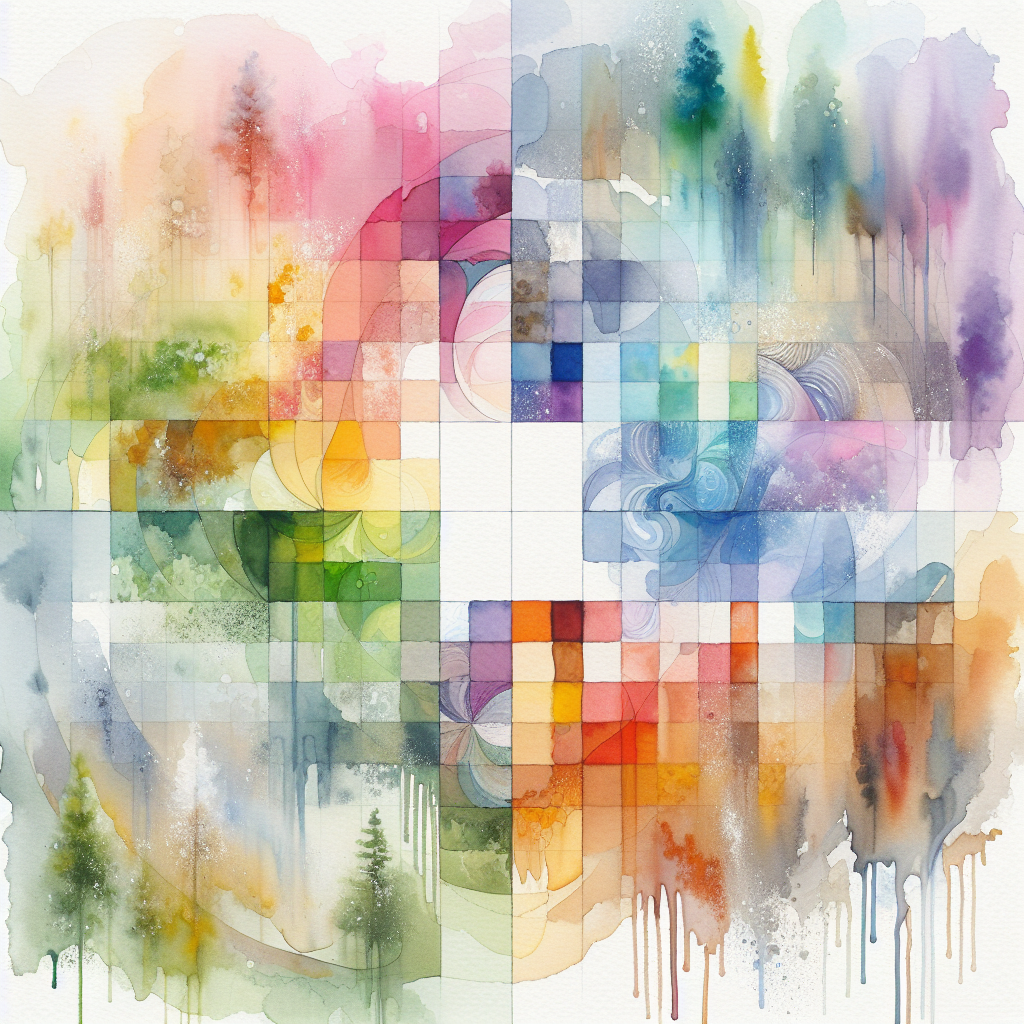
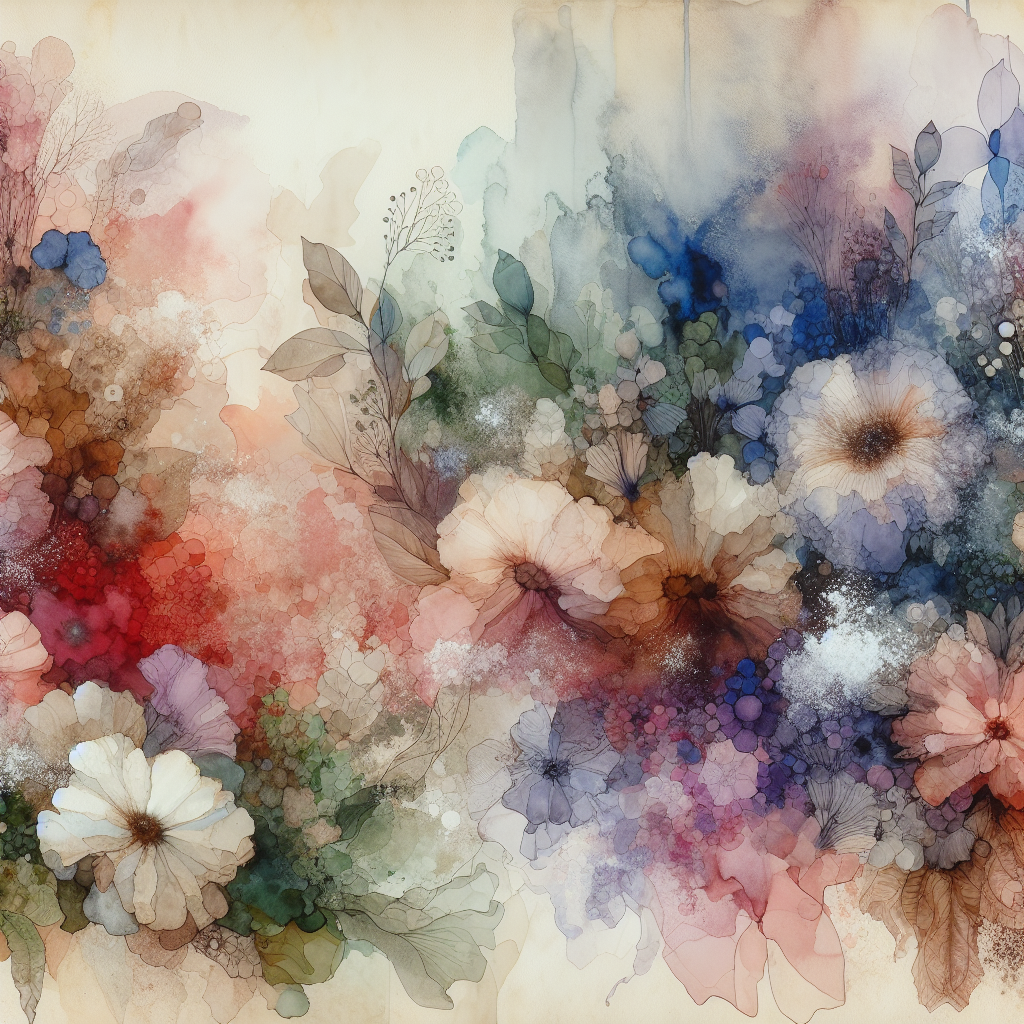
Each week, a new watercolor design arrives in your inbox. It is already finished, already beautiful — rich color, nuanced texture, visual depth that gives your eye something real to look at. Your session is already defined: here is the image, here is the pen, here are the forms you can find and draw. The creative decision that usually consumes the first twenty minutes of a session — what should I make? — is already answered.
This matters enormously for habit formation, because friction at the start of a session is where most habits die. When sitting down requires first solving a creative direction problem, the activation energy required is high enough that on a low-motivation evening, you don't do it. When sitting down simply means printing the image you received earlier in the week, the activation energy drops to nearly zero.
The weekly delivery cadence also creates a gentle external rhythm that supports the habit. You don't have to remember to practice — the week's design arriving in your inbox is itself a cue. It signals that the creative moment is coming. For people who rely too heavily on internal motivation, an external prompt like this removes a significant dependency.
For more on what makes reverse coloring distinctive as a creative medium, see what reverse coloring is and how it works.
Seasonal Symphony
Whispering Blossoms
Enchanted Canopy
Protecting Your Creative Time From the Week
Even well-designed habits get pressured. The weekly creative session is easy to skip when life accelerates — when work is demanding, when social obligations stack up, when fatigue makes every optional activity feel like a burden. The habits that survive this pressure are the ones that have been actively defended rather than passively hoped for.
A few strategies that research and practice support:
Schedule it as an appointment. Put it on your calendar with the same status as a meeting. Block the time. If someone asks to schedule something during that slot, you're booked. This sounds obvious but most people treat optional activities as genuinely optional in every moment, which means they get displaced by things that feel more urgent.
Tell one other person. Social commitment is one of the strongest predictors of follow-through. You don't need an accountability partner who checks in on you — just the act of telling someone "I'm doing my creative session Sunday morning" creates a mild social pressure that helps on the days when self-motivation is thin.
Keep the barrier to entry minimal. Your workspace should require almost no setup. Materials should be ready. If you use a printed design, print it at the beginning of the week, not during the session. Every minute of setup during the session is time in which you can decide it's not worth it and do something else instead.
Don't let a missed session become a missed fortnight. The research on habit recovery is clear: one lapse has no meaningful effect on long-term habit formation. What matters is returning quickly. A two-week gap is more damaging than a one-week gap not because the habit muscle atrophies in that week, but because the mental narrative around the lapse tends to grow. "I missed it again" becomes evidence that you're not the kind of person who keeps creative commitments. This narrative is the real threat, not the missed session itself.
For those building creative habits alongside other wellness goals, screen-free activities for adults offers additional frameworks for reclaiming unstructured time.
The Compounding Effect of Consistent Creative Practice
The functional benefits of a sustained creative habit are worth naming, because motivation built on abstract aspiration tends to erode when life gets hard. Concrete, proximate benefits are more durable as motivators.
What actually accrues over months of weekly creative practice: perceptual sharpness improves. People who draw regularly begin to see differently — they notice light and shadow and form in everyday environments in a way that wasn't accessible before. This is not mystical; it's a trained perceptual skill. Sustained attention improves. Creative practice is one of the few voluntary activities that demands extended concentration without external structure, and like any skill, this transfers. Tolerance for imperfection develops. Early creative sessions often feel frustrating because the gap between what you can see and what you can execute is large. Over time this gap narrows, and more importantly, the frustration with the gap diminishes — you learn that showing up is the work, not producing something perfect.
These benefits accrue slowly and invisibly. Week to week, you may not notice them. But at the scale of months and years, they become significant. The weekly habit is the mechanism. The ritual is the vehicle. Consistency is the ingredient that transforms occasional creative engagement into something that genuinely changes how you move through the world.
Top tip
Print next week's design the moment it arrives in your inbox on Monday. Place it somewhere visible in your home. By the time the weekend arrives, you have already been looking at it for days — you know where you want to start, and the session begins before you even sit down.
Start your weekly creative ritual this week
Get a free watercolor design in your inbox every week. Print it, pick up a pen, and let the image do the work of deciding what to create. No skill required, no blank page.
Free forever. No spam. Unsubscribe anytime.
Frequently Asked Questions
How long does it take to build a creative habit?
The commonly cited figure of 21 days comes from a misreading of older research. A 2010 study published in the European Journal of Social Psychology found that habit formation takes an average of 66 days, with a range of 18 to 254 days depending on the person and the behavior. Simpler habits with lower friction form faster. The practical implication: expect the first two months to feel deliberate and effortful. That is not a sign that the habit is not forming — it is a sign that you are in the formation period.
What if I miss a week?
Missing one instance does not break a habit. The same research found that a single lapse had no measurable effect on long-term habit formation. The key is to return to the behavior as soon as possible rather than treating the lapse as evidence that the habit has failed. The most common mistake after a missed session is treating it as confirmation that "I'm not the kind of person who keeps this up." That narrative, if accepted, is more damaging than the missed week itself.
Do I need to be creative to build a creative habit?
No. Creative output is a skill that develops with practice, not a fixed personality trait. A creative habit is not about producing impressive work every week. It is about showing up consistently. The quality follows the consistency, not the other way around. If you wait until you feel creative enough to start, you may wait a very long time.
Why is weekly better than daily for creative habits?
Daily habits work well for low-effort behaviors like brushing teeth. Creative practice requires setup time, sustained focus, and a degree of energy that makes daily adherence unrealistic for most people balancing full lives. Weekly frequency with a predictable ritual is both achievable and meaningful enough to sustain motivation. A single substantial session per week produces more cumulative benefit than five minimal ones that feel like chores.
What is the best time of day for creative work?
Research on cognitive performance suggests that most people do their best focused work in the late morning, when alertness and working memory are near their daily peak. However, the best time is ultimately the time you will actually protect consistently. Consistency of scheduling matters more than the specific hour. A creative session that reliably happens Sunday evening at 8 p.m. is worth more than one theoretically scheduled for peak cognitive hours but regularly displaced.
How do I get back on track after a long break?
Start smaller than you think you need to. If you have been away from creative practice for months, do not attempt a full session on the first day back. Do five minutes. Make the re-entry easier than your ego suggests it should be. The goal in the first week back is simply to have shown up — not to produce anything in particular, not to "catch up," not to prove that the gap was a mistake. Just show up. Everything else follows from that.