Mindfulness Through Art: How Creative Flow Replaces Meditation for Active Minds
FreeReverseColoring · Editorial
Quick Answer
Mindfulness through art works by using visual focus and hand-eye coordination to achieve the same present-moment absorption that breath-based meditation aims for — without requiring you to sit still. For people whose minds resist stillness, creative flow is not a consolation prize for failing at "real" mindfulness. It is a legitimate and neuroscientifically distinct pathway to the same state.
The Problem With Telling Active Minds to Sit Still
Mindfulness has a marketing problem. Decades of popular coverage have collapsed a wide family of attention-training practices into a single image: a person sitting cross-legged, eyes closed, breathing deliberately. This image works for many people. For a significant number, it does not — and those people often conclude that they are simply bad at mindfulness, rather than that they have been handed the wrong tool.
The clinical definition of mindfulness — present-moment, non-judgmental awareness — contains nothing about posture, eye position, or breath. What it describes is a quality of attention: full, open, not pulled into the past or future. This quality of attention can be cultivated through dozens of pathways. Breath focus is one. Mindful walking is another. And creative engagement — drawing, painting, making marks on paper — is another, with its own distinct neuroscience and a surprisingly robust evidence base.
People who struggle with seated meditation tend to share a common pattern: when the body goes still and the perceptual field goes quiet, the mind doesn't follow. It accelerates. The absence of external input doesn't reduce internal noise — it amplifies it. Thoughts about the day, unfinished tasks, and unresolved worries rush into the space that stillness creates. This is not a character flaw or a failure of discipline. It's a predictable response for certain nervous system profiles, particularly those with high baseline arousal or a tendency toward rumination.
The solution is not to push harder at the thing that isn't working. It is to find a different entry point to the same destination.
What Creative Flow Actually Does to the Brain
In the late 1980s, psychologist Mihaly Csikszentmihalyi named and described "flow" — a mental state characterized by deep, effortless absorption in a challenging task. During flow, self-consciousness decreases, time distorts, and the activity itself becomes intrinsically rewarding. People across vastly different fields — musicians, surgeons, athletes, programmers — describe nearly identical phenomenological experiences when asked what flow feels like.
Neuroscience has since begun to map what is happening in the brain during this state. One of the most consistent findings is a reduction in activity in the default mode network (DMN) — the set of brain regions that become active during self-referential thought, mind-wandering, and rumination. The DMN is essentially the brain's "narrative self" system: it constructs and maintains your sense of ongoing personal identity, replays memories, and projects into the future. It is also the network most associated with anxiety, depression, and the kind of recursive negative thinking that makes both conditions self-sustaining.
During flow, DMN activity decreases substantially. This is sometimes called "transient hypofrontality" — a temporary reduction in the effortful, self-monitoring prefrontal activity that normally keeps the inner narrator running. The result is a state where thoughts about yourself — your problems, your worries, your past mistakes — lose their grip. Not because you've suppressed them, but because the network that generates them is genuinely less active.
This same pattern of DMN suppression is observed during meditation. Which is why the subjective experiences have so much overlap: both involve a quiet inner narrator, a sense of presence, and a natural lifting of habitual worry. The mechanism is different — meditation tends to use attentional control to quiet the DMN from above; flow uses task absorption to redirect resources away from it. But the destination is recognizably similar.
"Flow doesn't silence the inner narrator by force. It starves it of the attentional fuel it needs to keep running."
The Hand-Brain Connection in Visual Art
Drawing has a specific set of characteristics that make it particularly effective at inducing flow, and they are worth examining in detail because they explain why the activity works even for people with no artistic background.
When you draw from observation — or when you draw in response to a visual image — you engage a hand-eye coordination loop that requires ongoing, present-tense attention. You look at a shape. Your hand makes a mark. You look at the mark. You look at the shape again. You adjust. This is not a linear sequence that can be performed on autopilot. It requires you to be genuinely looking, in real time, at what is actually in front of you.
This observational demand is deceptively powerful. Rumination — the engine of anxiety and low mood — depends on the mind moving freely between past and future without anchoring to the present. Visual observation makes that movement difficult. You cannot simultaneously look carefully at the curve of a petal and also rehearse an argument that happened three days ago. The observational channel and the rumination channel compete for the same cognitive resources, and observation tends to win when the visual task is sufficiently engaging.
The hand-brain connection adds another layer. Fine motor activity in the hands activates proprioceptive awareness — the felt sense of your own body in space. This proprioceptive input is a natural attentional anchor, similar to what breath awareness provides in meditation, but one that many people find easier to sustain because it is tied to visible, external action. You can see what your hand is doing. The feedback is immediate and concrete.
Researchers at Drexel University, including Dr. Girija Kaimal, have found that 45-minute art-making sessions produce measurable reductions in cortisol — the primary stress hormone — regardless of the participant's skill level or prior experience with art. The effect is not about quality of output. It is about quality of engagement.
Why Reverse Coloring Is an Ideal Entry Point
For someone who wants to use art as a mindfulness practice but has no drawing background, the biggest obstacle is usually the blank page. Starting with an empty surface requires you to generate the subject, the composition, and the visual structure of what you will make — all before you have made a single mark. This generative demand is the opposite of meditative. It activates planning, self-evaluation, and the very self-monitoring processes that the practice is supposed to quiet.
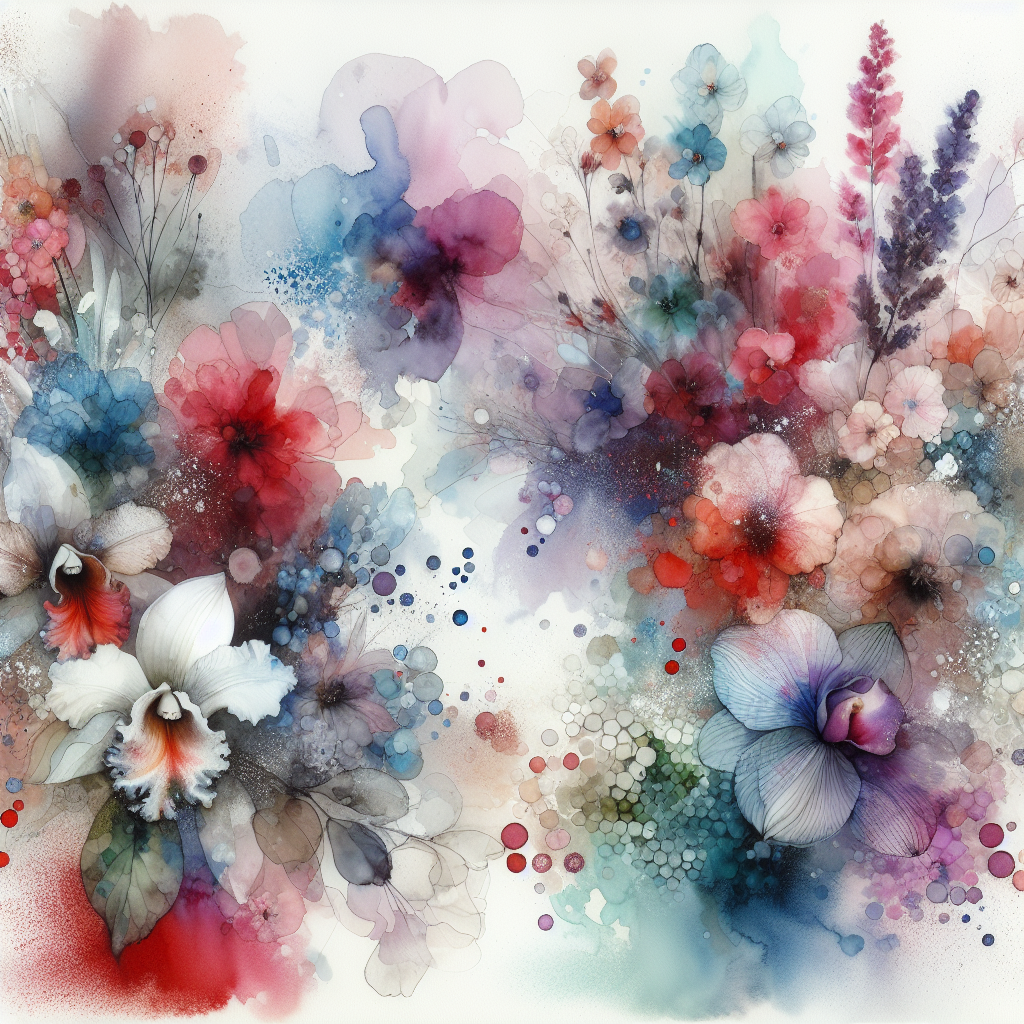
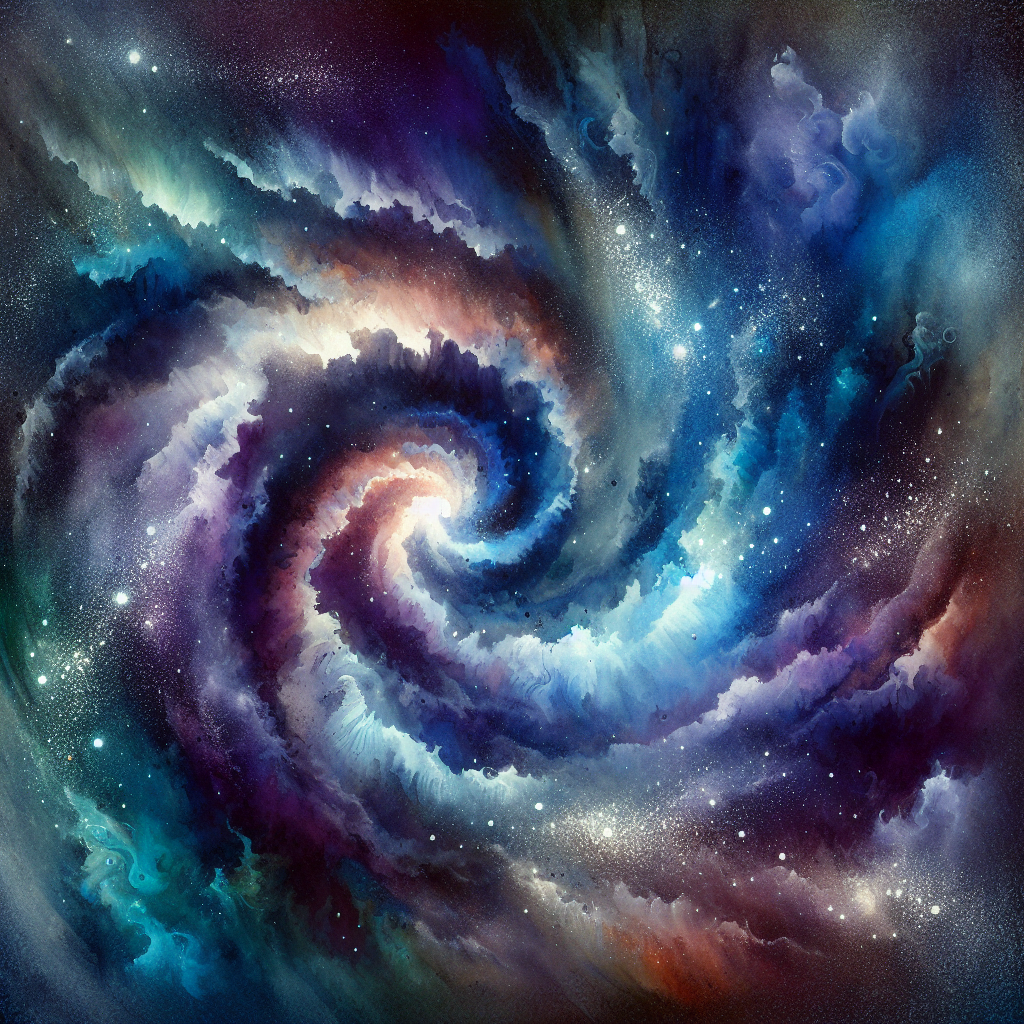
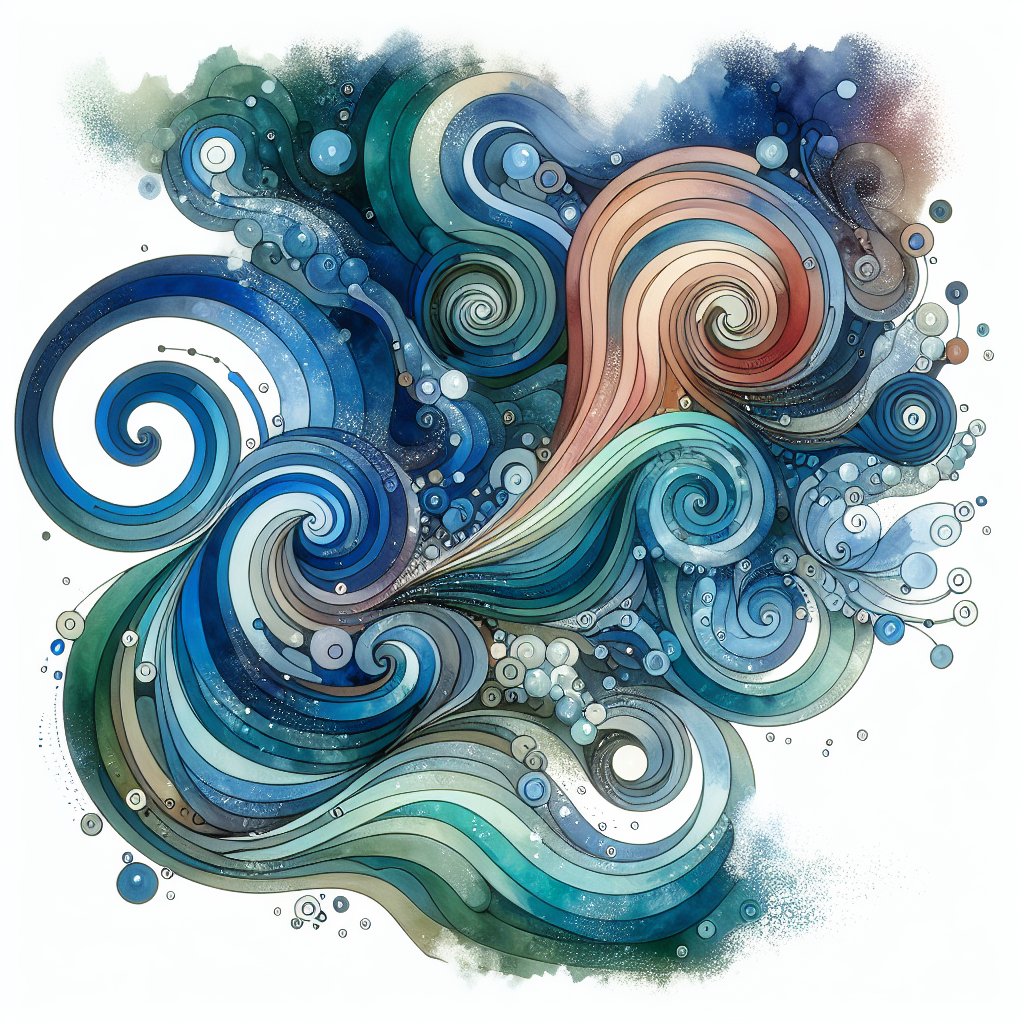
Reverse coloring removes this obstacle structurally. The background arrives already painted — a complete, richly layered watercolor image with color, texture, and visual energy already built in. Your task is not to generate something from nothing. Your task is to look at what is already there and respond to it: trace the shapes you see in the color, add forms that feel suggested by the composition, draw the outlines your eye naturally wants to find.
This changes the cognitive demand from generation to observation. And observation, as the neuroscience of flow suggests, is exactly what is needed to enter the absorbed state that makes art function as mindfulness.
The bounded nature of the task matters too. You are not staring at an empty canvas wondering what to make of your life and your creative ambitions. You are looking at a specific, beautiful watercolor image and making decisions about the lines within it. The scope is clear. The feedback is immediate. The entry point is low enough that even someone who has never considered themselves creative can begin without preparation.
This is why reverse coloring functions as what researchers call a "scaffolded flow experience" — the structure is provided in advance so that the practitioner can move directly to the absorptive engagement without navigating the generative ambiguity that stops most beginners.
Swirling Serenity
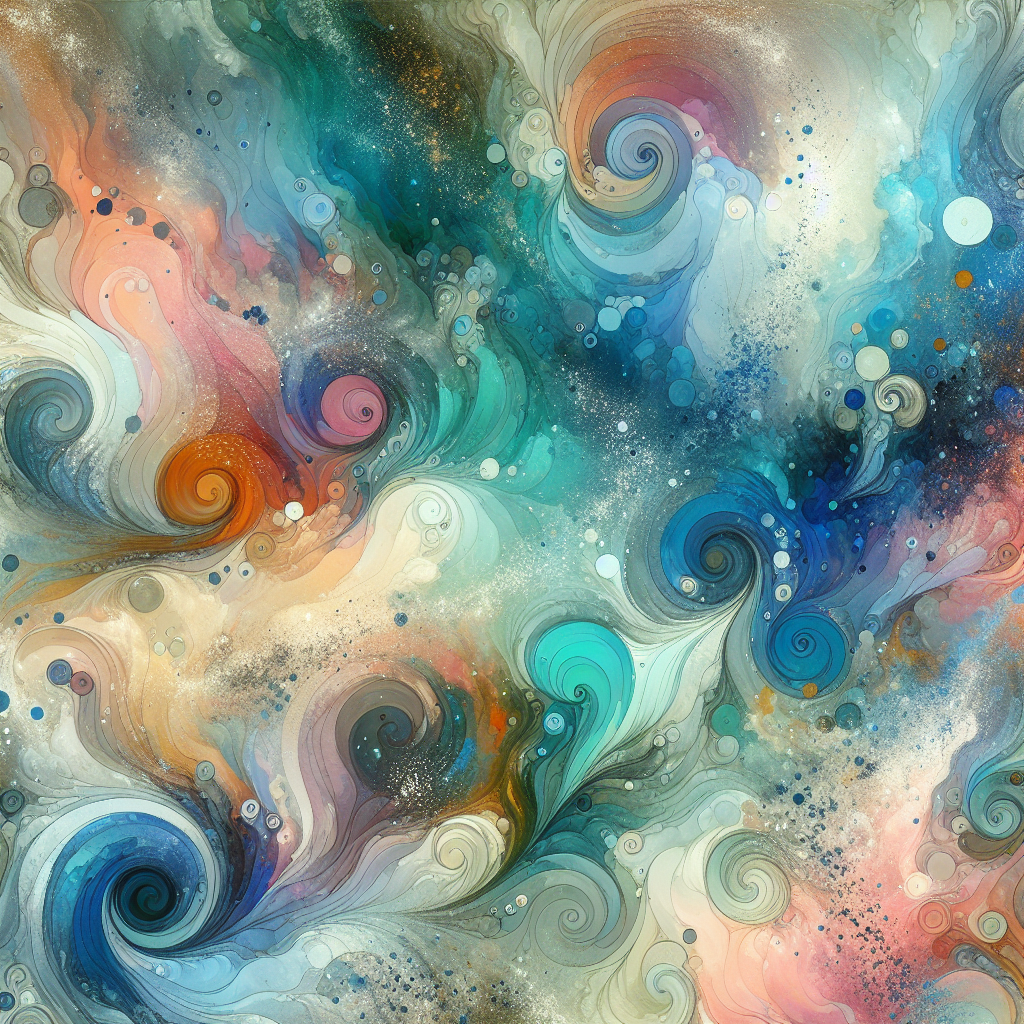
Ephemeral Swirls
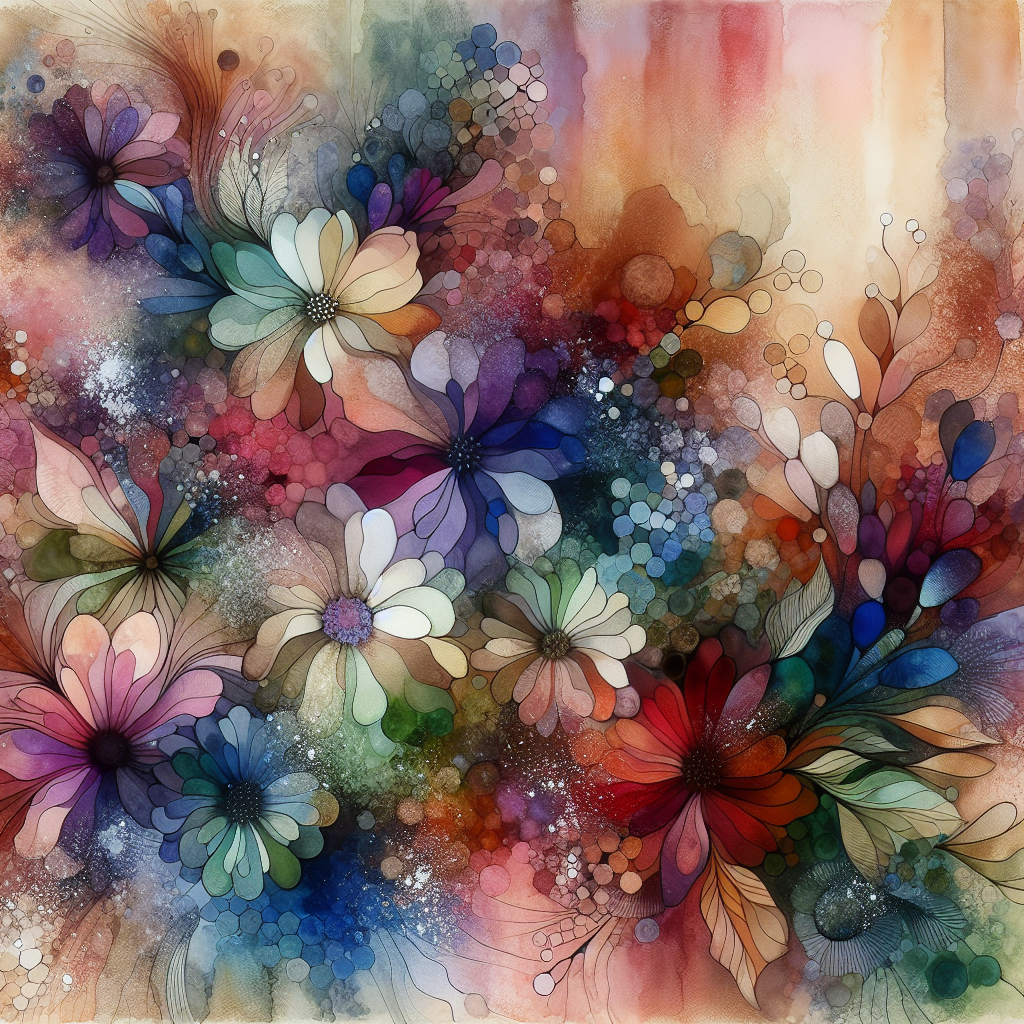
Whispering Petals
Building a Sustainable Art Mindfulness Practice
The research on mindfulness consistently shows that regularity matters more than duration. A fifteen-minute practice three times a week produces greater long-term benefit than a single ninety-minute session once a month. This applies to art-based mindfulness as much as to seated meditation.
The practical implication is that the most valuable thing you can do is lower the friction of the practice — making it easy enough to begin on days when motivation is low. A few principles help with this:
Keep materials accessible. If your drawing materials are in a closet, you will skip sessions. A set of pens and a stack of printed designs on a visible desk surface removes the setup barrier. The moment you sit down, you can begin.
Protect the time container. Flow requires uninterrupted engagement. A ten-minute session where you check your phone twice is far less effective than a ten-minute session where you do not. Even a brief interruption reactivates the default mode network — the inner narrator comes back online. A short but protected window consistently outperforms a long but fractured one.
Release the outcome. The mindfulness benefit of drawing comes from the process, not the product. A session that produces something you consider beautiful and a session that produces something you consider mediocre have essentially the same neurological effect if the quality of engagement was the same. Keeping the output out of the evaluation calculus is one of the most important habits to build.
For people who find seated meditation genuinely inaccessible — whether due to anxiety, ADHD, chronic pain, or simply temperament — art-based mindfulness is not a lesser alternative. It is a different but equally valid pathway. The goal of mindfulness practice has always been to cultivate a quality of attention that carries over into daily life. Flow-based practices build that same attentional capacity, through a different door.
For more on how creative activities intersect with mental health, see art therapy activities you can do at home. If you are exploring reverse coloring as a specific practice, what is reverse coloring covers the technique in detail. And if anxiety is part of why you are searching for calming creative practices, calming activities for anxiety that don't require sitting still addresses the nervous system science directly.
Top tip
Set a five-minute intention before you begin. Not a goal for the drawing — an intention for the attention. Something like: "For this session, I will look carefully before I mark." This primes the observational mode that makes the session meditative rather than merely productive.
The Difference Between Art as Mindfulness and Art as Productivity
There is a subtle trap in bringing mindfulness intentions to creative practice: the productivity reflex. We are conditioned to evaluate creative sessions by what they produce. If the drawing looks good, the session was good. If it looks bad, we failed.
This framing is antithetical to mindfulness, which by definition involves non-judgmental awareness. The moment you begin evaluating whether the drawing is meeting a quality standard, you reactivate the prefrontal monitoring that flow was suppressing. The inner narrator comes back, now with aesthetic opinions.
Separating art-as-mindfulness from art-as-production is a conscious practice. It helps to have a clear intention at the start of each session: this session is for presence, not for product. Some people keep their "mindfulness drawings" separate from work they actually care about aesthetically — they make the distinction literal by using cheap paper or a dedicated sketchbook that is never evaluated, never shown to anyone, never judged.
Reverse coloring is structurally helpful here. Because the most visually striking element of the image — the watercolor background — is already provided, the session cannot be "ruined" by your drawing. Whatever marks you add, the image retains its original beauty. This removes the highest-stakes evaluative moment from the session: whether you made something worth looking at. You are always adding to something already worth looking at.
Start your art mindfulness practice this week
Get a free AI-generated watercolor design delivered to your inbox every week. Print it, pick up a pen, and give yourself twenty minutes of genuine present-moment focus. No skill required.
Free forever. No spam. Unsubscribe anytime.
Frequently Asked Questions
Can art-making really count as mindfulness?
Yes. The clinical definition of mindfulness — present-moment, non-judgmental awareness — does not specify the mechanism by which that awareness is achieved. Art-making achieves it through focused visual attention and hand-eye coordination rather than through deliberate breath focus. The research on flow states shows that deep creative engagement produces neural signatures similar to those observed during meditation, including reduced default mode network activity. What matters is the quality of attention, not the technique used to arrive at it.
Do I need to be a good artist for creative flow to work?
No. Flow state is not a function of skill level — it occurs when challenge and ability are in balance. This means that a beginner working on a well-calibrated beginner task can experience flow just as readily as an expert working on an expert task. Structured activities like reverse coloring are designed specifically to place beginners in that balance point. The background is already complete; your task is observation and response, not generation. That calibration makes flow accessible without requiring existing skill.
How is creative flow different from regular distraction?
Distraction fragments attention across multiple stimuli without producing genuine absorption. Flow concentrates attention on a single task and produces genuine absorption. During flow, self-referential thinking quiets, time perception shifts, and the activity absorbs awareness almost completely. The neurological difference is significant: distraction (scrolling, television) tends to leave the default mode network partially active, meaning the inner narrator keeps running in the background. Flow suppresses it more thoroughly.
How long does it take to get into a flow state when drawing?
Most people report a transition period of 5-15 minutes before absorption deepens. The early part of a session typically involves some degree of self-monitoring and evaluation. As the observational task takes over, this decreases. Starting with a structured, visually engaging image rather than a blank page shortens the entry time significantly, because there is less generative ambiguity to navigate before the observational engagement begins.
Is reverse coloring suitable for people with no meditation experience?
Yes, and it may be easier for beginners than traditional meditation. In seated meditation, beginners often struggle because there is no concrete object of focus — just the breath, which is subtle and easy to lose. Art-making provides visual and tactile anchors that give the mind something concrete to hold. This removes the most common beginner frustration: having nothing to sustain attention to. People who have tried and abandoned seated meditation sometimes find that art-based practice gives them their first genuine experience of what mindfulness is supposed to feel like.
How often should I practice art-based mindfulness to notice a difference?
Studies on art-making and wellbeing suggest that even one 45-minute session produces measurable cortisol reduction. Regular practice two to three times per week compounds this effect over time, building attentional capacity and reducing baseline stress reactivity. The most important factor is consistency, not duration. A fifteen-minute session three times a week will produce more lasting benefit than a single hour-long session on the weekend.