The Science of Why Drawing Reduces Stress (And How to Use It)
FreeReverseColoring · Editorial
Quick Answer
Drawing reduces stress through three converging mechanisms: it suppresses the brain's default mode network (the rumination engine), triggers measurable cortisol reduction through focused creative engagement, and activates a hand-brain feedback loop that anchors attention in the present moment. These effects occur regardless of artistic skill level and begin within the first session.
What Stress Actually Does to the Brain — and Why Attention Is the Lever
To understand why drawing reduces stress, it helps to understand what stress does to the brain in the first place. When the nervous system detects threat — whether that threat is a predator or a difficult email — the hypothalamic-pituitary-adrenal (HPA) axis activates and triggers the release of cortisol, the primary stress hormone. Cortisol prepares the body for emergency response: it raises blood glucose, suppresses non-essential immune functions, and sharpens threat-relevant attention.
In short bursts, this is adaptive. The problem is that modern stress is rarely the short-burst variety. Work pressure, financial worry, relationship tension, and social comparison do not resolve in minutes the way an animal threat does. They persist, and so cortisol levels remain elevated — not to dangerous peaks, but to chronically elevated baselines that produce measurable damage over time: impaired memory consolidation, disrupted sleep, immune suppression, and a heightened hair-trigger for further stress responses.
What cortisol does to attention is particularly important for understanding why drawing helps. Elevated cortisol narrows attentional focus toward threat-relevant stimuli and increases the activity of the default mode network — the brain system responsible for self-referential thought, mind-wandering, and rumination. In simple terms: stress makes you think about yourself more, specifically about your problems, your mistakes, and your uncertain future. This is the engine of chronic stress maintenance. The worrying about the thing is often more physiologically harmful than the thing itself.
The intervention point is attention. Techniques that redirect attention away from self-referential rumination reduce DMN activity, which in turn reduces cortisol. This is the mechanism behind meditation, mindfulness, physical exercise, and — as a growing body of research confirms — art-making.
The Cortisol Research: What Studies Actually Show
The most frequently cited research on art-making and cortisol comes from Dr. Girija Kaimal and colleagues at Drexel University, published in 2016 in the journal Art Therapy. The study measured salivary cortisol in 39 participants before and after 45-minute art-making sessions. Participants could use a range of materials: collage, markers, modeling clay. Crucially, roughly half had no prior art experience.
The finding: 75% of participants showed reduced cortisol after the session. There was no significant difference between experienced and inexperienced art-makers. The stress-reduction effect was not a product of skill. It was a product of engagement.
Subsequent research has reinforced and extended these findings. A 2021 review published in Frontiers in Psychology examined 37 studies on art-making and psychological wellbeing and found consistent evidence of stress reduction, mood improvement, and reduced anxiety across diverse populations — including medical patients, caregivers, and people with no clinical condition being treated. The review noted that the mechanism appears to be engagement-based rather than skill-based, supporting the view that access to the benefit does not require artistic training.
Other research has looked at specific types of creative engagement. Studies on coloring — a simple, structured visual task — have found significant reductions in anxiety and stress markers, with researchers noting that the structured nature of the task (clear boundaries, defined color areas, predictable feedback) may make it easier for novices to achieve the absorbed state that produces the neurological effect. This finding has direct implications for understanding why structured visual formats are particularly effective stress-relief tools.
The Default Mode Network: Why Rumination Is the Real Problem
The default mode network is active when you are not focused on a specific external task. It is the network that fires up when you daydream, replay social interactions, plan for the future, or think about yourself. It is, in a sense, the brain's background processing system — running whenever the foreground is not occupied.
The DMN is not inherently problematic. Its activity underlies some of the most valuable cognitive functions humans have: self-reflection, empathy, future planning, creativity. The problem arises when it becomes the dominant mode, cycling through threat assessments, self-critical narratives, and catastrophic predictions without resolution. This is rumination — and it is the cognitive process most strongly associated with stress, anxiety, and depression.
Research using fMRI imaging has shown that skilled meditators show reduced DMN activity during meditation, and that this suppression is one of the key mechanisms through which meditation reduces stress. What is less commonly known is that the same pattern of DMN suppression appears during flow states — the state of deep absorption in challenging, engaging tasks.
When you are fully engaged in observational drawing, the task demands present-tense, external-world attention. You are looking at an actual shape, tracking its contours, deciding where to place a mark, evaluating the mark against the source. This is not a future-oriented or self-referential cognitive process. The DMN has nothing useful to contribute to it. And as with meditation, the network's activity decreases accordingly.
The difference between drawing and meditation is the mechanism of entry. Meditation typically asks you to use attentional control to redirect from thought to breath — a top-down effortful process that requires practice to sustain. Drawing achieves DMN suppression through task absorption — a bottom-up process that occurs naturally when the task is engaging enough. For many people, especially those who find meditation effortful or frustrating, this distinction matters considerably.
"Stress persists not because of what happened, but because of what we keep thinking about. Drawing interrupts the thinking loop — not by force, but by replacing it."
Flow State: The Neuroscience of Being Completely Absorbed
Mihaly Csikszentmihalyi's concept of flow — deep, effortless absorption in a challenging task — has been one of the most influential frameworks in positive psychology. It describes a state that most people have experienced but rarely know how to reliably induce: time disappears, self-consciousness evaporates, effort becomes invisible, and the activity itself becomes its own reward.
Neuroscientifically, flow involves several simultaneous phenomena. DMN activity decreases. Task-relevant neural networks become highly coherent and synchronized. The brain's reward system activates, releasing dopamine in a way that is associated with intrinsic motivation rather than external reward. Prefrontal activity related to self-monitoring and evaluation temporarily decreases — a state called "transient hypofrontality" that is associated with reduced self-consciousness and reduced inhibition.
The conditions for flow are relatively well-established: the task must be challenging enough to require attention but not so difficult that it generates anxiety. It should provide clear, immediate feedback. It should have defined goals or structure. And it should allow for genuine engagement without significant external interruption.
Drawing — particularly observational drawing with a structured visual reference — meets these conditions well for a wide range of participants. The challenge can be calibrated by the complexity of the image. Feedback is immediate and visible. The structure (look, mark, look, adjust) is clear. And the sensory density of the task — color, form, line, spatial relationships — provides enough ongoing input to sustain engagement.
This is the practical reason why structured creative formats like reverse coloring are particularly effective at inducing flow for beginners. The background provides enough visual richness to sustain interest, while the defined task (add outlines to what you see) provides enough structure to prevent the kind of generative paralysis that stops many beginners before they begin.
The Hand-Brain Loop: Why Physical Mark-Making Matters
There is something specific about making marks by hand that matters for stress relief beyond what general attentional focus provides. The hand-eye coordination loop in drawing engages proprioceptive awareness — the felt sense of your own body — in ways that screen-based or purely mental activities do not.
Research on embodied cognition has shown that the motor system is deeply integrated with cognitive and emotional processing. Hand movements activate sensorimotor cortex, which is anatomically and functionally connected to emotional regulation systems. The deliberate, fine-motor control required for drawing — holding a pen, controlling pressure, adjusting direction — activates this system in a way that appears to contribute to emotional regulation beyond what visual attention alone would produce.
This is part of why tactile craft activities — drawing, knitting, pottery, woodworking — consistently show up in stress-reduction research across cultures and populations. The hand-brain connection is ancient and deeply embedded. Activities that engage the hands in skilled, focused ways appear to activate something that sedentary, screen-based engagement does not.
There is also a feedback quality to hand-drawing that differs from digital tools. When you make a mark on paper, you feel the pen on the surface. You hear the slight sound it makes. You see the ink appear. This multisensory, immediate feedback loop is a natural attentional anchor — harder to drift away from than the abstract feedback of a digital interface.
For beginners, this physical dimension of drawing is often underestimated. Many people assume that the benefit of drawing comes from the visual result. The research suggests that a substantial portion of the benefit comes from the act of making — the physical process of hand movement, sensory feedback, and embodied engagement that digital coloring or image-editing cannot replicate in the same way.
Why Reverse Coloring Is the Most Accessible Entry Point
The primary obstacle that prevents most people from using drawing as a stress-relief tool is not lack of interest or motivation. It is the blank page — and more specifically, the self-evaluation that the blank page demands. When you sit down to draw with no structure, you immediately face a series of high-stakes generative decisions: What will I draw? How will I compose it? What if it looks wrong?
These questions are not conducive to flow or stress relief. They are the opposite: they activate evaluation, comparison, and self-monitoring — the same processes that stress amplifies and that drawing is supposed to quiet. The blank page, for many people, replaces one source of stress with another.
Reverse coloring solves this structurally. The starting point is a complete, richly layered watercolor image — already beautiful, already finished. Your task is not to create something from nothing. Your task is to look at what is already there and respond: trace the shapes you perceive in the color, add forms that the image suggests, draw the outlines your eye naturally gravitates toward. The question is not "what should I make?" It is "what do I see?"
This shifts the cognitive mode from generation to observation. And as the neuroscience above suggests, observation is precisely the mode that produces DMN suppression, flow, and cortisol reduction. Reverse coloring places beginners directly in the conditions for the therapeutic effect — without requiring the generative decisions that typically block access to it.
The structural advantage compounds when you consider the evaluative pressure. Because the most striking visual element of the image — the watercolor background — is provided, the session cannot be "ruined" by your drawing choices. Whatever marks you make, the image retains its original visual richness. This removes the highest-stakes evaluation moment from the session and makes it genuinely safer to engage without self-judgment.
Nebulous Drifts

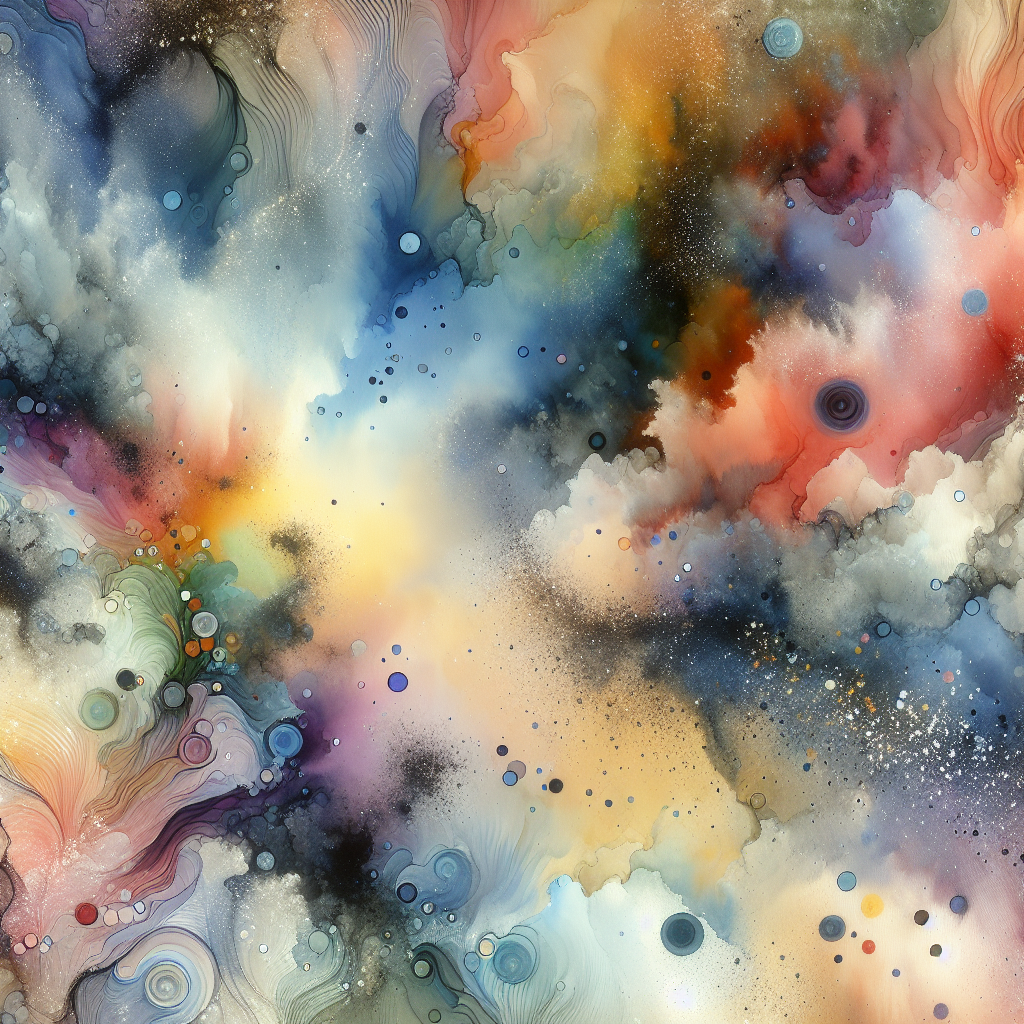
Cosmic Voyage
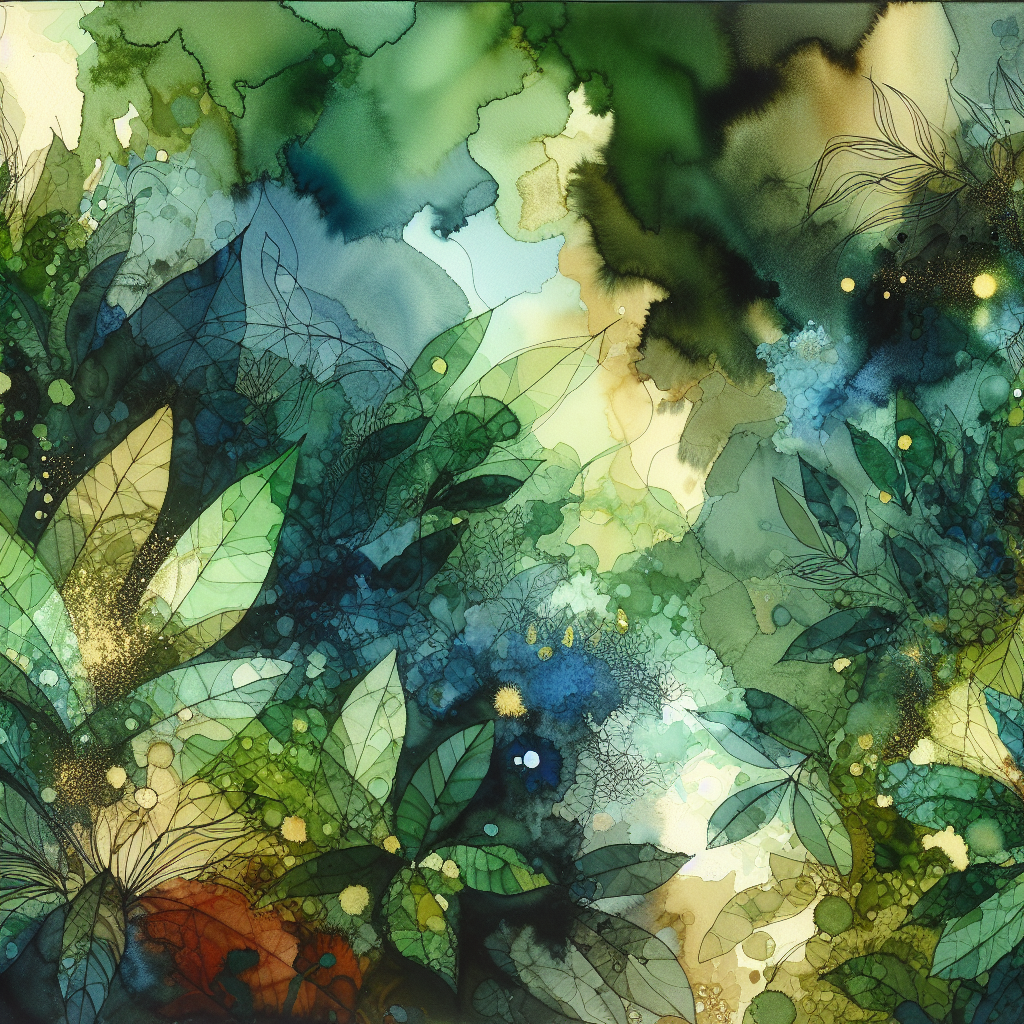
Verdant Whispers
Building a Drawing Practice That Actually Sticks
The research on stress and wellbeing is clear that consistency matters more than intensity. A drawing practice done two to three times per week produces more lasting cortisol reduction and attentional resilience than sporadic longer sessions. The practical challenge is building a habit that sustains itself.
Several principles help:
Lower the setup cost. The single biggest predictor of practice consistency is how easy it is to begin. If you have to find materials, set up a space, and decide what to draw every time, you will skip sessions during low-motivation periods. A printed design on your desk, pens in a visible container, and a designated time removes these barriers. The goal is to reduce the activation energy to zero.
Separate the stress-relief practice from any art goals. If you are also trying to improve your drawing skills, keep that work separate from your stress-relief sessions. Skill-building involves evaluation and correction — both of which reactivate the DMN. Stress-relief drawing should be explicitly evaluation-free: no comparing your marks to a standard, no deciding whether it looks good. Just making marks in response to what you see.
Use duration as a floor, not a ceiling. Commit to a minimum — fifteen or twenty minutes — but don't cap the session. Flow tends to deepen over time. If you are absorbed and the session naturally extends to forty-five minutes, that is the practice working. Cutting it off prematurely because the timer rang interrupts the very state you were cultivating.
For more on how drawing fits into a broader stress-management approach, see calming activities for anxiety that don't require sitting still, which covers the nervous system science in more detail. If you are new to reverse coloring as a technique, what is reverse coloring explains the approach. And if you are looking for other ways to build screen-free space for stress relief, screen-free activities for adults offers a range of options.
Top tip
After a stressful day, resist the urge to choose the most complex design in your collection. A visually rich but compositionally simpler image gets you into flow faster. Save the intricate designs for when your baseline is already lower — they will feel more rewarding and less frustrating.
The Compound Effect: What Regular Practice Builds
Single-session cortisol reduction is well-documented. What is less discussed is what happens when the practice becomes regular over weeks and months.
Research on meditation — the most studied attentional training practice — shows that consistent practitioners develop measurable differences in brain structure and function over time. The prefrontal cortex (associated with emotional regulation) shows increased gray matter density. The amygdala (the brain's threat-detection center) shows reduced reactivity to stressors. Practitioners don't just feel less stressed during sessions. Their baseline stress reactivity decreases.
There is growing evidence that art-based practice produces analogous adaptations. A 2010 study published in Art Therapy followed adults who engaged in regular art-making over eight weeks and found significant reductions in perceived stress, improvements in self-efficacy, and changes in how participants reported responding to stressful events. The practice did not just produce in-session relief — it appeared to change how participants experienced stress outside of sessions.
The mechanism is likely attentional training. Consistent practice in directing and sustaining attention toward a specific task, and releasing habitual rumination during that time, appears to build the attentional capacity to do so more easily in other contexts. Over time, the practiced ability to redirect from rumination becomes more accessible — not just during a drawing session, but throughout the day.
This is the full value of establishing a drawing practice. Not twenty minutes of cortisol reduction three times a week — though that is genuinely valuable on its own terms. But the gradual building of an attentional capacity that changes how your nervous system responds to stress as a baseline. Art-making, practiced consistently, is not just a response to stress. It is a training protocol that makes you more resilient to it.
Start reducing stress with your first free design
Get a free AI-generated watercolor design delivered to your inbox each week. Print it, pick up a pen, and give yourself twenty minutes of genuine absorption. No art experience needed — the science works regardless of skill level.
Free forever. No spam. Unsubscribe anytime.
Put the research into practice
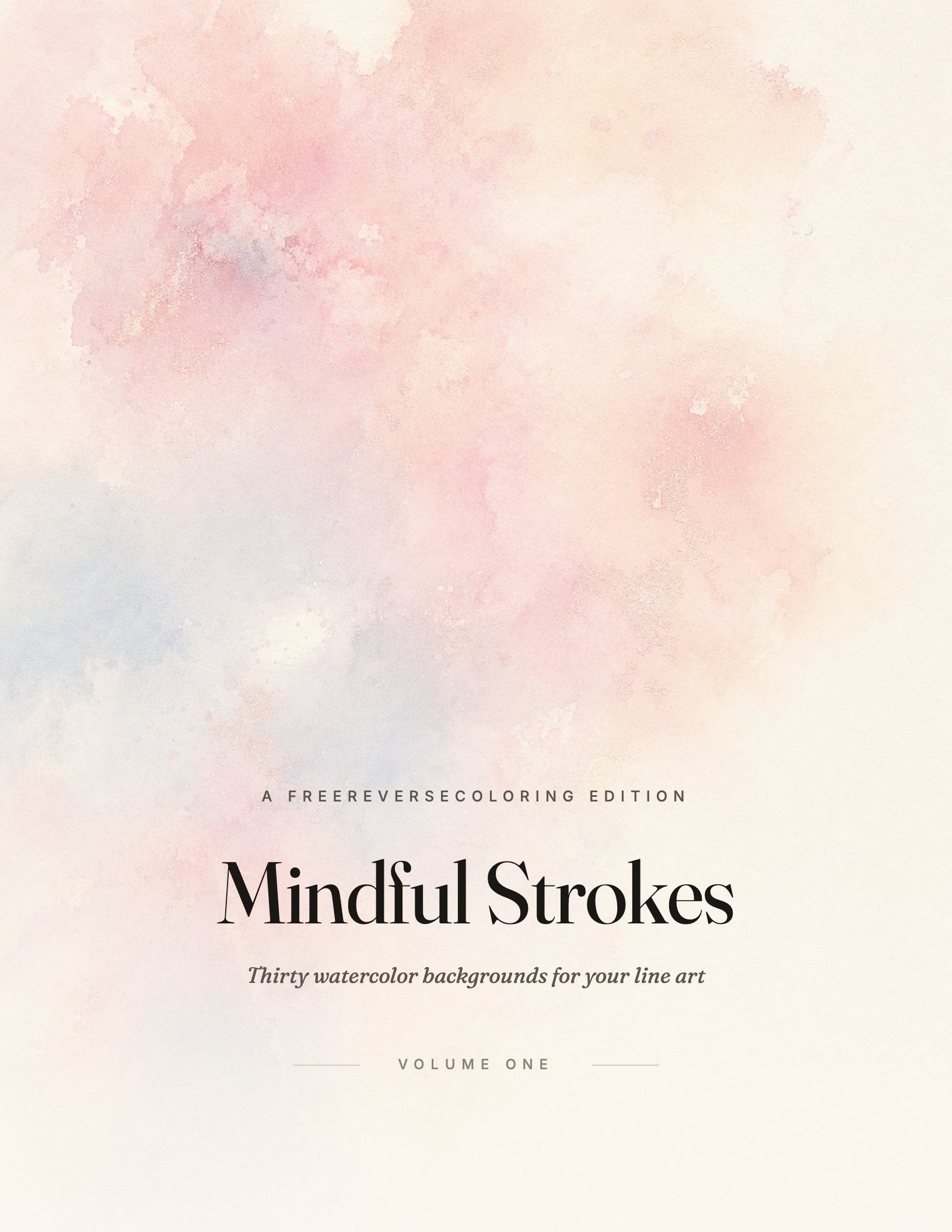
Mindful Strokes — Volume One gives you 30 curated watercolor backgrounds and 50 prompts — a month of evidence-backed 20-minute drawing sessions in one printable $9 PDF. Try the free 8-page sample first.
Frequently Asked Questions
Why does drawing reduce stress scientifically?
Drawing reduces stress through three converging mechanisms. First, it suppresses the default mode network — the brain region responsible for rumination and self-referential thought — by redirecting attention to the immediate, present-tense task of observation and mark-making. Second, it triggers measurable cortisol reduction: research at Drexel University found a 75% rate of cortisol decrease after 45-minute art-making sessions, regardless of participants' skill levels. Third, it activates the hand-brain feedback loop through fine motor engagement, which appears to contribute to emotional regulation through the embodied connection between manual activity and the nervous system.
Do I have to be good at drawing for it to reduce stress?
No. This is one of the clearest findings in the research: the stress-reduction effect is tied to engagement quality, not output quality. The Drexel studies specifically included participants with no art background and found the same cortisol reduction as in experienced artists. The therapeutic mechanism is the process of engaged attention, not the aesthetic value of the result. A drawing session in which you are genuinely absorbed but produce something you consider ugly has essentially the same physiological effect as one in which you are equally absorbed and produce something beautiful.
How long does a drawing session need to be to reduce stress?
Research suggests 45 minutes as a well-documented effective session length. However, meaningful physiological shifts can begin within 20 minutes of genuine engagement, and many people report a noticeable state change within the first 10 minutes once the activity has absorbed their attention. The key factor is sustained engagement — fragmented attention during the session reduces the effect significantly. A shorter protected session outperforms a longer interrupted one.
Is drawing more effective than other stress relief activities?
Drawing is not categorically superior to all other stress relief techniques — walking, gardening, and other absorbing physical activities produce comparable effects through similar mechanisms. Drawing has specific advantages: it requires minimal equipment, can be done indoors in any weather, and produces particularly deep attentional absorption for people who are visually oriented. Its greatest advantage is the accessibility of the flow-entry point, especially with structured formats like reverse coloring that remove the blank-page barrier.
What type of drawing is best for stress relief?
Observational drawing — where you are looking at and responding to a visual image — tends to be more absorbing than drawing from imagination, because it anchors attention in the present-tense external world rather than in memory or invention. Structured formats are especially effective for beginners, because they provide a visual scaffold that reduces the generative decisions that block access to flow. The more of the visual structure that is provided for you, the lower the initiation barrier — and the faster you can enter the absorbed state that produces the neurological effect.
Can drawing help with chronic stress, or just acute stress in the moment?
Both. Single sessions produce acute cortisol reduction that is measurable in the hours following the practice. Regular practice over weeks appears to build attentional resilience and reduce baseline stress reactivity — analogous to how regular aerobic exercise produces cardiovascular adaptation over time. Research following participants over 8-week art-making programs found not only reduced perceived stress but changes in how participants reported responding to stressful events outside of sessions. The benefit compounds with consistency.