Best Creative Hobbies for Beginners: An Honest Ranking
FreeReverseColoring · Editorial
Quick Answer
The best creative hobby for a beginner is the one with the lowest barrier to starting — low cost, no prerequisite skill, and a defined activity that doesn't require solving a creative direction problem before you can begin. By those criteria, reverse coloring, drawing, and journaling lead the field. More demanding hobbies like ceramics, oil painting, and music production are deeply rewarding but front-load frustration in a way that causes most beginners to quit before they get traction.
How to Read This Ranking
Most "best hobbies" lists are aspirational rather than honest. They describe hobbies at their best — the serene potter in her studio, the confident watercolorist at the cafe table — without accounting for what the first six months actually look like: the failed attempts, the gap between what you envisioned and what you produced, the question of whether you're cut out for this.
This ranking is organized differently. Each hobby is evaluated on three axes that matter most for beginners:
- Cost to start — what you actually need to spend before you know whether you like it
- Learning curve — how much time passes before sessions feel rewarding rather than frustrating
- Beginner satisfaction — the likelihood that early sessions produce genuine enjoyment, not just the promise of future enjoyment
These three factors predict whether a beginner sticks with a creative hobby past the first month — which is the window where most people stop.
Tier 1: Start Today, Cost Almost Nothing
Reverse Coloring
Cost to start: Free. Learning curve: Minimal. Beginner satisfaction: High immediately.
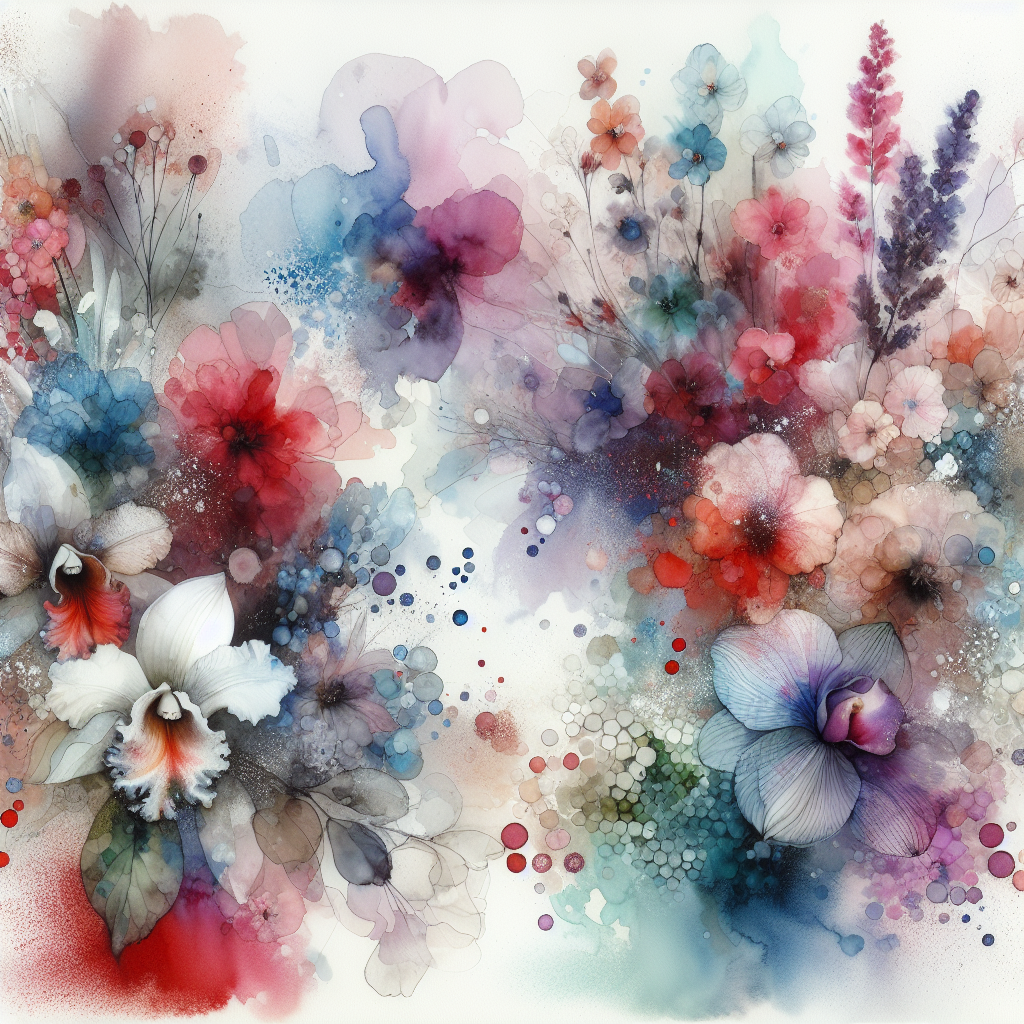
Reverse coloring is the practice of drawing outlines and forms on top of pre-colored backgrounds — typically watercolor images that arrive already finished, already beautiful. Your task is to find the forms suggested by the colors and draw them. There is no blank page. There is no "what should I draw" question to answer before you can begin.
For beginners, this eliminates the two most common barriers to visual art: the anxiety of the blank page and the feeling that you need to be good at drawing before you can enjoy drawing. You are responding to something that already exists rather than generating something from nothing. The image is already beautiful before you add anything; what you add is exploration, not justification.
The cost is effectively zero — FreeReverseColoring.com delivers a new watercolor design to your inbox each week, free, and all you need is a printer and a pen. There is no equipment to buy, no class to take, no decision about what to draw.
For a deeper look at why this approach works for people who consider themselves non-artistic, see art for people who think they can't draw.
Journaling and Reflective Writing
Cost to start: $5-10 for a notebook and pen. Learning curve: Minimal. Beginner satisfaction: High, though highly personal.
Writing is the most universally accessible creative medium because the tools are familiar, the format is unconstrained, and there is no audience to perform for. Journaling requires nothing except time and honesty. It produces benefits — emotional processing, clarity of thought, the pleasure of articulating something that was previously formless — that are available from the first session.
The downside for some beginners is the same as its strength: the unlimited freedom. No format, no subject, no structure. If an empty page is more anxiety-producing than liberating, journaling can feel directionless rather than free. Structured approaches (gratitude journaling, three-pages-per-morning in the Julia Cameron tradition, prompted writing) solve this for many people.
Sketching and Drawing
Cost to start: $10-20 for pencils and a sketchbook. Learning curve: Moderate. Beginner satisfaction: Variable — high when observational, difficult when imaginative.
Drawing is one of the most portable, inexpensive, and scalable creative hobbies available. It requires almost nothing to start and can develop into a sophisticated, absorbing practice over years. The perceptual training alone — learning to really see light, form, and proportion — changes how you experience the visual world.
The caveat: early drawing sessions are more frustrating than early journaling sessions, because the gap between what you see in your mind and what your hand produces is immediately visible and often discouraging. Observational drawing (drawing from life or reference) is more accessible than imaginative drawing for beginners, because it gives the hand something specific to respond to. Drawing classes help significantly. The Betty Edwards method (particularly the exercises in Drawing on the Right Side of the Brain) has produced measurable results for beginners who considered themselves constitutionally unable to draw.
The connection between drawing and mental clarity is covered in more depth in the science of why drawing reduces stress.

Tier 2: High Reward, Small Upfront Investment
Watercolor Painting
Cost to start: $30-60 for student-grade paints, paper, and brushes. Learning curve: Moderate to steep. Beginner satisfaction: Moderate — the medium is unpredictable in ways that beginners find either delightful or maddening.
Watercolor is one of the most beautiful and most humbling painting mediums. Water does things you did not intend. Colors bloom and bleed in ways that are sometimes magical and sometimes catastrophic. The medium rewards looseness and patience and punishes overthinking and overworking — which means it tends to teach beginners things about themselves fairly quickly.
The startup cost is reasonable for a genuine creative hobby: a set of student-grade paints, a few brushes, and proper watercolor paper (regular printer paper will not work) runs $30-60. Online tutorials are abundant and free. The payoff when sessions go well is significant — there is a particular satisfaction in a watercolor that works that few other beginner mediums can match.
The risk is the frustration tax during the first weeks while learning how to work with the medium rather than against it. Beginners who enjoy process and tolerate uncertainty tend to take to watercolor faster than those who need legible results quickly.
Knitting and Crochet
Cost to start: $20-40 for yarn and needles/hooks. Learning curve: Moderate. Beginner satisfaction: High once basic motions are learned (typically after 2-3 sessions).
Knitting and crochet belong in a slightly different category from visual art — they are tactile, rhythmic, and produce functional objects rather than purely aesthetic ones. This makes them particularly suitable for people who feel guilty spending time on something with no practical output.
The learning curve has a specific shape: the first two sessions feel awkward and slow, and the gap between where the needles are and where they need to go is frustratingly imprecise. By session three or four, basic mechanics become somewhat automatic, and from that point the hobby becomes meditative. The rhythm is one of its most significant features — knitting and crochet are among the few creative hobbies that can be practiced while listening to audiobooks, podcasts, or watching television, which makes them unusually sustainable for people with limited uninterrupted time.
Collage
Cost to start: $0-15 (old magazines, scissors, glue, paper). Learning curve: Very low. Beginner satisfaction: High — visual decision-making without technical skill.
Collage is underrated as a beginner creative hobby because it is often associated with children's crafts. In practice, it is a serious visual art form that makes sophisticated demands on composition, color sense, and juxtaposition. It also removes technical skill almost entirely from the equation: you are selecting and arranging rather than drawing or painting.
For people who want to engage with visual art but find the technical barriers of drawing or painting frustrating, collage offers genuine creative engagement at essentially zero cost and no learning curve. The materials are old magazines, a pair of scissors, and a glue stick. The activity is looking, selecting, and placing — which is more cognitively interesting than it sounds.
Tier 3: High Ceiling, Significant Investment
Pottery and Ceramics
Cost to start: $200-500+ if taking classes; $1,000+ for a personal wheel and kiln. Learning curve: Steep. Beginner satisfaction: Low initially, high once basic centering is achieved.
Ceramics produces some of the most satisfied long-term practitioners of any creative hobby. The connection to material, the transformation of raw clay into a finished object, the sensory satisfaction of working with your hands — these qualities are unusually compelling once you have access to them.
The barrier is significant. Most beginners need class access (a pottery studio or community arts center) because the wheel, kiln, and clay represent substantial upfront costs. Centering clay on a wheel takes most beginners four to eight sessions to achieve with any consistency, and that period is often deeply frustrating. Hand-building techniques (coiling, pinching, slab construction) have a lower learning curve and are worth starting with before attempting wheel work.
"The right creative hobby is not the most impressive one. It is the one with a low enough entry point that you actually begin — and a high enough ceiling that you keep going."
If the long-term investment is appealing and you have access to a community studio, ceramics is one of the most rewarding creative paths available. If you are testing whether you enjoy making things with your hands, start with collage or drawing first.
Oil and Acrylic Painting
Cost to start: $80-150 for student-grade materials. Learning curve: Steep. Beginner satisfaction: Low to moderate — results rarely match expectations early on.
Oil and acrylic painting carry an aspirational weight that makes them common first choices for people who want to "become an artist." They are also among the slower-burning creative hobbies in terms of beginner satisfaction, because the technical demands (mixing color, controlling consistency, understanding light and shadow, composition) are all present simultaneously from the first session.
Acrylics are more beginner-friendly than oils: they dry faster, clean up with water, and are less toxic. Both mediums benefit enormously from structured instruction. Free YouTube tutorials have made self-teaching more viable than it once was, but most beginners progress faster with even a single in-person class that addresses foundational concepts.
The payoff at intermediate and advanced levels is significant. Oil painting in particular offers a richness and depth of surface that no digital medium fully replicates. But the path from beginner to competent is longer and more effortful here than in most other creative hobbies.
Music Production and Songwriting
Cost to start: $0 (GarageBand on Mac/iOS) to $200+ for a MIDI controller and DAW. Learning curve: Very steep. Beginner satisfaction: Low initially — the gap between what you hear and what you can produce is large and persists for months.
Music production is included here because it is increasingly accessible as a creative hobby, especially with free software and tutorial ecosystems that didn't exist ten years ago. It is also among the most demanding beginner experiences because the technical knowledge required (music theory, sound design, mixing, arrangement) is extensive and largely invisible to the uninitiated.
Beginners who come with some musical background (any instrument, any level of music theory) will find the entry considerably less steep. Those starting from zero should expect six months or more before sessions feel rewarding rather than disorienting. The long-term ceiling is high — music production is one of the few creative hobbies where beginner work and professional work are separated by years of technical development — but the path there requires sustained tolerance for frustration.
The Real Question: What Lowers the Barrier Enough That You Actually Begin?
The ranking above is useful for setting expectations, but it obscures the most important variable: the barrier to starting for you specifically. Some people find blank-page writing energizing; others find it paralyzing. Some find the tactile messiness of clay appealing; others need a cleaner process.
What creative hobbies for beginners share, when they work, is a low enough barrier that you actually begin — not just intend to begin. This is where reverse coloring has a structural advantage that other hobbies don't: the creative decision about what to make is already made for you. The image arrives. You print it. You sit down with a pen and begin.
Vivid Voyages
Celestial Voyage

Nebulous Drifts
For most people who have tried creative hobbies and abandoned them, the failure point was not the creative work itself — it was the activation energy required to begin, week after week. A hobby that eliminates most of that friction is worth starting with, especially if you want to build the kind of sustained creative practice described in our article on building a weekly creative habit.
Top tip
When choosing a first creative hobby, start with the one that requires the fewest decisions before you can begin — not the one that sounds most impressive or that you most want to be good at. Competence builds from engagement, and engagement requires starting.
When to Move Between Hobbies
One question that comes up for beginners: how long should you stay with a hobby before concluding it is not for you?
The answer depends on where in the learning curve you are. Every creative hobby has an "ugly phase" — usually between sessions two and ten — where your technical capacity has improved just enough that you can see clearly how far you are from where you want to be. This phase feels terrible. It is also temporary and necessary. Quitting during the ugly phase means never finding out what the hobby is actually like when you have some facility with it.
A useful rule of thumb: give any creative hobby at least eight genuine sessions before evaluating whether you want to continue. Eight sessions is typically enough to get through the worst of the ugly phase and begin to experience what the hobby offers at a slightly more practiced level. Less than that, and you are evaluating the entry cost rather than the hobby itself.
If eight sessions in you still dread the sessions more than you anticipate them, that is legitimate signal. Not every creative medium is right for every person. The right creative hobby is the one where the sessions themselves — not just the finished products — are satisfying. That quality usually becomes apparent within eight sessions if it exists at all.
For those interested in the broader connection between creative practice and mental wellness, art therapy activities you can do at home covers how structured creative engagement supports emotional health. And if you are exploring creative hobbies as part of a broader project of spending more time offline, screen-free activities for adults offers additional direction.
The lowest-barrier creative hobby starts here
Get a free watercolor design in your inbox every week. No skill required, no materials to buy, no blank page to face. Just a beautiful image and a pen.
Free forever. No spam. Unsubscribe anytime.
Frequently Asked Questions
What is the easiest creative hobby to start?
Reverse coloring has the lowest barrier to entry of any visual art hobby: it costs nothing to start, requires no prior skill, and eliminates the blank page problem that stops most beginners before they begin. Drawing and journaling are close seconds, but both require more comfort with starting from nothing. Drawing asks you to decide what to draw; journaling asks you to decide what to write. Reverse coloring makes those decisions for you.
Which creative hobbies are most affordable?
Reverse coloring, journaling, and drawing are all effectively free or near-free to start. Knitting and watercolor painting require a modest initial investment of $20-50 for basic materials. Photography, ceramics, and printmaking carry higher startup costs, especially when you factor in equipment, studio access, or classes. The cost differential matters most in the first month, when you are still deciding whether a hobby is worth continuing.
How do I know which creative hobby is right for me?
The most reliable signal is what you find yourself noticing in the world. If you notice light and color and the way shadows fall, visual art is worth trying. If you notice sound and rhythm and the emotional texture of music, music may be more natural. If you notice texture and the satisfying weight of physical objects, making things with your hands might be the right direction. Start with what already draws your attention, not with what sounds most impressive.
Can I try multiple creative hobbies at once?
You can, but depth tends to produce more satisfaction than breadth, especially in the early months. It is worth spending at least four to six weeks with one hobby before adding another. This gives enough time for the initial awkwardness to pass and the first real signs of progress to appear. Spreading attention across three new hobbies simultaneously means staying in the awkward phase of each one indefinitely.
What if I tried a creative hobby before and gave up?
The most common reason beginners give up is choosing a hobby whose difficulty curve outpaced their patience. This is not a reflection of your creative capacity. It is a reflection of the hobby's fit with your current availability of time, money, and frustration tolerance. Try a lower-friction version of the same interest, or try a different medium entirely. Most people who consider themselves uncreative have simply not found the right entry point yet.
Do creative hobbies have real mental health benefits?
Yes. Research consistently links creative engagement to reduced cortisol, improved mood, and better stress tolerance. The specific mechanism varies by activity: drawing engages focused attention and quiets rumination, knitting provides rhythmic physical repetition that calms the nervous system, writing facilitates emotional processing. You do not need to pick the scientifically optimal hobby. Any sustained creative engagement produces benefit. The hobby that you actually keep doing is the one that works.